January is Switzerland at its most wintry and, once the first few days are over, one of its best-value months. The New Year crowds leave the ski resorts around January 3, the snow is usually well settled, and rates in Zermatt, Grindelwald and St. Moritz ease until the February school holidays. Expect cold, short days and gray skies over Zurich and Lucerne, with bright sun above the clouds in the mountains.
If you are still choosing a season, our best time to visit Switzerland guide compares the whole year. Here is January in detail.
The three quiet weeks after New Year
January has a clear shape. From about January 4 to the end of the month, the ski areas run their full winter timetable with shorter lift lines and calmer gondolas. Two events push prices up locally: the Lauberhorn ski races in Wengen (January 15 to 17, 2027) and the World Economic Forum in Davos (January 18 to 22, 2027), when Davos and Klosters hotels are taken by delegations months ahead. Unless you want to be there, we route around them.
Cities are at their calmest of the year. The Kunsthaus in Zurich, the Fondation Beyeler near Basel and the Paul Klee Center in Bern are pleasant without queues, and the winter sales run in the shops of Zurich's Bahnhofstrasse.
How cold is Switzerland in January?
Colder in the valleys than most visitors expect, milder in the south. These are 1991-2020 averages we calculated from MeteoSwiss station data:
| Place |
Altitude |
Average high |
Average low |
January sunshine |
| Zurich |
1,982 ft |
38°F (4°C) |
30°F (-1°C) |
59 hours |
| Lucerne |
1,490 ft |
39°F (4°C) |
29°F (-2°C) |
51 hours |
| Interlaken, Bernese Oberland |
1,896 ft |
38°F (4°C) |
27°F (-3°C) |
67 hours |
| Zermatt, Valais |
5,374 ft |
33°F (1°C) |
19°F (-8°C) |
96 hours |
| Sils, Engadine |
5,919 ft |
30°F (-1°C) |
10°F (-12°C) |
about 120 hours (Samedan) |
| Lugano, Ticino |
896 ft |
45°F (7°C) |
34°F (1°C) |
125 hours |
| Geneva, Lake Geneva |
1,348 ft |
41°F (5°C) |
30°F (-1°C) |
64 hours |
| Jungfraujoch weather station |
11,716 ft |
15°F (-9°C) |
4°F (-15°C) |
123 hours |
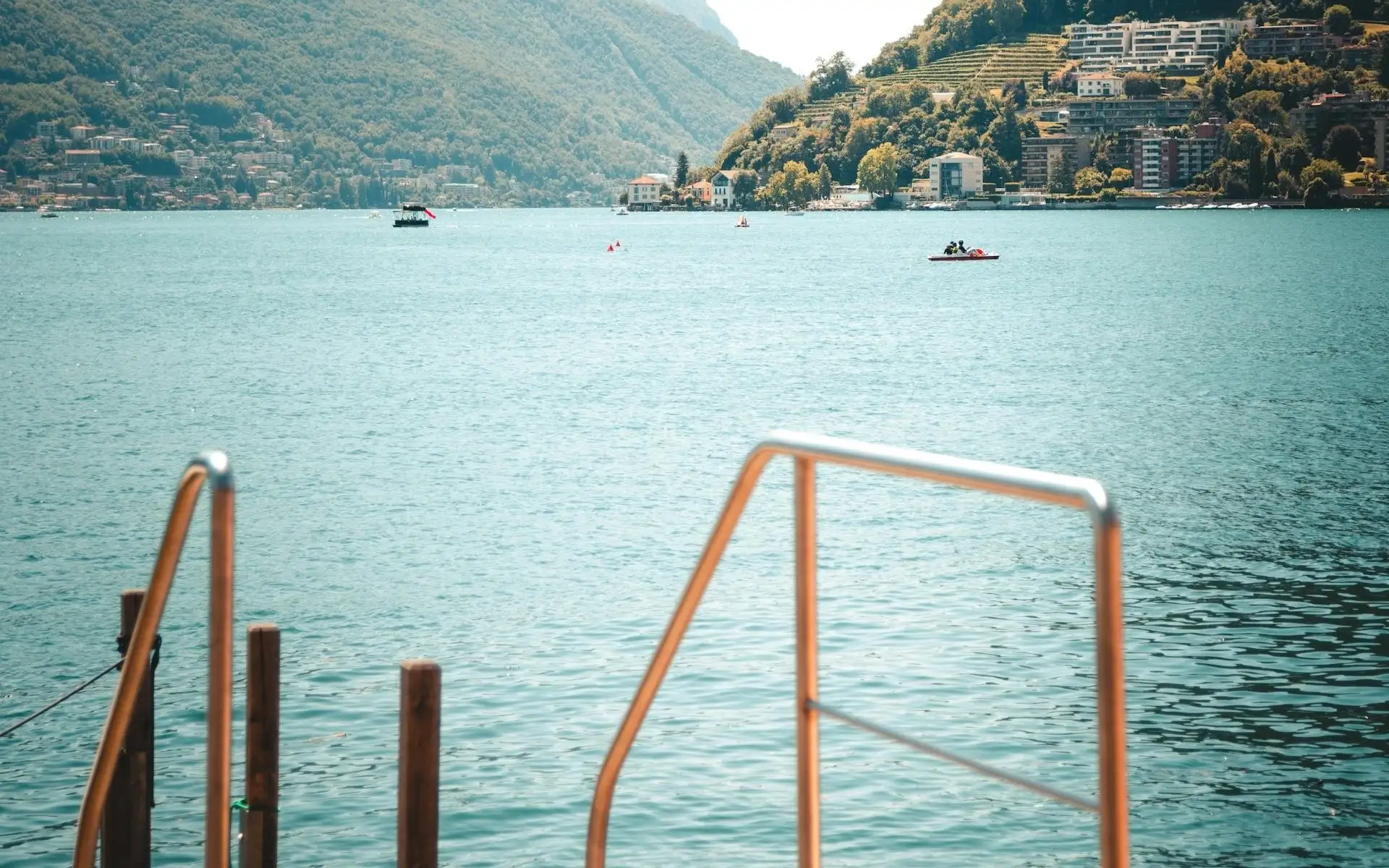
Three patterns shape our January plans. The Swiss Plateau, where Zurich, Lucerne and Bern sit, often lies under a lid of low cloud for days, while the peaks above it are in sunshine: the Jungfraujoch gets about twice Zurich's January sun. The Engadine is the coldest region on this list but also one of the sunniest and driest, with dry powder snow and nights well below 10°F. And Lugano is the mild corner, with only about five days of rain or snow in the month, which makes Ticino a good add-on for travelers who do not ski.
Daylight is short. On January 15, the sun rises in Zurich at 8:09 a.m. and sets at 5:00 p.m., under nine hours, and in deep valleys such as Lauterbrunnen it slips behind the cliffs much earlier. We schedule summit excursions between 9 a.m. and 2 p.m.
What runs in January, and what sleeps
The good news: all the famous winter excursions operate.
- Jungfraujoch is open every day of the year, from Grindelwald by the Eiger Express gondola and the Jungfrau Railway, or from Lauterbrunnen and Wengen via Kleine Scheidegg.
- Gornergrat trains climb from Zermatt all winter, carrying skiers and sightseers together.
- Schilthorn runs normally from Mürren; the last of its new cableways, between Birg and the summit, opened in April 2026.
- Titlis above Engelberg is open 365 days, and its rotating Rotair cabin is back after its autumn 2026 closure.
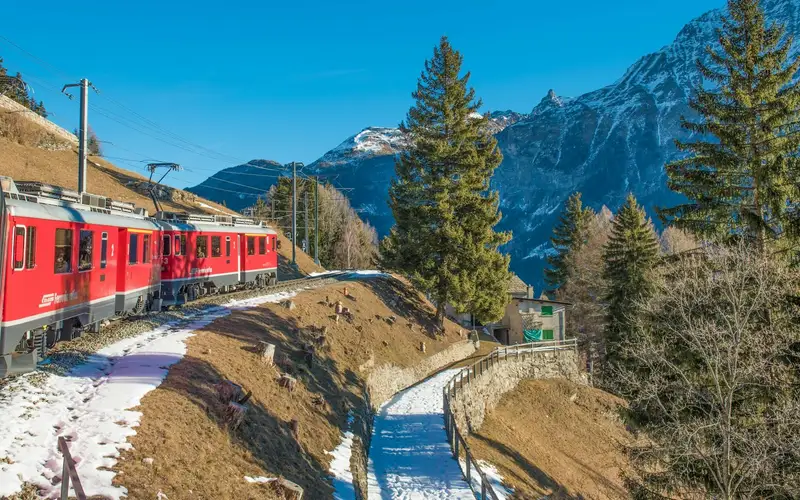
- Glacier Express runs its winter timetable from December 5, 2026 to May 7, 2027. One pair of trains (905 and 920) does not run from January 4 to January 29, 2027, so mid-January has fewer seats. Our Glacier Express guide covers classes and which side to sit on.
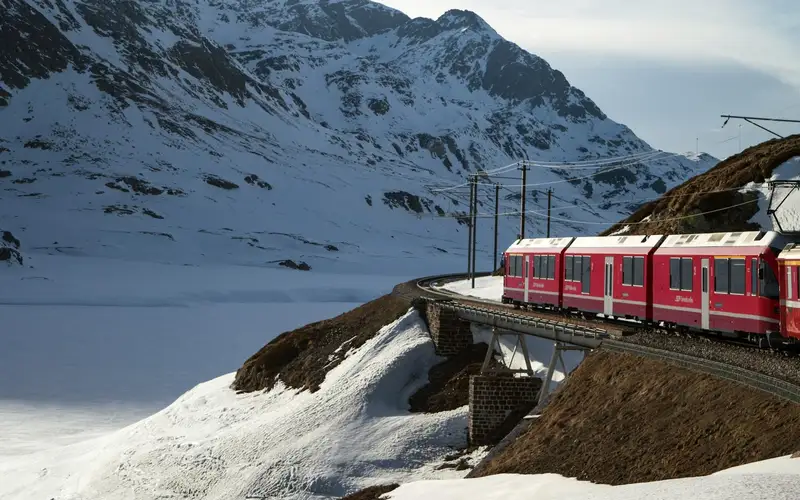
- Bernina Express crosses the Bernina Pass all winter, with fewer departures than in summer.
- Pilatus is reached by gondola from Kriens and the Dragon Ride cableway only. The cogwheel railway from Alpnachstad is a summer line; in 2026 it ran from May 11 to November 29.
- Lake Lucerne boats keep a reduced winter timetable until April 16, 2027.
Closed until spring: the Harder Kulm funicular above Interlaken (back on March 26, 2027), the Schynige Platte railway, and the high road passes, including Grimsel, Furka, Susten, Nufenen, Gotthard and Great St Bernard. The Bernina, Maloja, Julier and Simplon passes stay open all year, so St. Moritz and the road to Italy remain accessible.
The January 2027 calendar
- Silvesterchlausen, January 13: in Urnäsch and other villages of Appenzell Ausserrhoden, costumed groups of "Chläuse" with heavy bells and elaborate headdresses go from farm to farm yodeling to mark the old New Year of the Julian calendar. It is a village custom, not a show, so ask us for the current program.
- Lauberhorn races, Wengen, January 15 to 17: super-G on Friday, downhill on Saturday and slalom on Sunday, on the longest downhill course of the World Cup.
- Inferno race, Mürren, January 20 to 23: a famous amateur downhill, held on Saturday, January 23, from the Schilthorn slopes toward Lauterbrunnen.
- Snow Polo World Cup, St. Moritz, January 22 to 24: polo on the frozen lake.
- International Hot Air Balloon Festival, Château-d'Oex, January 23 to 31: dozens of balloons over the Pays-d'Enhaut, an easy day trip from Montreux or Gstaad on the GoldenPass line.
- Lilu light festival, Lucerne: light installations in the old town in January. The 2027 dates are not published yet, so check before booking.
What January costs, and who else is there
Festive rates run until about January 3. After that, the ski resorts settle at their mid-winter level, below Christmas and below the February school holidays, which start in some cantons at the end of the month. City hotels in Zurich, Basel and Geneva are at their lowest of the year, except during trade fairs.
A Swiss Travel Pass covers the main rail and boat lines; summit railways such as the Jungfraujoch and Gornergrat give pass holders a discount rather than free travel. Our Swiss Travel Pass calculator shows whether it pays off for your route.
Dressing for snow, ice and overheated trains
- Insulated, waterproof boots with a real tread. Village streets in Zermatt and Wengen are packed snow and ice, and slip-on ice grips help on winter walking trails.
- Thermal base layers, a warm hat and gloves, and a down jacket you can take off: Swiss trains and hotels are well heated.
- Sunglasses and sunscreen. At 11,000 feet the January sun on snow is strong even at 15°F.
- A small backpack for layers on summit days, since the Jungfraujoch can be 25°F colder than Interlaken the same morning.
For travelers with reduced mobility, January asks for extra planning: even when cleared, cobbled old towns and village lanes are slippery. The main levels at the Jungfraujoch are linked by elevators, and car-free Zermatt has electric taxis, which we book in advance.
Three January trips we design
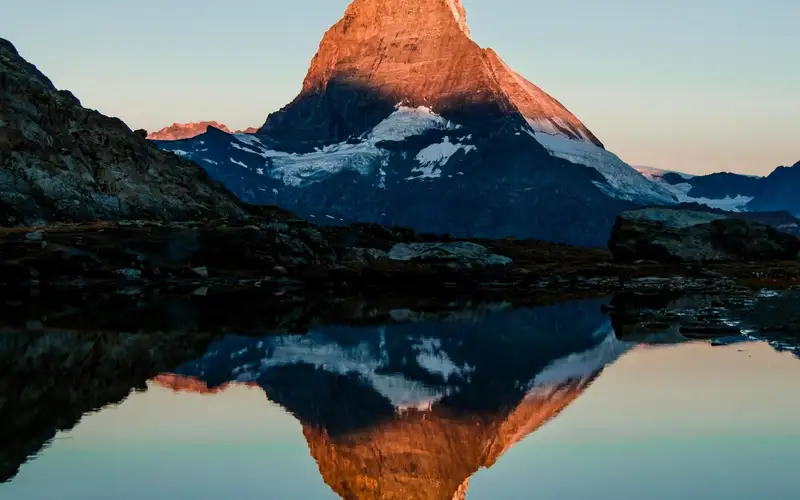
Snow trains from St. Moritz to Zermatt. Two nights in St. Moritz with the Bernina Express to Tirano and back, the Glacier Express over the Oberalp Pass, then two nights in Zermatt with an early Gornergrat ride for the Matterhorn in morning light. It is the winter version of our Legendary Swiss Trains trip.
Lucerne, Jungfrau and Zermatt in the snow. Our Switzerland in 7 Days works in January with two changes: Pilatus by gondola instead of the cogwheel, and a ski or sledding day at Grindelwald instead of a hike. If you stay in Wengen, avoid the Lauberhorn weekend.
Chasing the sun in Ticino. For travelers who would rather skip gray Zurich, we pair two nights in the Engadine and the Bernina Express with three nights in Lugano. In January we add a private transfer from Tirano to Lugano, because the Bernina Express bus does not run in deep winter.
More carnival and peak snow come next, in Switzerland in February. Tell us your dates, and one of our travel designers will build your January trip around the snow and the right events: start planning.