February is carnival month in Switzerland and the heart of the ski season. Lucerne's Fasnacht erupts at 5 a.m. on February 4, 2027, Basel's lanterns appear in a blacked-out old town at 4 a.m. on February 15, and on three Sundays horses race across the frozen lake at St. Moritz. Snow is at its most dependable in the resorts, and so are the crowds: school holidays from half of Europe fill the slopes for most of the month.
In 2027 the two big carnivals sit eleven days apart, so one trip can catch both. Here is how they differ, what the weather does, and how we plan around the holiday weeks. For the year-round picture, see our best time to visit Switzerland.
Lucerne Fasnacht: brass, masks and confetti, February 4 to 9
Lucerne's carnival starts on "Schmutziger Donnerstag," Thursday, February 4, 2027, with the Urknall, a bang at 5 a.m. in the old town, followed by a parade at 2 p.m. For six days, masked crowds and Guggenmusik bands, brass bands that play loud and gloriously out of tune, fill the lanes and squares along the Reuss. The other high points are Güdismontag (February 8) and Güdisdienstag (February 9), when the evening Monstercorso parade starts at 7:30 p.m.
In Lucerne, spectators dress up too. A mask or a painted face is the norm, and shops in the old town sell both in the weeks before.
Basel Fasnacht: three days from 4 a.m. on February 15
Basel's Fasnacht, listed by UNESCO as intangible cultural heritage, is quieter in spirit and stricter in form. At 4 a.m. on Monday, February 15, every light in the old town goes out for the Morgestraich, and the cliques march through the dark behind huge lit lanterns, playing piccolos and drums. Then come 72 hours of processions, with the Cortège on Monday and Wednesday afternoons, a lantern exhibition on the Münsterplatz and music in every alley, until 4 a.m. on Thursday.
Two pieces of etiquette we pass on to every traveler: spectators in Basel do not wear costumes, and buying the "Blaggedde" badge supports the event and spares you the worst of the confetti. Basel hotels sell out for these nights, so we often base travelers in Zurich, under an hour away by train, and book a Basel room only for the night before Morgestraich.
For travelers using a wheelchair or walking with difficulty, the Morgestraich in pitch-dark, packed lanes is hard going. The afternoon Cortège, which follows wider streets, is the easier way to see Fasnacht, and we can arrange a spot along the route.
White Turf and the frozen lakes of the Engadine
St. Moritz holds the White Turf horse races on its frozen lake on Sundays, February 7, 14 and 21, 2027, including skikjöring, where skiers are towed at a gallop behind riderless horses. The Saturdays before are family days.
The Upper Engadine is the sunniest and driest corner of winter Switzerland. Samedan averages about 121 hours of February sunshine and only four days with meaningful precipitation, so the snow stays light and dry. When the lakes of Sils and Silvaplana are frozen, groomed paths and cross-country trails cross the ice.
February weather from the lakes to the summits
1991-2020 averages calculated from MeteoSwiss station data, as daily high and low:
- Zurich: 41°F and 30°F (5°C and -1°C), 88 hours of sunshine, about nine days with rain or snow.
- Lucerne: 43°F and 29°F (6°C and -2°C).
- Interlaken: 42°F and 27°F (6°C and -3°C). Grindelwald and Wengen, higher up, are colder and snowier.
- Zermatt: 35°F and 19°F (2°C and -7°C), with about 111 hours of sunshine.
- Sils, Engadine: 33°F and 10°F (0°C and -12°C).
- Lugano: 48°F and 36°F (9°C and 2°C), the sunniest lowland city, with about 142 hours.
- Geneva: 45°F and 30°F (7°C and -1°C).
- Jungfraujoch weather station: 14°F and 3°F (-10°C and -16°C). On average, February is the coldest month on the summit.
Daylight returns quickly. Sunset in Zurich moves from 5:25 p.m. on February 1 to about 6 p.m. at the end of the month, and mid-February brings just over 10 hours of daylight, well over an hour more than in mid-January.
The school-holiday squeeze
Switzerland staggers its winter sports holidays by canton across February and into early March, and families from France, Germany, the Benelux countries and the UK arrive in the same weeks. Ski schools and family hotels fill up, and rates in Zermatt, Verbier, Grindelwald and St. Moritz reach their highest level of the winter outside Christmas. For a ski week in February, we start booking in late summer.
A train-and-cities trip is much less affected. The Glacier Express is back to its full winter timetable from January 30, 2027, and city hotels are reasonably priced outside the carnival nights in Lucerne and Basel.
Lifts, trains and roads in February
Every ski area is in full operation. Jungfraujoch, Gornergrat, Schilthorn, Titlis and Rigi run daily, and Pilatus is open by gondola from Kriens and the Dragon Ride cableway, without its cogwheel railway. Lake boats keep their reduced winter timetable. Grimsel, Furka and Susten remain closed under snow, so a winter road trip follows the valleys and the car-carrying rail tunnels.
What to pack for parades and pistes
- For the Morgestraich, the warmest layers you own: you will stand in the dark at around freezing for two hours.
- Earplugs for the Guggenmusik, which is very loud in narrow streets.
- Waterproof boots with grip, a hat and gloves.
- Goggles or category 3 sunglasses for the bright Engadine sun.
- In Lucerne, a mask or face paint if you want to join in.
February itineraries for 2027
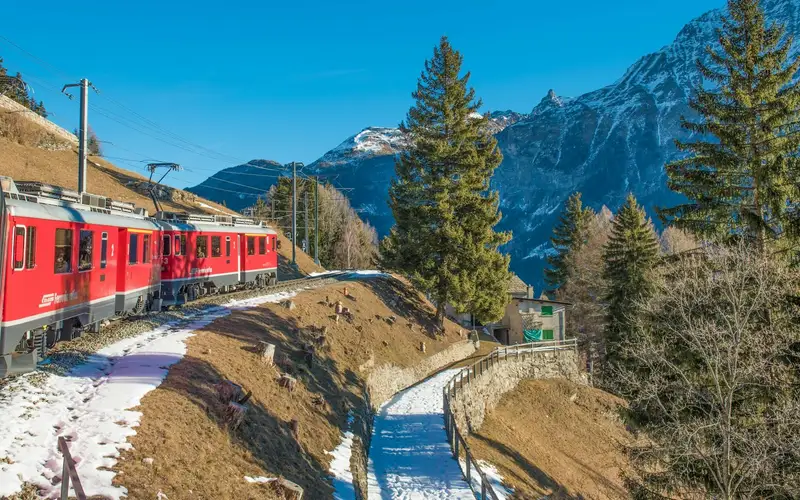
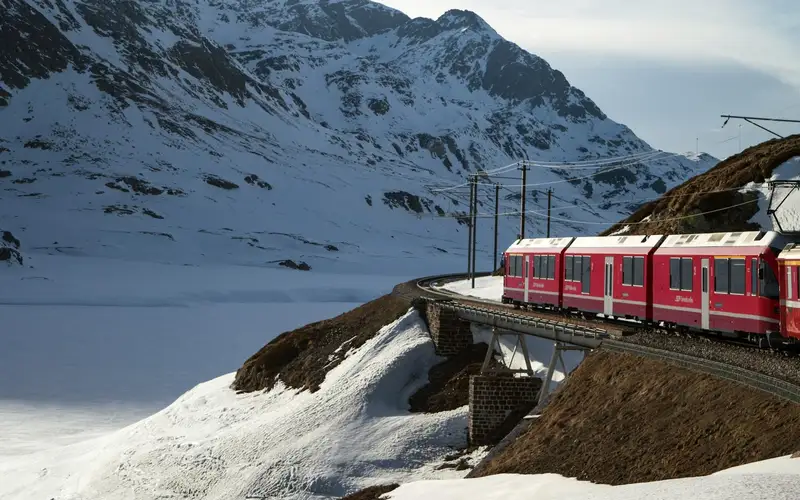
Both carnivals in one trip (10 days). Arrive for Lucerne's Güdismontag on February 8, ride the Bernina Express and spend White Turf Sunday, February 14, in St. Moritz, then reach Basel for the Morgestraich at dawn on February 15. Between them, the Glacier Express to Zermatt fits neatly, following our Legendary Swiss Trains route in the format of our 10-day Switzerland trips.
Ski and sun in the Engadine. Four nights in St. Moritz or Pontresina for the Corviglia and Diavolezza ski areas, with White Turf on the Sunday and an evening walk on the frozen lake.
A first winter trip. Lucerne, the Jungfrau region and Zermatt in a week, as in our Switzerland in 7 Days, with a sledding afternoon at Grindelwald and the Gornergrat at sunrise. Choosing where to sleep matters more in February than in any other month; our guide on where to stay in Switzerland compares the bases.
When the snow softens and the days stretch, it is time for Switzerland in March. Tell us which carnival or which slopes you have in mind, and we will build the trip around those dates: plan your trip.