Italy

Italy in 14 Days: Itineraries Designed by Local Experts

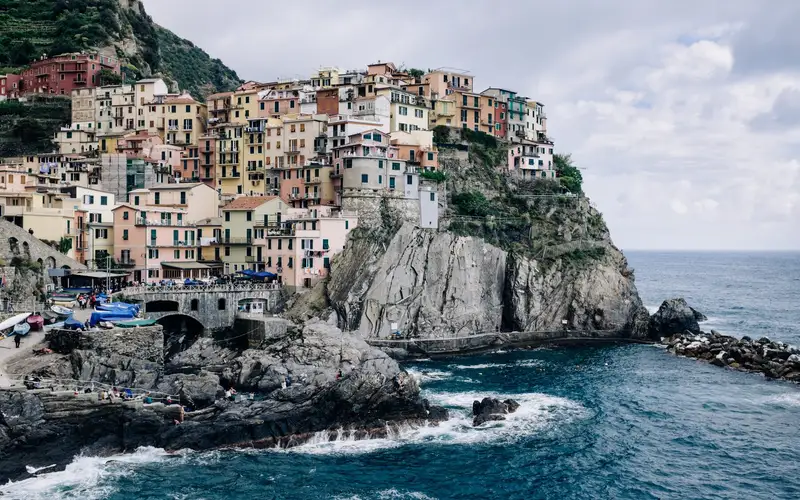
The colored houses of Manarola on a rock above the sea in the Cinque Terre

Italy in 14 days

Be inspired by our European itineraries, then let our local travel designers tailor your journey to your interests, preferences and pace.

Italy in 14 days: three ways to do it

Our designers’ take

The best 2-week Italy itinerary for a first trip is Venice (2 nights), Florence (3), the Cinque Terre (2), Rome (3) and the Amalfi Coast (3), flying into Venice and home from Rome or Naples. Two weeks is the length at which Italy's three great cities, a stretch of coast and a slower day in the Tuscan countryside fit without rushing, and it is the shape of our 14-day Italy grand tour. Travelers on a second trip often prefer the north, with the lakes and the Dolomites, or a route that starts in Switzerland.

Fourteen days means thirteen nights. With five bases, we keep the moves short and give the largest cities three nights each; with four bases, every stop gets three or four. Below are the three routes we build most often, with nights per base, the train times we use in 2026 and the budget. Our designers adapt any of them and send a priced version within 48 hours.

  1. 1

    The grand tour from Venice to the Amalfi Coast

    1. Days 1 to 3Venice, 2 nights: St. Mark's, the Doge's Palace, Murano and Burano.
    2. Days 3 to 6Florence, 3 nights, with a day in Siena and the Chianti.
    3. Days 6 to 8Cinque Terre, 2 nights in Monterosso or Vernazza: the coastal trains, a boat between the villages, the trail to Vernazza.
    4. Days 8 to 11Rome, 3 nights: the Colosseum, the Vatican, Trastevere.
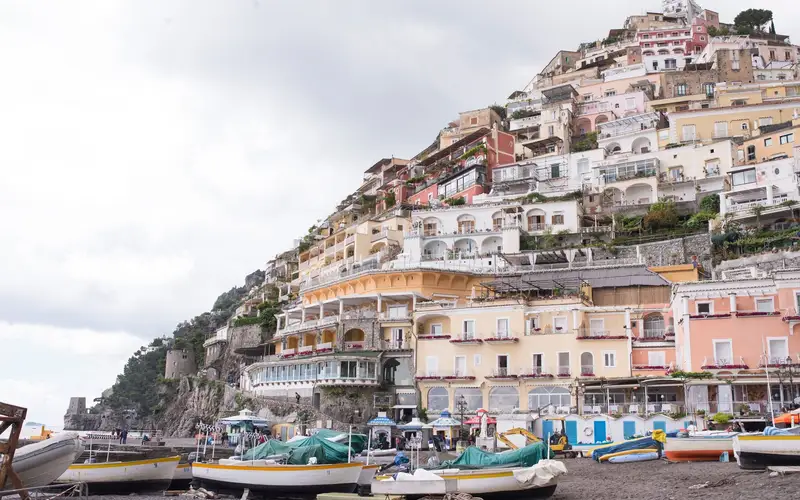
    5. Days 11 to 14Positano or Amalfi, 3 nights, with a boat day to Capri and Pompeii or Ravello.

    Venice to Florence is about 2 h 15 by fast train; Florence to the Cinque Terre about 2 h 30 to 3 h with one change, at Pisa or La Spezia; the Cinque Terre to Rome about four to four and a half hours with a change at La Spezia; Rome to Naples about 1 h 10, then a driver. This is our 14-day Italy grand tour.

    Suits first-time visitors who want the classic cities and the sea.

  2. 2

    Northern Italy: Venice, the Dolomites and the lakes

    1. Days 1 to 4Venice, 3 nights.
    2. Days 4 to 8The Dolomites, 4 nights in Cortina d'Ampezzo, Val Gardena or Alta Badia.
    3. Days 8 to 10Verona or Lake Garda, 2 nights: the Arena, Sirmione, a Valpolicella winery.
    4. Days 10 to 13Lake Como, 3 nights in Bellagio or Varenna.
    5. Days 13 to 14Milan, 1 night: the Duomo and the Last Supper (€15 in 2026, booked well ahead).

    Venice to the Dolomite valleys is about two to three hours by car; Bolzano to Verona about 1 h 30 by train; Milan to Como under 40 minutes. Our 10-day Dolomites and Italian lakes trip stretches easily to this route.

    Suits return visitors, walkers and travelers who prefer landscapes to crowds, from mid-June to mid-September.

  3. 3

    Switzerland and northern Italy by train

    1. Days 1 to 8Switzerland: Zurich, the Rhine Falls, Interlaken and the Schilthorn, Lucerne and Mount Rigi.
    2. Days 8 to 10Lugano, with the lakeside village of Gandria.
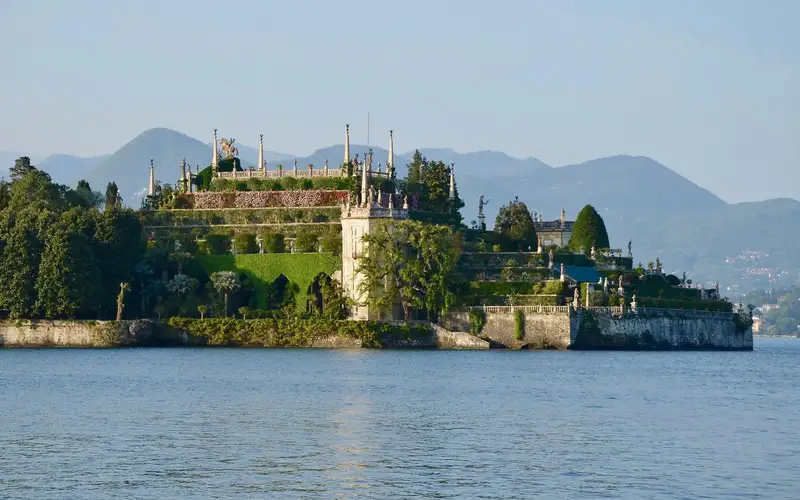
    3. Days 10 to 12Lake Como and the Borromean Islands on Lake Maggiore.
    4. Days 12 to 14Milan, with a cooking class before the flight home.

    This is our 14-day trip from Switzerland to Italy, from €5,499 (about $6,270) per person. Lugano is about 30 minutes from Como by train. Read Lake Como to Switzerland for the border crossings.

    Suits families and active travelers who want mountains, lakes and two countries without a car.

Other two-week shapes. Rome (4 nights), Tuscany (4) and the Amalfi Coast (5) for a slower trip without Venice; or Rome and Florence for a week, then Sicily for the second, flying from Rome to Palermo or Catania.

How we move you between bases. Typical times on the fastest trains in 2026: Venice to Florence about 2 h 15, Florence to Rome about 1 h 30, Rome to Naples about 1 h 10, Naples to Salerno about 35 minutes, Rome to Milan about 3 h. Regional trains serve the Cinque Terre and the lakes. We reserve high-speed seats together, send luggage-friendly transfers where the trains stop short, and use drivers on the Amalfi Coast and in the mountains. See Italy by train and Milan to Venice by train.

Budget in 2026. At the daily rates our trip cost calculator uses for Italy, two weeks costs about €3,050 to €4,150 (about $3,480 to $4,730) per person in comfortable 4-star hotels, €5,000 to €6,800 (about $5,700 to $7,750) in boutique 4-star and 5-star hotels with private guides, and €9,000 to €12,200 in luxury hotels, two people sharing, with first-class trains, meals and guided visits, before flights. Routes with Switzerland or summer nights on Lake Como and the Amalfi Coast sit at the top of each range. Our Italy cost guide details each line.

Best season. May, June and September suit the grand tour: the sea is warm, hotels on the coast are open and the cities are not yet at their hottest. Route 2 needs the summer lift season, roughly mid-June to mid-September, and Route 3 is at its best from June to September. Day visitors to Venice paid an access fee on 60 days between April 3 and July 26, 2026; overnight guests, which covers every route here, are exempt. Our best time to visit Italy guide compares the months.

Accessibility. For wheelchair users, we replace the Cinque Terre and the Amalfi villages, which are built on steps, with Lake Garda and Sorrento, and keep Venice, Florence and Rome with step-free hotels, adapted transfers and Sala Blu assistance for every train. See our wheelchair-accessible Italy guide and accessible trips.

Shorter on time? See Italy in 10 days or Italy in 7 days, and our Italy travel guide for every region. When your dates are set, ask for your two weeks, priced within 48 hours.


Guides and itineraries

All articles

Frequently asked questions

Is 2 weeks enough for Italy?

Two weeks is enough for the classic first trip: Venice, Florence, Rome and a stretch of coast, either the Cinque Terre or the Amalfi Coast, or both at a brisker pace. It is not enough for the whole country; Sicily, Puglia and the Dolomites each deserve a week of their own, so we suggest one region per trip beyond the grand tour.

What is the best 14-day Italy itinerary?

For a first trip: two nights in Venice, three in Florence, two in the Cinque Terre, three in Rome and three on the Amalfi Coast, flying into Venice and out of Rome or Naples. Return visitors often prefer Venice, the Dolomites, Lake Garda and Lake Como, which needs the summer lift season.

How should I split 14 days between Rome, Florence and Venice?

If those are your only three bases: five nights in Rome, four in Florence with a Tuscan day trip and four in Venice, or swap one Florence night for a night in Verona. Most travelers prefer three nights per city and the remaining four on a coast or in the countryside.

How much does a 2-week trip to Italy cost?

In 2026, about €3,050 to €4,150 (about $3,480 to $4,730) per person in comfortable 4-star hotels and €5,000 to €6,800 in boutique hotels with private guides, two people sharing, with first-class trains, meals and guided visits, before international flights. The Amalfi Coast and Lake Como in summer are the most expensive nights.

Can I combine Italy and Switzerland in 14 days?

Yes, and it is one of our most requested shapes: about a week in Switzerland (Lucerne, the Bernese Oberland, Zermatt or the Bernina line), then Lugano, Lake Como and Milan. Lugano is about 30 minutes from Como by train. Our 14-day trip from Switzerland to Italy starts from €5,499 (about $6,270) per person.

Is it better to travel Italy by train or by car for two weeks?

By train between the cities, which is faster and avoids the ZTL limited-traffic zones and their camera fines. A car or a driver makes sense only for the countryside parts, such as Tuscany or the Dolomites. We often combine both: trains for the long legs, a driver for two or three days in between.

Two minutes, three steps. Free and without obligation.

01Your trip
Where would you like to go?
02How you travel
03Your details

Pick your country code, then your number.

We use your details only to reply to your request, as described in our legal.