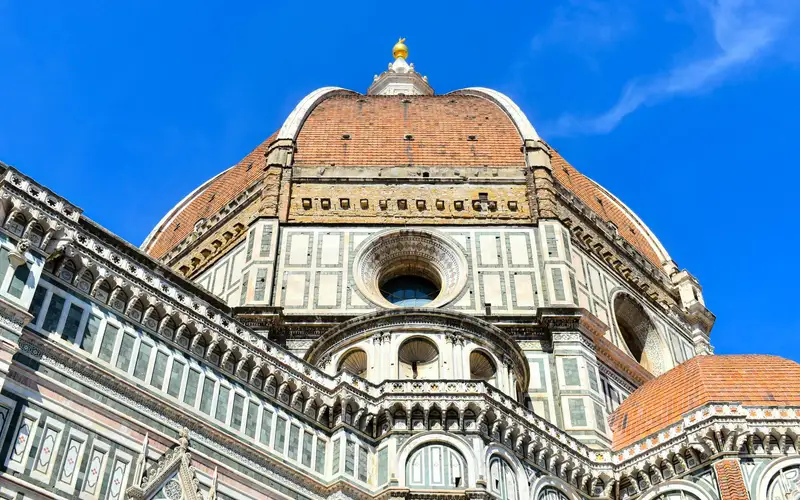
Italy is one of the best countries in Europe to travel by train. A high-speed line runs the length of the country from Turin and Milan through Bologna, Florence and Rome to Naples and Salerno, with branches to Venice, and two companies compete on it: Trenitalia, the state operator, with its red Frecciarossa trains, and Italo, a private operator. Rome to Florence takes about 1 h 30, Florence to Venice about 2 h 05, and the trains leave city center to city center, often several times an hour.
For the classic first trip (Rome, Florence, Venice), the train is faster and calmer than driving or flying. Below is how the network works, which operator and class we book, how passes compare with tickets, and what to know about regional trains, strikes, luggage and accessibility.
Trenitalia or Italo
|
Trenitalia (Frecciarossa) |
Italo |
| Owner |
state group Ferrovie dello Stato |
private company |
| Network |
high-speed lines plus Intercity and all regional trains |
high-speed lines only |
| Classes |
Standard, Premium, Business, Executive |
Smart, Prima Business, Club Executive |
| Accepts rail passes |
yes: Eurail with a paid reservation, Trenitalia Pass with a free one |
no |
| Cities served |
the whole country |
the main cities, including Rome, Milan, Florence, Venice, Naples, Bologna, Turin, Verona, Salerno |
The two are equivalent in speed and comfort on the main axis. We book whichever has the better timing and fare for each leg, and sometimes mix them on the same trip. Two practical differences: only Trenitalia serves regional lines like the Cinque Terre and most smaller towns, and only Trenitalia accepts passes.
The high-speed network in words
Think of a long spine with a few branches:
- The spine: Turin, Milan, Bologna, Florence, Rome, Naples, Salerno. Milan to Rome takes about 3 hours on the fastest trains; Rome to Naples about 1 h 10.
- The Venice branch: trains from Rome and Florence reach Venice via Bologna and Padua. From Milan, trains run east via Brescia, Verona and Padua.
- The south: some high-speed trains continue beyond Salerno toward Calabria, and Puglia is linked by fast trains to Bari and Lecce.
- Sicily: there is no bridge. Intercity trains from Rome, including night trains, cross the Strait of Messina on a train ferry to Palermo and Siracusa. For most trips we fly to Sicily instead.
- Abroad: direct trains link Milan with Switzerland (Zurich, Geneva, Basel) and France (Paris via Turin and Lyon).
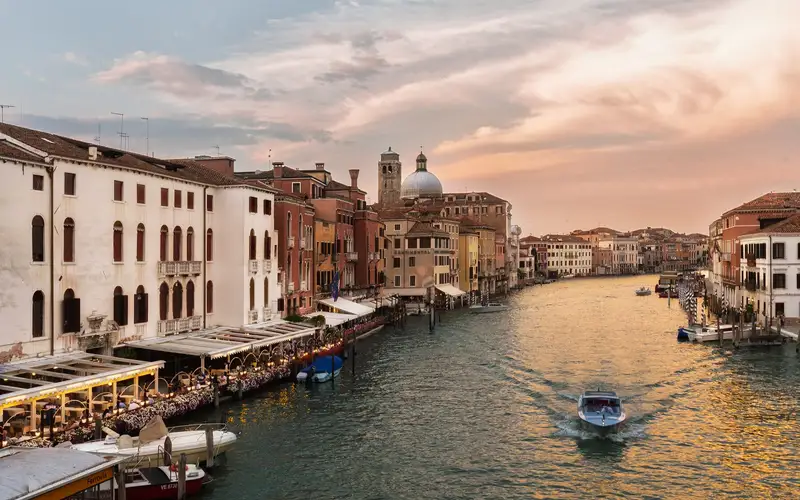
Station names matter. Rome's main station is Roma Termini; Florence's is Firenze Santa Maria Novella (S.M.N.); for Venice, get off at Venezia Santa Lucia, on the Grand Canal, not Venezia Mestre on the mainland; Milan's is Milano Centrale; Naples' is Napoli Centrale. Some trains stop only at Roma Tiburtina or Firenze Campo di Marte, so we always check the station on the ticket.
Classes: what we book
On Trenitalia's Frecciarossa, Standard is a good second class, Premium adds a little more space, Business has larger leather seats and a quiet area on most trains, and Executive is a small car with a handful of large seats and a meal served at your seat. On Italo, Smart is the base, Prima Business is first class with leather seats, extra legroom and a snack and drink served at your seat, and Club Executive is the top class, with extra-wide seats and catering at the seat.
For most of our travelers we book Business on Trenitalia or Prima Business on Italo: wider seats, calmer cars and more room near the seat for a medium suitcase. The difference is often modest when booked early. Executive is a treat on a long leg such as Rome to Venice.
Booking tickets
- High-speed trains need a ticket for a specific train and seat. Prices rise as seats sell, so for May, June and September we book as soon as our clients confirm, often three to four months ahead.
- Fares come in levels. The cheapest fares cannot be changed or refunded; flexible fares cost more but can be moved. With connections to flights, we choose flexible fares.
- Tickets are digital. Nothing to print: the conductor scans the QR code on your phone. High-speed tickets do not need validation.
- Arrive 15 to 20 minutes early. Platforms are announced on the departure boards shortly before departure, and in Roma Termini, Firenze S.M.N. and Milano Centrale you show your ticket at the gates before the platform.
Rail passes: do they still make sense?
Two passes exist in 2026 for travelers living outside Italy:
- Trenitalia Pass: sold by Trenitalia for non-residents, in Easy and Comfort versions, for 3 or 4 journeys within 7 days, 7 within 15 days or 10 within 30 days, from €139 (about $160). It covers Frecce, Intercity and Intercity Night trains, with free but compulsory seat reservations. Up to two children aged 4 to 12 travel free with an adult pass holder.
- Eurail Italy Pass: a one-country pass for a set number of travel days within a month. Trenitalia trains require a paid reservation on top, €13 per trip on the Frecciarossa and €3 on Intercity trains in 2026, and Italo does not accept the pass.
Our view: on a typical trip of four to six train legs booked a few months ahead, individual tickets usually cost about the same as a pass, with more flexibility in choosing Italo or Trenitalia. A pass helps with last-minute bookings or many long legs. We compare both on each quote.
Regional trains and validation
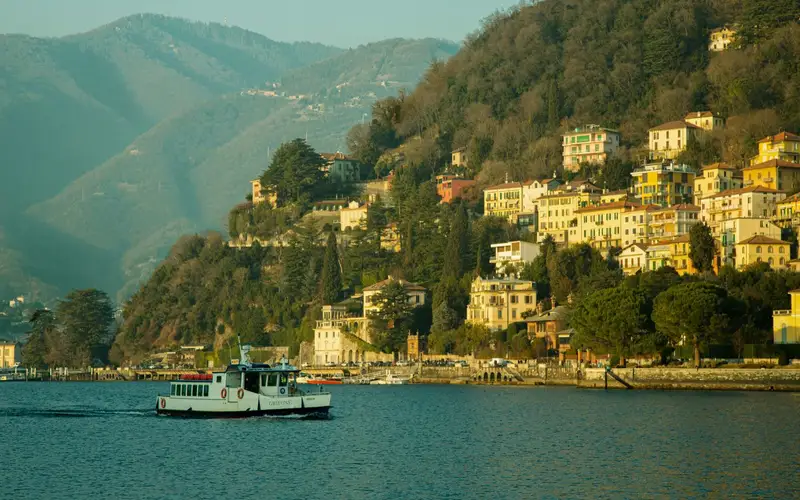
Regional trains (Regionale and Regionale Veloce) serve the Cinque Terre, Lake Como, Pisa, Lucca, Siena, Verona and hundreds of towns. They have fixed prices, no seat reservations and no classes on most lines, and they are often crowded in summer.
The one rule to remember is validation. A paper regional ticket must be stamped in the green and white machines on the platform or in the station before boarding; an unvalidated ticket can mean a fine. Digital regional tickets bought from Trenitalia's app or website activate automatically at the scheduled departure of the chosen train, so no stamping is needed, but they are valid only for that train. We buy regional tickets for our travelers in advance and tell them exactly which one is which.
Strikes
Italian rail strikes are frequent and always announced in advance, usually a week or more ahead, on the Ministry of Transport's strike calendar and in the train companies' news. For regional trains, a minimum service is guaranteed on weekdays from 6 to 9 a.m. and from 6 to 9 p.m. For high-speed and Intercity trains, Trenitalia and Italo publish a list of guaranteed trains. When a strike falls on one of our clients' travel days, we move them to a guaranteed train or arrange a car, and we warn them as soon as the strike is announced.
Luggage
Italian trains have no weight limit for luggage in practice, but you carry your own bags: there are steps up into most trains, and porters are rare. Large suitcases go in the racks at the ends of each car or behind the last row of seats; smaller bags above the seats. Italo sets a size limit of 75 x 53 x 30 cm for bags in its Smart class. With two large suitcases each, we suggest one checked bag per person and sending the rest ahead, or a private transfer between stations and hotels in Venice and on the coast.
Accessibility: Sala Blu
Italy's rail infrastructure company, RFI, runs a free assistance service for passengers with disabilities and reduced mobility, the Sala Blu. In 2026 it had 16 Sale Blu coordinating assistance in more than 380 stations, with staff and lifts to board and leave the train. You book by phone (+39 02 32 32 32 from abroad), online, through the SalaBlu+ app or in person. Notice required: at least 1 hour at the main "fast" stations for daytime trains, and 12 hours at other stations. Frecciarossa and Italo trains have wheelchair spaces with accessible toilets, which must be reserved. Older regional trains can have high steps; newer ones are level from raised platforms. Our guide to wheelchair accessible Italy goes further.
Italy's scenic train rides
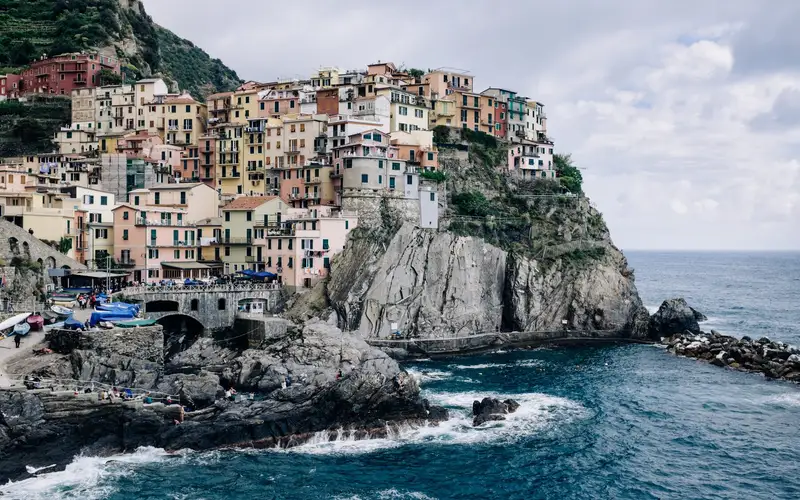
- The Cinque Terre line. Regional trains, often called the Cinque Terre Express, link Levanto, the five villages and La Spezia in a few minutes between each stop, much of it in tunnels with sea views at the stations. The Cinque Terre Treno card combines unlimited trains on this stretch with access to the park's paths. See our Cinque Terre travel guide.
- The Bernina line from Tirano. From Tirano, a short regional ride from Lake Como, the red Rhaetian Railway trains climb over the Bernina Pass to St. Moritz in Switzerland. Our Bernina Express guide covers it.
- The Centovalli railway. A narrow-gauge line from Domodossola, near Lake Maggiore, through the Vigezzo valley and the "hundred valleys" to Locarno in Switzerland, in about two hours, every day of the year. It pairs well with a stay on Lake Maggiore.
- The Brenner line. From Verona to Bolzano along the Adige valley, with vineyards and castles, it is the gateway to the Dolomites.
Trips we design by train
Our Rome, Florence and Venice by Train in 10 Days is built entirely on high-speed trains, with Business class seats reserved. Italy's Grand Tour in 14 Days adds the Cinque Terre line and the Amalfi Coast. To combine Italy and Switzerland by rail, see Italy and Switzerland in 7 Days. For the whole of Italy, start at our Italy destination page.
Send us your cities and dates, and a designer will build your Italy rail itinerary, with every seat reserved.