Italy is harder than Switzerland or Paris for a wheelchair user, but very doable with the right plan. The great sights have done real work: the Colosseum has step-free entrances and a lift between its tiers, the Vatican Museums run a barrier-free route, and the rail network offers free assistance at more than 380 stations. What makes Italy hard is everything between the sights: cobblestones, narrow sidewalks, old hotels with tiny lifts, Venice's bridges and the Amalfi Coast's stairs. So we build accessible Italy trips around Rome and Florence first, Venice with care, and the coasts only with the right hotel.
This guide is how we plan Italy for wheelchair users and for seniors with limited mobility: city by city, with what we check before we book, and the limits stated plainly.
Italy at a glance for wheelchair users
| Destination |
How accessible |
What works |
What to watch |
| Rome |
good with a vehicle |
Colosseum, Vatican Museums, St. Peter's, Pantheon |
cobblestones, crowds, broken lifts in the Metro |
| Florence |
good |
compact and flat center, major museums with lifts |
narrow sidewalks, uneven paving |
| Venice |
possible, with planning |
accessible vaporetto lines, level areas around many stops |
more than 400 bridges, high tides |
| Amalfi Coast |
difficult |
some hotels with level access, boat trips with help |
stairs everywhere, steep lanes |
| Sicily |
mixed |
flat centers in Palermo and Ortigia, parts of the archaeological sites |
old towns on hills, long distances |
| Lakes and Dolomites |
good in places |
lakefront promenades, several accessible lifts and valley paths |
steep villages, ferry gangways |
Rome
Rome is our first recommendation for an accessible Italy trip, because the major sites are accessible and the city can be done with a vehicle between them.
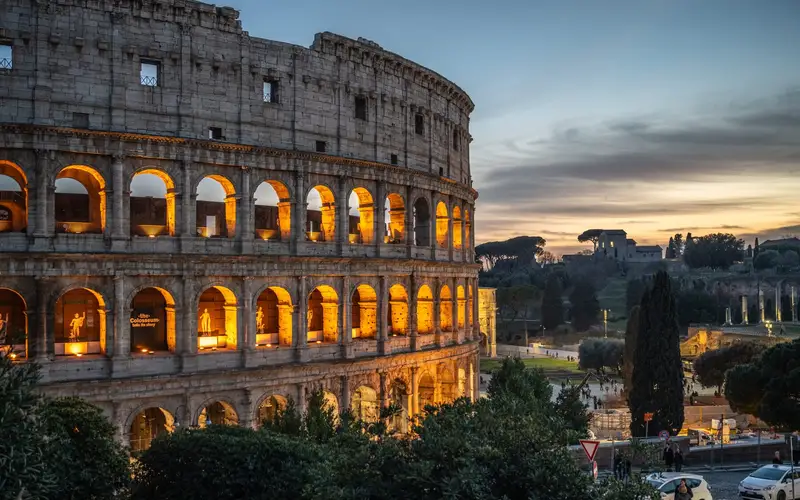
The Colosseum. According to the Archaeological Park of the Colosseum, the entrances on the northern side and the main entrances to the Forum and the Palatine are accessible to wheelchair users. Inside the Colosseum, a marked route covers most of the first tier, and a lift connects the first and second tiers, so the whole second tier is reachable. The park keeps three wheelchairs at the Colosseum's first-tier reception and five at the Forum and Palatine entrances. In the Roman Forum, an alternative path to the Via Sacra reaches the main monuments, with lifts at the Largo della Salara Vecchia entrance and the Curia; the Palatine has steep stretches and irregular paving, so we limit it to the accessible sections.
The Vatican Museums. Visitors with a certified disability of at least 67 percent enter free, with the certificate or the European Disability Card, and one companion also enters free when the visitor is not self-sufficient. These free tickets cannot be booked online: they are issued at the desks in the entrance hall, with priority entry. The museums publish a map of their barrier-free itinerary through the collections. We send our travelers with a private guide who knows the accessible route, because it differs from the standard one.
Free entry elsewhere. Under the Italian Ministry of Culture's rules, people with disabilities and one companion enter Italian state museums and archaeological sites free, including the Colosseum park, without a nationality restriction. Bring documentation of the disability.
Getting around. Rome's historic center is mostly cobbled, with high curbs and crowded sidewalks. Some Metro stations have lifts, but they are not always working, and buses fill up. We use a private van with a ramp or lift for every transfer and between distant sites, and plan walks only on smoother routes, such as around Piazza Navona and the Pantheon.
Florence
Florence's center is compact and flat, the easiest of the great Italian art cities to explore on wheels. The challenge is the paving: large uneven stones and very narrow sidewalks in the medieval streets.
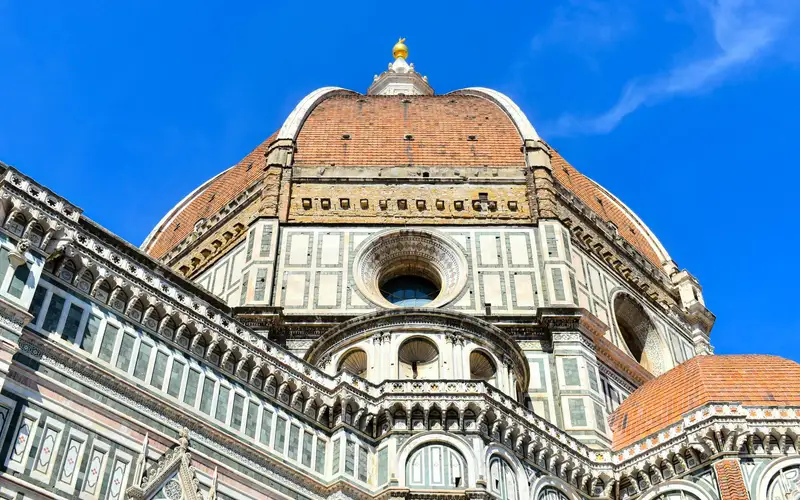
The Uffizi is served by lifts between its floors, the Accademia (Michelangelo's David) is mostly on one level, and the Duomo's main floor is accessible, while the climbs to the dome and the bell tower are stairs only. The Ponte Vecchio and the Oltrarno are reachable, with some slopes. We book timed entries and confirm the accessible entrance with each museum before the trip. A day in the Chianti hills by accessible van, with a wine estate that has a level tasting room, works well from Florence.
Our Accessible Rome and Florence trip combines both cities over 8 days with adapted rooms, an accessible van for every transfer and guides who know the step-free routes.
Venice
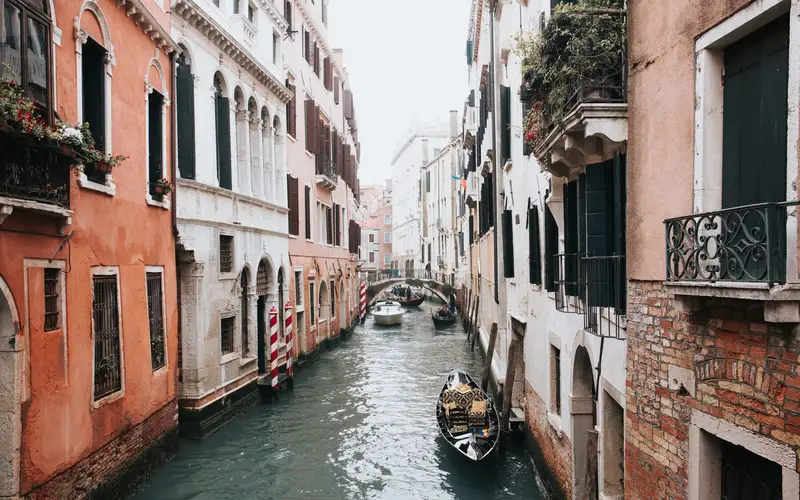
Venice has no cars, more than 100 small islands and more than 400 bridges, most of them with steps. The city's own accessibility office estimated that a wheelchair user can reach only about 2 percent of the historic center on foot, but almost 70 percent of it by public transport. That is the key: in Venice, the vaporetto replaces the sidewalk.
- Vaporetto lines 1 and 2, on the Grand Canal, use boats with level access and space for wheelchairs, and the landing stages are designed to be accessible. During particularly high tides, the ramps can become steep.
- Wheelchair users pay a special reduced fare, €1.50 for 75 minutes in 2026, and a companion rides free.
- The city's accessible Venice map shows which areas can be reached without crossing a bridge from each stop, and which bridges have ramps. We plan each day stop by stop: St. Mark's Square and the Doge's Palace area from San Zaccaria, the Accademia gallery and the Dorsoduro waterfront from their own stops.
- The day-tripper access fee does not apply to hotel guests, and people with a certified disability and one companion are exempt, though in 2026 they still registered on the official portal for a free QR code.
Where we put people: a hotel with level access from a vaporetto stop, ideally on the Grand Canal or near San Marco, with no bridge between the landing stage and the door. A private water taxi from the station or the airport needs a crew that can help at the landing; we confirm it in advance.
The Amalfi Coast: the honest version
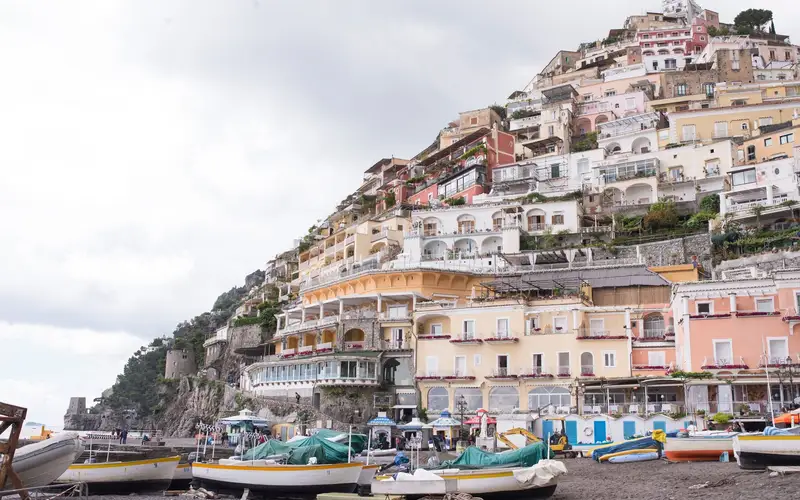
The Amalfi Coast is built vertically. Positano is a staircase with houses, Ravello sits on a ridge, and almost every hotel, beach and restaurant is reached by steps. The public buses on the coast road are crowded, and ferry gangways move with the sea.
It can still work, with three conditions: a hotel with level access from the road and a lift to an adapted room, a private accessible van for every movement, and boat trips with a crew used to helping. Amalfi town's main square is reachable from the waterfront, but the cathedral is at the top of a long staircase. For many of our travelers with limited mobility, Sorrento is a better base: a flatter center, more hotels with level access, and the coast and Capri as day trips.
Sicily
Sicily is mixed. Palermo's center is flat with wide avenues, and Ortigia in Siracusa is mostly level. Taormina is a hill town reached by road, with a main pedestrian street that is largely level once there. The Valley of the Temples in Agrigento has long paths with some accessible sections; we plan it with a vehicle and a guide. Distances between bases are long, so we pace Sicily at one main visit a day.
Trains and transfers
Italy's rail infrastructure company, RFI, runs the Sala Blu, a free assistance service for travelers with disabilities and reduced mobility. In 2026, its 16 Sale Blu coordinated assistance in more than 380 stations, with staff and lifts to board and leave trains. Book by phone (+39 02 32 32 32 from abroad) at least 1 hour ahead at the main stations for daytime trains and 12 hours ahead at the others, or through the SalaBlu+ app or the SalaBlu Online site up to 3 hours before departure. Frecciarossa and Italo high-speed trains have wheelchair spaces with accessible toilets, reserved with the ticket. Our Italy by train guide has the details.
For transfers, accessible taxis exist in Rome, Florence and Milan but are few and hard to book on the day. We reserve private vans with a ramp or lift for every transfer, including the airport.
Hotel rooms: what we ask before booking
Italian hotels are often in historic buildings, and "accessible room" can mean many things. Before we book, we ask the hotel for:
| What we check |
Why it matters |
| Step-free entrance from the street or drop-off |
many historic hotels have a few steps at the door |
| Lift door width and cabin depth |
old lifts can be too small for a wheelchair |
| Door widths to the room and bathroom |
in centimeters, measured, not "standard" |
| Roll-in shower with seat and grab bars |
many adapted rooms still have a bathtub |
| Bed height and space on each side |
for transfers from the chair |
| Photos of the actual room |
the brochure room is not always the one assigned |
We only book adapted rooms that the hotel has measured and photographed for us, and we reconfirm the room number before arrival.
Italy tours for seniors with limited mobility
Many of the travelers who ask us about accessible Italy do not use a wheelchair: they walk slowly, tire after an hour, or cannot manage stairs. For them, the same principles apply at a gentler level:
- One main visit a day, in the morning, with a private guide who sets the pace.
- A vehicle for every transfer, including short ones across Rome.
- Hotels within a short, level walk of a square or restaurant street.
- Small electric vehicles for guided tours of Rome's historic center, and wheelchairs borrowed on site for long museum visits.
- Spring and fall travel, to avoid summer heat on uneven paving.
Our guide to Europe tours for seniors with limited mobility covers this approach across Europe, and the most accessible cities in Europe ranks where Rome, Florence and Venice stand.
What we check before we confirm a trip
- Every museum's accessible entrance and route, confirmed for your dates.
- Every hotel room measured and photographed.
- Sala Blu bookings for each train, with seats in the wheelchair area.
- A vehicle with a ramp or lift for every transfer.
- A local contact reachable 24/7 if a lift breaks or a boat cannot dock.
Our accessible trips are designed by our accessible travel team on this method. Tell us about your mobility, your equipment and the places you dream of, and we will send you an accessible Italy itinerary, with every step checked.