Traveling Europe by train works best between cities one to five hours apart: Paris to Brussels takes 1 hour 22 minutes, Paris to Geneva about 3 hours 11, Paris to Zurich about 4 hours. For a trip with two to four long train legs, advance point-to-point tickets are usually cheaper than a rail pass; a pass pays off when you take many trains and want flexibility. Switzerland follows its own logic, with the Swiss Travel Pass or Half Fare Card.
We design rail itineraries through France, Switzerland, Germany, Italy and Belgium every day. This guide covers the routes, tickets, passes, booking windows, classes, luggage and accessibility, the way we explain them to our own travelers.
Journey times on the key routes
These are the fastest direct times in the 2026 timetables. Frequencies vary by day; the busiest routes run every hour or two.
| Route |
Fastest direct time |
Train |
| Paris to Brussels |
1 h 22 |
Eurostar (formerly Thalys) |
| Paris to London |
about 2 h 20 |
Eurostar |
| Paris to Lyon |
about 2 h |
TGV INOUI, Ouigo, Frecciarossa |
| Paris to Strasbourg |
about 1 h 50 |
TGV INOUI |
| Paris to Basel |
3 h 05 |
TGV Lyria |
| Paris to Geneva |
3 h 11 |
TGV Lyria |
| Paris to Zurich |
4 h 04 |
TGV Lyria |
| Paris to Amsterdam |
3 h 25 |
Eurostar |
| Paris to Frankfurt |
about 3 h 45 |
ICE or TGV |
| Paris to Munich |
about 5 h 40 |
TGV (one direct a day) |
| Paris to Nice |
from 5 h 45 |
TGV INOUI |
| Paris to Turin |
about 5 h 40 |
TGV INOUI or Frecciarossa |
| Paris to Milan |
about 7 h |
TGV INOUI or Frecciarossa |
| Brussels to Cologne |
about 1 h 50 |
ICE or Eurostar |
Two notes for 2026. The direct Paris to Milan trains through the Alps returned in April 2025 after the 2023 landslide in the Maurienne valley, with the TGV arriving at Milano Porta Garibaldi and the Frecciarossa at Milano Centrale. The direct ICE from Paris to Berlin (about 7 hours 47) was temporarily suspended in summer and autumn 2026, so a change may be needed; we check this when we book.
Point-to-point tickets or a rail pass?
Since September 9, 2026, Eurail and Interrail have merged: the passes formerly sold to North-American visitors as Eurail are now sold as Interrail, open to everyone regardless of residence. The logic of when a pass is worth it has not changed.
A pass covers the fare, but not always the seat. In France and Italy, high-speed trains are fully reserved, and pass holders pay a compulsory reservation:
| Train |
Reservation for pass holders (2026) |
| French TGV INOUI (domestic) |
EUR 10 within a limited quota per train, then EUR 20 |
| Eurostar Paris to Brussels |
EUR 27 (2nd class) or EUR 32 (1st), limited quota |
| Eurostar Brussels to London |
EUR 35 (Standard) or EUR 40 (Plus) |
| German ICE |
optional, from EUR 5.50 |
| Swiss domestic trains |
none, except panoramic trains |
| Glacier Express |
CHF 54 (about $67) in 1st or 2nd class |
Point-to-point tickets in France and Italy include a seat reservation at no extra cost, and early fares are often much cheaper than the walk-up price. So on a typical 10-day trip with three long legs (say Paris to Strasbourg, Strasbourg to Basel, Basel to Milan), advance tickets usually win. A pass starts to make sense when you take a train most days, travel in several countries, and want to change plans on the go.
In Switzerland, compare the Swiss Travel Pass (unlimited travel on trains, buses and boats, plus discounts on many mountain railways) with the Half Fare Card (50 percent off almost everything). The right answer depends on your exact route; our Swiss Travel Pass calculator runs both for you.
When to book
Booking horizons range from about 11 months to as little as 7 days, depending on the operator.
- France and Italy load their trains a few months ahead, often in waves, so a date three or four months away may not show trains yet. The cheapest fares go first.
- Germany and Switzerland load the whole timetable year, up to the timetable change in mid-December.
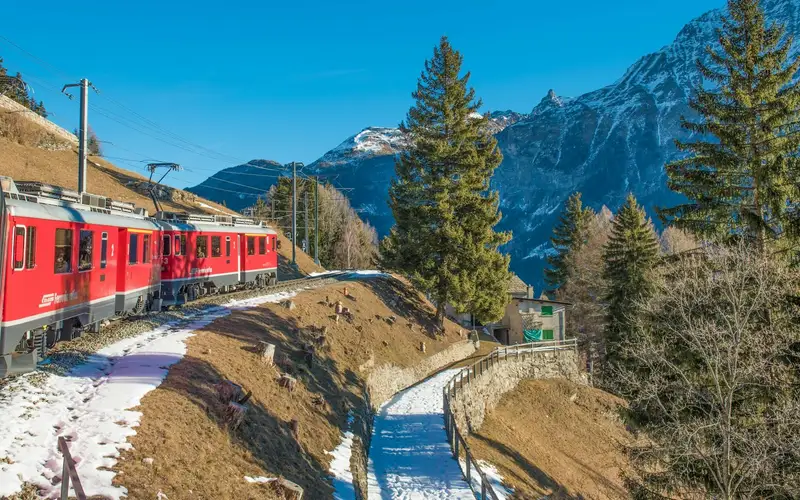
- Panoramic trains (Glacier Express, Bernina Express, GoldenPass Express) open reservations ahead of the season. For summer departures, we book at least five months ahead because the panoramic cars sell out.
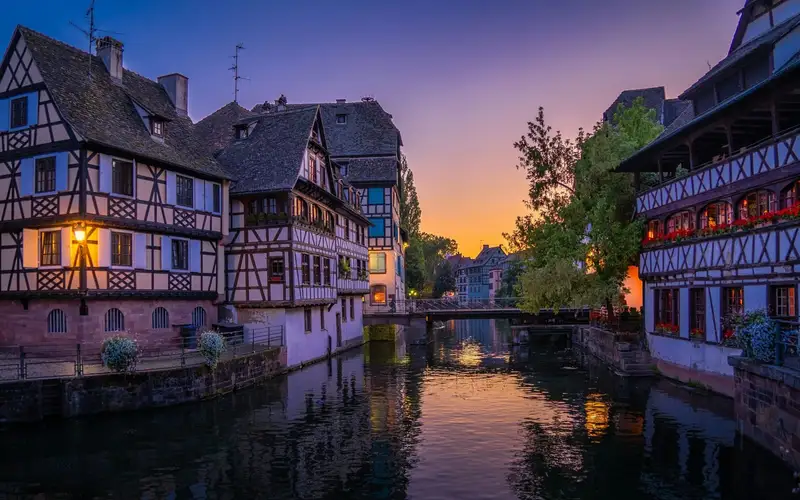
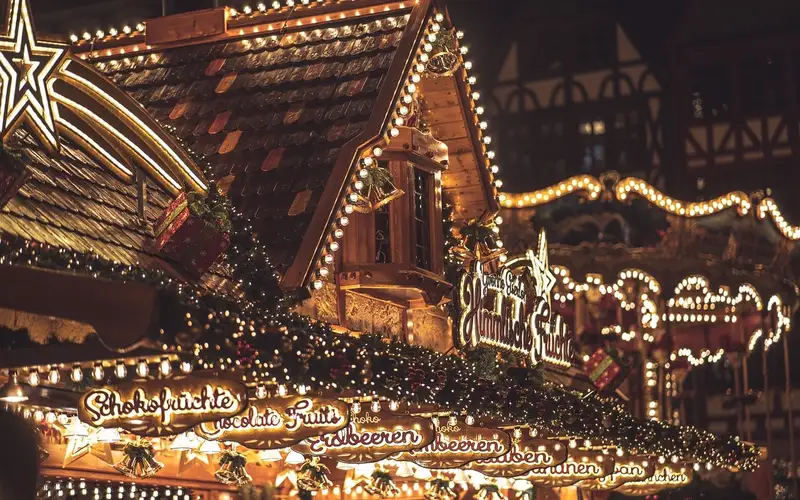
- Christmas market weekends fill early on Munich, Nuremberg and Strasbourg routes.
First or second class?
- TGV INOUI: 1st class on the double-deck trains has a 2-plus-1 seat layout, so you can choose a solo seat; the upper deck has the better view. 2nd class is perfectly comfortable for two to three hours.
- Eurostar: Standard, Plus and Premier. Plus gives more space and a light meal; Premier adds lounge access and a fuller meal.
- ICE: 1st class is quieter, with at-seat service on many trains.
- Swiss trains: 1st class is calmer at peak times and has more luggage space. On panoramic trains, we book 1st class for most travelers; the windows are the same as in Excellence Class on the Glacier Express, which adds the meal and the service, not the view.
As a rule, we book 1st class on long legs and on scenic lines, and 2nd class on short regional hops where the difference is a few minutes of comfort.
Luggage on European trains
- France: on TGV INOUI, Ouigo and Intercités, SNCF limits each traveler to two large bags (up to 70 x 90 x 50 cm) and one small bag (up to 40 x 30 x 15 cm), all tagged with your name. Fines start at EUR 50.
- Switzerland, Germany, Italy, Belgium: no strict per-bag limit on most trains, but space is limited at peak times. Big cases go on the racks at the end of the car or above the seats.
- Our approach: one medium suitcase per person, and on trips with many changes we use Swiss luggage forwarding or a private transfer for the stage with the most connections. Read our guide to luggage on Swiss trains for the details.
Stations to know
- Paris has several main stations. Gare de Lyon serves Lyon, the Riviera, Switzerland and Italy. Gare de l'Est serves Strasbourg and Germany. Gare du Nord serves Brussels, Amsterdam and London. Montparnasse serves Bordeaux. Allow at least an hour by taxi between two of them.
- Basel SBB has a French sector for TER trains to Mulhouse and Colmar.
- Milan has two main stations for international trains: Centrale and Porta Garibaldi. From Centrale, Italy's high-speed trains continue to Venice, Florence and Rome; our Italy by train guide compares Trenitalia and Italo.
- Zurich, Lucerne, Bern and Geneva stations have direct escalators and elevators to the platforms, and lockers.
How we plan connections
Leave at least 60 to 90 minutes between an international train and the next long-distance train, and two to three hours before a train you cannot miss, such as a booked Glacier Express or a flight. Swiss connections are often timed to a few minutes and are reliable; connections in France, Germany and Italy are not guaranteed to be. Check for strikes in France before travel days: they are announced in advance, and we rebook proactively.
Accessibility by train
Rail is the easiest way to travel through Europe with reduced mobility, if you book assistance. SNCF, Deutsche Bahn and SBB all offer free help to board and leave the train when requested in advance, and wheelchair spaces are reserved with the ticket. Swiss trains are largely low-floor with step-free platforms; older regional trains in France and Italy can have steps. When we book for wheelchair users, we confirm the space, the assistance and the step-free route at each station before the trip is confirmed.
Three rail routes we design often
- Brussels to Zermatt in 10 days: Brussels, Ghent and Bruges, then Strasbourg and the Alsace wine route, Basel, and day trips to Zermatt and Mount Pilatus. See Belgium, Alsace and Switzerland by train.
- Paris to the Alps: TGV Lyria from Paris to Geneva or Zurich, then the Swiss network. Our guide to Paris to Switzerland by train covers the stations and best departures. Continue to the Italian lakes and you have Route 1 of our Europe by train in 14 days itineraries.
- Switzerland's panoramic lines in one week: GoldenPass Express, Gornergrat, Glacier Express and Bernina Express, with hotels next to the stations. See Legendary Swiss Trains.
For winter, our Christmas market trip links Munich, Nuremberg, Dresden and Berlin by train in nine days. Two city routes we also book: Prague, Vienna and Budapest by rail, and London to Amsterdam and Bruges on the Eurostar. All our rail itineraries are on our train trips page.
You can also download our free Europe by train guide as a PDF, with maps and a checklist for booking.
If you would rather not juggle booking windows and reservations, send us your dates and a travel designer will build the whole rail itinerary with seats, hotels and transfers.