A private, tailor-made trip through France, Switzerland, Germany, Italy or Belgium with central 4-star hotels, trains and guided visits costs about EUR 250 to 450 per person per night (about $290 to $520), before international flights. In our own 2026-2027 pricing, a 7-day trip starts between EUR 1,099 and EUR 2,999 per person, and a 14-day trip between EUR 5,499 (3-star hotels) and EUR 9,999 (5-star hotels and suites). Flights, most meals, tips and hotel city taxes come on top.
Below are the real "from" prices of the trips we sell, what they include, how country, length and season change the number, and which extras catch first-time visitors by surprise.
What our real trips cost in 2026-2027
These are the published starting prices of our itineraries, per person. We divided each by its number of nights so you can compare trips of different lengths.
| Trip |
Days / nights |
Hotels |
From, per person |
Per person per night |
| France family trip: Normandy, Loire, Disneyland |
7 / 6 |
3-4* family rooms |
EUR 1,099 |
about EUR 183 |
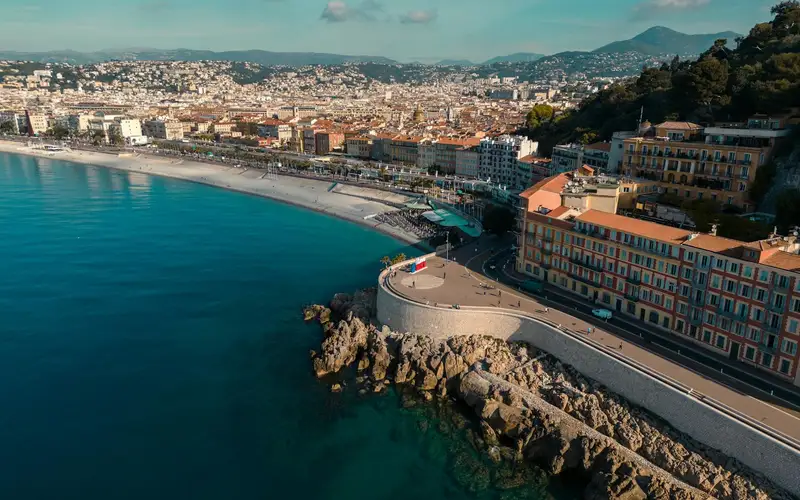
| Accessible French Riviera (Nice) |
8 / 7 |
4* on the Promenade |
EUR 1,499 |
about EUR 214 |
| Bordeaux and Dordogne road trip, car included |
7 / 6 |
4* boutique |
EUR 1,499 |
about EUR 250 |
| Accessible Paris |
7 / 6 |
4* accessible room |
EUR 1,699 |
about EUR 283 |
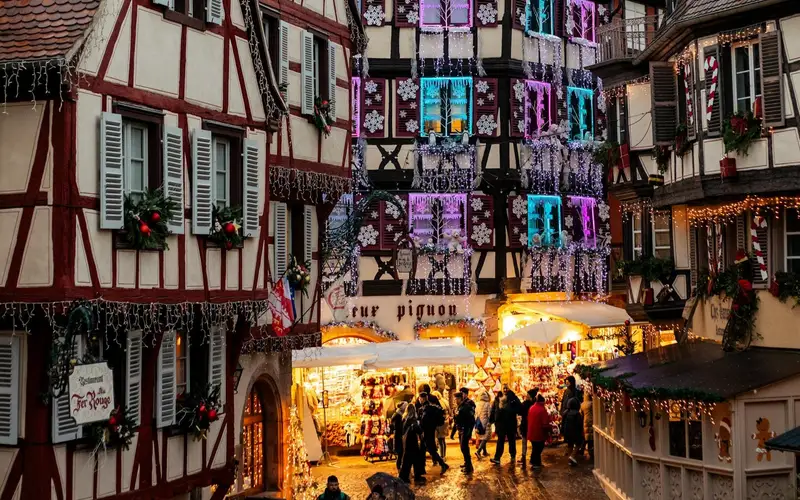
| Germany Christmas markets by train |
9 / 8 |
4* old-town hotels |
EUR 2,299 |
about EUR 287 |
| French Riviera: Saint-Tropez, Nice, Monaco |
7 / 6 |
4-5* |
EUR 1,899 |
about EUR 317 |
| Switzerland by train, 12 days |
12 / 11 |
3* near stations |
EUR 3,499 |
about EUR 318 |
| Switzerland in 7 days |
7 / 6 |
4* lakefront and village |
EUR 1,999 |
about EUR 333 |
| Belgium, Alsace and Switzerland by train |
10 / 9 |
3* near stations |
EUR 2,999 |
about EUR 333 |
| Legendary Swiss Trains |
7 / 6 |
4* |
EUR 2,199 |
about EUR 367 |
| Cognac getaway |
6 / 5 |
4* or 5* |
EUR 1,999 |
about EUR 400 |
| Switzerland to Italy by train, 14 days |
14 / 13 |
3* central |
EUR 5,499 |
about EUR 423 |
| Italy and Switzerland in 7 days |
7 / 6 |
4* with character |
EUR 2,999 |
about EUR 500 |
| Luxury France honeymoon, 14 days |
14 / 13 |
5* with suites |
EUR 9,999 |
about EUR 769 |
Two things stand out. First, the number of nights matters less than you would think: activities, private guides and trains make up a large share of the price, which is why a 3-star Swiss trip with the Glacier Express and Jungfraujoch costs more per night than a 4-star family week in France. Second, Switzerland is consistently the most expensive country we work in, even at 3 stars.
What the price includes, and what it does not
Every quote we send lists both sides. On our trips, the starting price covers:
- Hotels with daily breakfast, chosen for location: next to the station in Switzerland, inside the old town in Rothenburg or Colmar, on the lake in Stresa or Lucerne.
- Transport inside the trip: rail passes or train tickets with seat reservations, boats, mountain railways, the rental car on road trips, and the private transfers written in the program.
- The guided visits and experiences in the itinerary: for example the Gornergrat gastronomic route on the Switzerland 7-day trip, the Paul Bocuse dinner on our French Christmas trip, or the private Seine cruise on the honeymoon.
What is not included, on every trip we sell:
- International flights.
- Travel insurance.
- Most lunches and dinners (we list the ones included).
- Gratuities and personal expenses.
- City taxes, which hotels charge per person and per night at checkout in France, Switzerland, Germany and Italy.
- Upgrades you choose, such as Glacier Express Excellence Class (a CHF 590 reservation per person in 2026, about $740), ski passes or a suite.
When you compare a quote from us with a group tour or another agency, check these lines first. A price that looks lower often leaves out the trains, the reservations or the guides.
Cost per night by comfort level
From the trips above, here is how we budget a private trip per person per night, excluding flights. Prices assume two people sharing a room; a solo traveler pays noticeably more because the room is not shared.
| Comfort level |
What it looks like |
Per person per night |
| Comfortable |
Central 3* hotels, trains, a few key guided visits |
EUR 200 to 330 (about $230 to $380) |
| Premium |
4* hotels with character, more private guiding, a gourmet meal or two |
EUR 280 to 500 (about $325 to $580) |
| Luxury |
5* hotels and palaces, suites, private boats or helicopter, chef experiences |
EUR 700 to 900 and up (about $810 to $1,050) |
Most of our North-American travelers land in the premium band. The jump to luxury is steep because a 5-star room in Paris, Zermatt or on Lake Annecy costs several times a good 4-star, and because the experiences that go with it (a helicopter over Mont Blanc, a private electric boat on the Seine) are private by nature.
How the country changes the cost
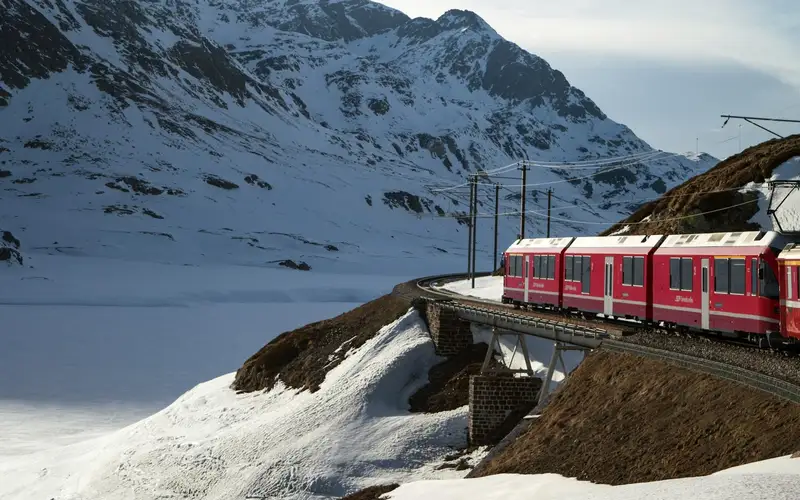
Switzerland is the most expensive. A 3-star hotel next to Zermatt station costs what a 4-star does in Alsace, and mountain railways are priced accordingly. The upside is that the trains are so good that you never need a car or a driver. Our Switzerland trip cost guide breaks this down by item.
France has the widest range. A family week in Normandy and the Loire starts at EUR 1,099, while a 5-star Paris-to-Provence honeymoon reaches EUR 9,999. Paris and the Riviera in July and August are the expensive corners; Burgundy, the Dordogne and Alsace outside December give the best value. See our France trip cost guide for details.
Germany is good value for the quality: our Christmas market trip puts you in 4-star old-town hotels in Munich, Nuremberg, Dresden and Berlin for about EUR 287 per night.
Italy is priced close to Switzerland in summer on the lakes. Lakefront hotels on Como and Maggiore are in high demand from May to September. Our guide to choosing a Lake Como village helps decide where that budget goes. For Rome, Florence, Venice and the Amalfi Coast, our guide to what a trip to Italy costs gives 2026 hotel prices and daily budgets.
Belgium sits in the middle, and combining it with Alsace and Switzerland by train keeps a three-country trip under EUR 3,000 per person.
How trip length and pace change the cost
The first and last days of any trip carry fixed costs: transfers, a first night when you are too tired to use the hotel, a last night near the airport. The longer the trip, the more those costs are spread out. That is why our 12-day Switzerland itinerary costs less per night than the 7-day version.
Pace matters too. Each change of hotel adds a transfer, a luggage move and often a half day lost. We build trips around three nights per base as a rule, and two only when the place is genuinely small. Fewer bases cost less and feel better.
| Length |
Typical price per person (our trips, flights excluded) |
| 6 to 8 days |
EUR 1,100 to 3,000 (about $1,275 to $3,480) |
| 9 to 10 days |
EUR 2,300 to 3,500 (about $2,670 to $4,060) |
| 12 to 14 days |
EUR 3,500 to 10,000 (about $4,060 to $11,600) |
How the season changes the cost
- July and August are the most expensive months on the Riviera, in Provence and on the Italian lakes.
- Christmas market weekends in Nuremberg, Strasbourg and Colmar fill early and price high; weekdays in the first half of December are cheaper and calmer.
- May, June and September give the best balance in most regions: full opening hours, long days, lower rates than peak summer.
- Ski season in Zermatt, Val d'Isère or St. Moritz pushes hotel prices to their highest of the year, especially over Christmas and February school holidays.
- November is the cheapest month in the Alps, but many mountain hotels and lifts close between seasons, and the Glacier Express does not run from October 11 to December 4, 2026.
- Flights. Fares from North America vary too much by city, season and class to give a useful number. In business class, the flight can cost as much as the trip itself.
- Meals. We include breakfast and selected lunches or dinners. For the rest, budget for one proper meal a day plus something light. A Michelin-starred dinner is a separate line, often several hundred euros per person with wine.
- Tips. In France, service is included in restaurant prices by law ("service compris"); leaving a few euros for good service is appreciated but not expected. Switzerland works the same way. For private guides and drivers, a tip is a personal choice; we tell you the local norm in your travel documents.
- City taxes. Paid at the hotel, per person per night, higher in 5-star hotels.
- Shopping and tastings. Wine estates in Burgundy and cognac houses charge for premium tastings, and bottles you buy are on you.
Where to spend and where to save
When we design a trip within a budget, we usually:
- Spend on location. A central hotel saves taxis and time every single day.
- Upgrade one or two stops, not all of them. On our 12-day Switzerland trip, most travelers move Zermatt or St. Moritz to a 4-star boutique hotel and keep 3-star addresses elsewhere.
- Skip what does not change the experience. Glacier Express 1st class has the same panoramic windows as Excellence Class. Excellence adds the meal and the service, not the view.
- Choose the right rail ticket. In Switzerland, a Swiss Travel Pass is not always cheaper than a Half Fare Card. Our Swiss Travel Pass calculator compares both for your route.
- Travel in the shoulder season. Late May, June and September cut hotel costs without closing anything important.
Three real budgets, flights excluded
- A couple, 7 days in Switzerland, 4-star hotels: from EUR 1,999 each, so about EUR 4,000 for two (about $4,640), plus lunches, dinners and city taxes.
- A couple, 14-day honeymoon in 5-star hotels from Paris to Provence: from EUR 9,999 each, so about EUR 20,000 for two (about $23,200). See the luxury France honeymoon.
- Two travelers, 12 days in Switzerland by train with 3-star hotels: from EUR 3,499 each, so about EUR 7,000 for two (about $8,100), before upgrading Zermatt or St. Moritz. See Switzerland by train in 12 days.
For a shorter, food-focused trip, our Cognac getaway starts at EUR 1,999 for six days in one hotel, with masterclasses and a Rémy Martin lunch included.
To get a first figure for your own dates, countries and hotel level, use our Europe trip cost calculator. It uses the same ranges as this guide. For what a fortnight looks like in practice, see our two-week Europe routes.
If you send us your dates, budget and must-sees, a travel designer will build a priced, day-by-day proposal that shows exactly what is included.