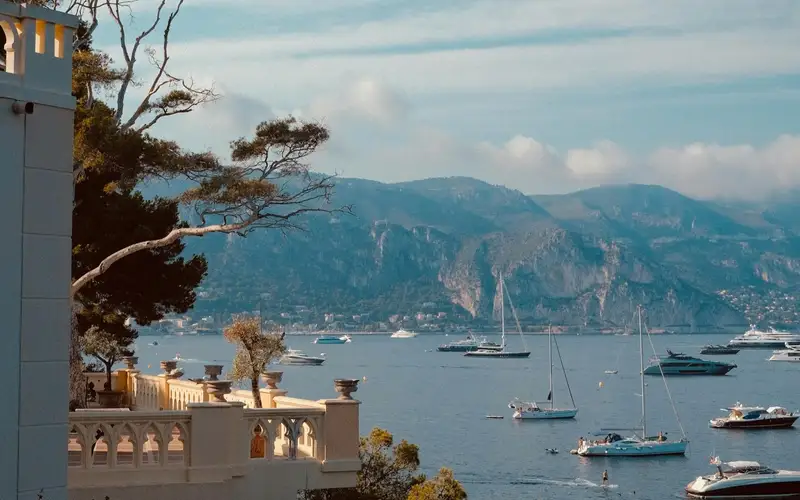
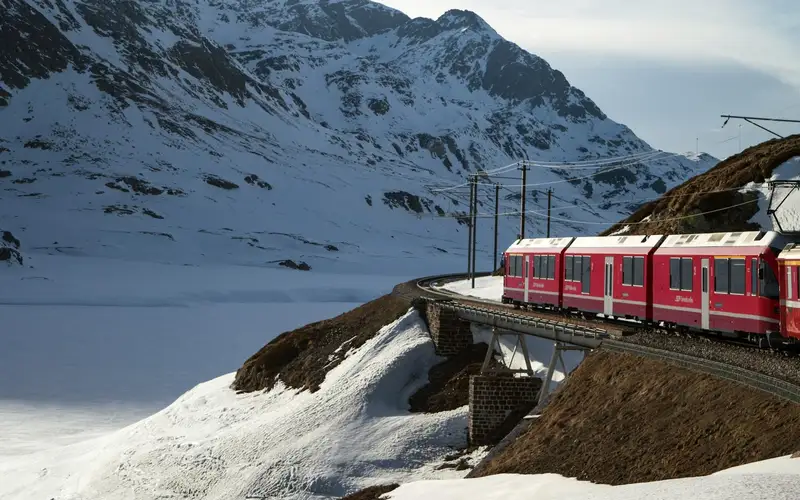
A Europe trip with kids works best with two or three bases instead of five, train legs under three hours, one big outing per day, and a destination that mixes a city with open space. For a first family trip, our two most successful formulas are France (Paris, Disneyland Paris and the Normandy coast) and the Swiss Alps by train, where children under 16 travel free with a parent.
This guide covers what works at each age, three family routes we build again and again, and the practical details that decide whether the trip feels easy: rooms, trains, car seats, meal times and jet lag.
What works at each age
| Ages |
What they enjoy most |
Pace we plan |
Best fits |
| Under 5 |
Parks, boats, animals, playgrounds, naps |
One outing a day, back at the hotel by mid-afternoon |
Swiss lakes, Annecy, one city at most |
| 6 to 9 |
Castles, trains, cable cars, Disneyland, beaches |
Morning outing, slow afternoon |
Paris plus Disneyland, Loire castles, Swiss Alps |
| 10 to 13 |
History with a story, hikes with a goal, adventure sports |
Fuller days, one rest day every three or four |
Normandy D-Day beaches, Chamonix, Lucerne |
| Teens |
Cities, food, freedom, anything they can film |
Late mornings, evenings out |
Paris, Lyon, Lake Como, Zermatt |
Two things hold at every age. First, the transfer days are the hard days, so we keep them short and put something fun at the end (a lake, a pool, a cable car). Second, children remember what they did, not what they saw from a bus window: a boat they steered, a glacier they touched, a crêpe they ordered in French.
Route 1: Paris, Disneyland and Normandy in 7 to 10 days
This is our most requested family trip and the base of our France Family Trip in 7 days, from EUR 1,099 (about $1,300) per person, which adds the Loire castles. With ten days, it becomes Route 2 of our 10-day France plans, with more time in Paris.
- Paris, 3 nights. One day for the Eiffel Tower and a Seine boat, one for the Louvre with a family guide who turns it into a treasure hunt (90 minutes is plenty under age 10), and one for the Jardin du Luxembourg's sailboats and the Jardin des Plantes.
- Disneyland Paris, 1 or 2 nights. The resort has its own station, Marne-la-Vallée Chessy, at the park gates. From central Paris the RER A suburban train takes about 40 minutes; TGV trains also stop there, which makes it an easy first or last night when you fly in or out of Charles de Gaulle. Two park days suit ages 4 to 12; one is enough for teens. Avoid weekends and French school holidays when you can.
- Normandy, 2 or 3 nights. Trains from Paris Saint-Lazare reach Caen in about 2 hours. We base families in Bayeux or on the coast and hire a private guide for the D-Day beaches, so the story is told at a child's level: Pointe du Hoc, Omaha Beach and the American Cemetery at Colleville-sur-Mer (free to visit). Ages 10 and up get the most from it. Our guide to D-Day tours from Paris explains the options.
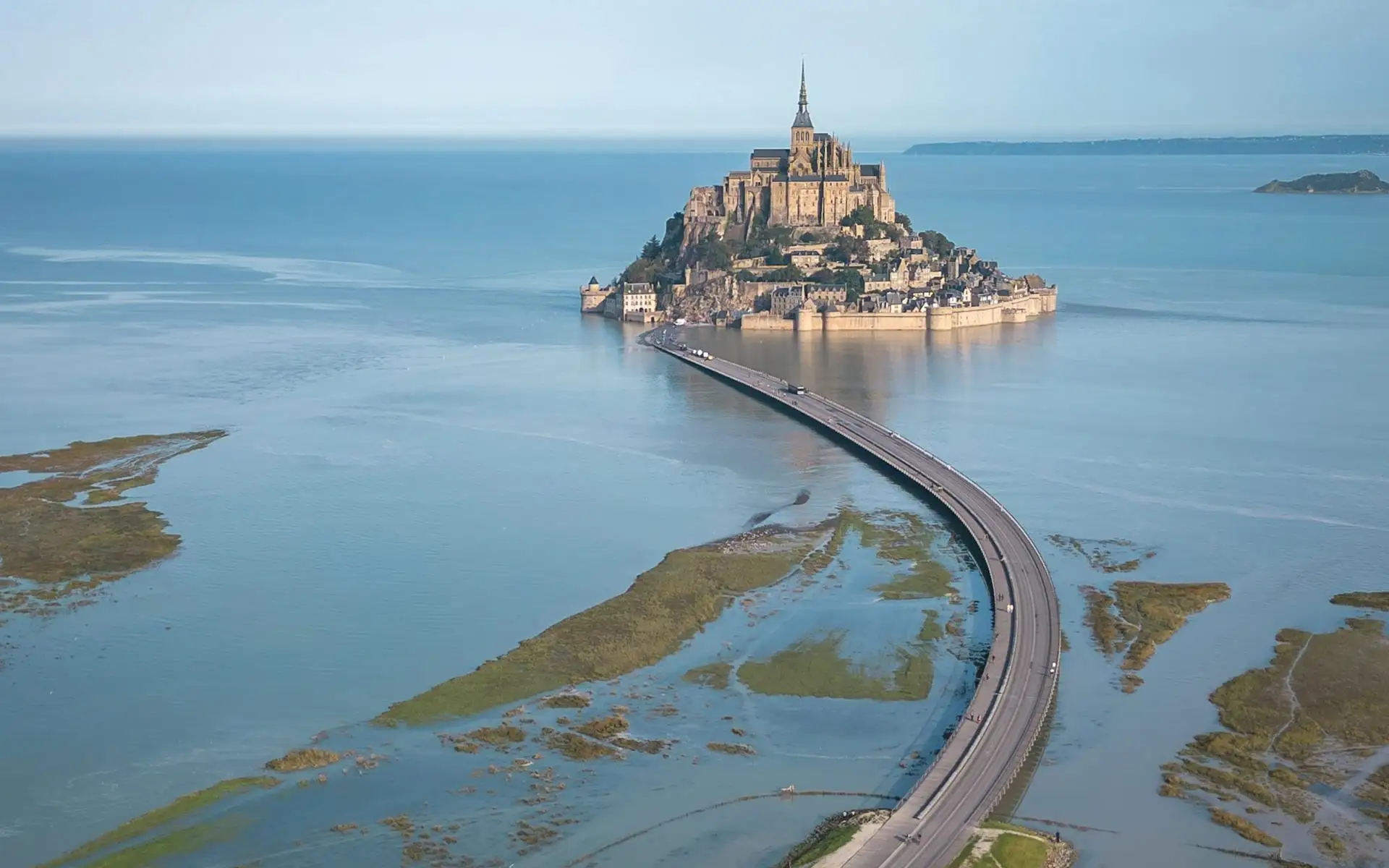
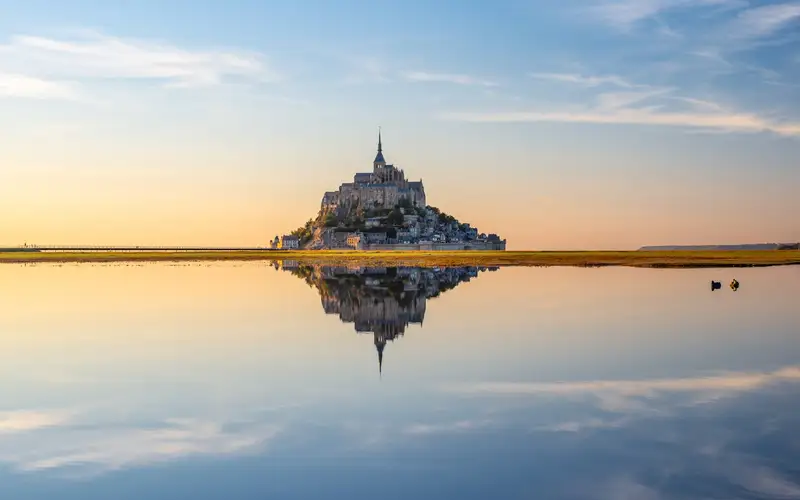
- Optional: Mont-Saint-Michel or the Loire. Mont-Saint-Michel is best timed with the tides (ask us for the big-tide dates); the Loire castles of Chambord and Chenonceau work for ages 6 and up, especially with a bike ride between them.
Route 2: the Swiss Alps by train in 7 to 10 days
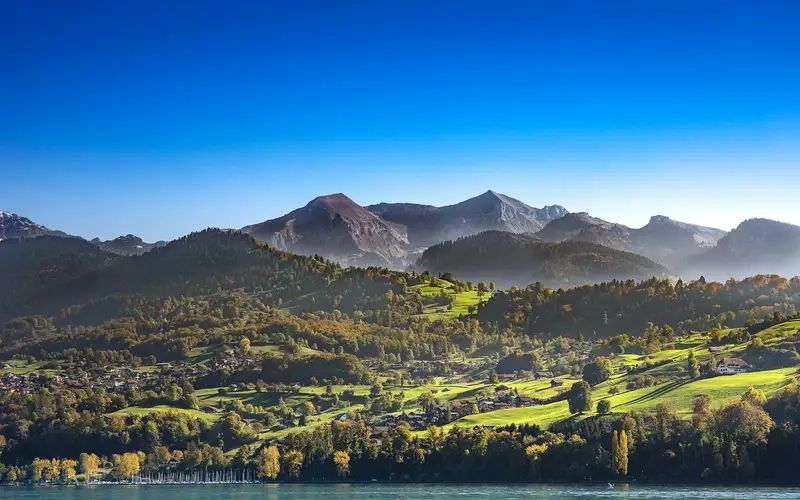
Switzerland is the easiest country in Europe for families: punctual trains with space for strollers, lakes clean enough to swim in, and cable cars that feel like a ride. Our Switzerland in 7 days trip, from EUR 1,999 (about $2,300) per person, follows this route by train.
- Lucerne, 3 nights. Zurich airport to Lucerne takes about an hour by train. Children love the Swiss Museum of Transport, the lake steamers and the cogwheel train up Mount Pilatus in summer.
- Interlaken or Grindelwald, 3 nights. Lucerne to Interlaken Ost takes about 1 hour 50 minutes on the scenic Luzern-Interlaken Express. From Grindelwald, the First gondola leads to easy family walks and the Cliff Walk. Day trip to Kandersteg for the Oeschinensee: the gondola runs in summer and autumn (bookable time slots through November 8, 2026), the walk from the top station to the lake takes about 30 minutes and is fine with a stroller, and Swiss Travel Pass holders get 50 percent off.
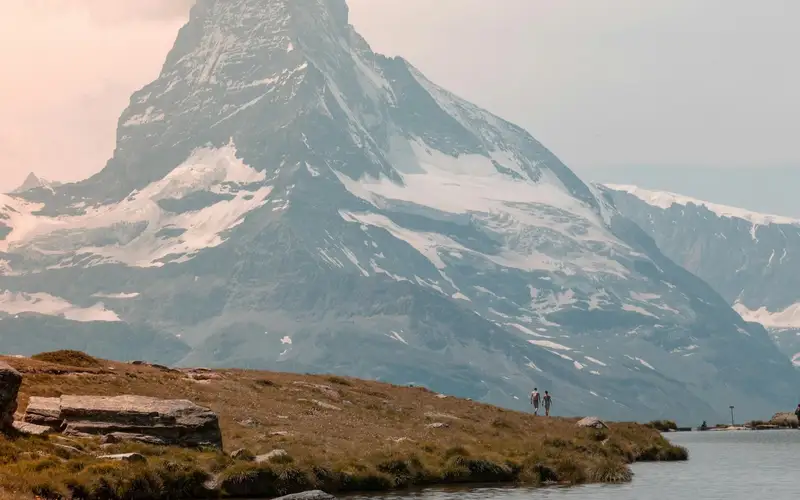
- Zermatt, 2 or 3 nights (optional). Car-free streets, the Gornergrat railway and the Matterhorn Glacier Paradise.
How children travel in Switzerland: children under 6 travel free, and with the free Swiss Family Card, children aged 6 to 15 travel free when accompanied by a parent holding a Swiss Travel Pass or a valid ticket. That often makes the Swiss Travel Pass very good value for families; our Swiss Travel Pass calculator checks your route. For the right length, see how many days in Switzerland.
Route 3: Chamonix and Annecy for active families
For children 8 and up who like to move, a week in the French Alps beats any city. Our Chamonix Adventure Week, from EUR 1,299 (about $1,500) per person, combines rafting, the Aiguille du Midi cable car and a few days on Lake Annecy. Adventure activities have minimum ages and heights, which we check for each child before booking. Annecy is the gentle half: a flat lakeside cycle path, swimming beaches in summer and boat rentals without a license. Our Chamonix planning guide covers the Mer de Glace and Lac Blanc.
Family hotels: rooms, apartments and what to ask
- Paris rooms are small. A family of four rarely fits in one standard room. We book two connecting rooms, a family suite, or a serviced apartment in the 7th or the Marais.
- Count every child. European hotels count babies and children in the room capacity, and fire rules are strict. Tell us every age; a crib or extra bed must be confirmed in writing.
- Breakfast included, always. It removes one decision from every morning.
- Half board in the mountains. In Swiss and French Alpine hotels, dinner at the hotel after a long day outdoors is a gift to tired parents.
- Pools matter more than stars. In summer, a pool or a lake beach at the hotel can save an afternoon.
Trains, cars and car seats
French trains. On SNCF trains, children under 4 can travel free on a parent's lap, and children 4 to 11 pay a reduced child fare. Book seats facing each other around a table on the TGV, and bring snacks: the café car queue is long at lunchtime.
Car seats. In France, children under 10 must ride in an approved child seat or booster, with rare exceptions. Taxis and ride-hailing cars rarely carry them, so we book private drivers who supply the right seat for each child's age and weight. Switzerland has similar rules (children under 12 and shorter than 150 cm need a child seat).
Luggage. One suitcase per person and one stroller, folded easily. Swiss trains have luggage racks at the end of each car; French TGV racks fill up quickly at busy stations, so we board early.
Meal times, jet lag and keeping everyone happy
- Dinner is late. Restaurants in France often open for dinner at 7:00 or 7:30 pm. We reserve the first seating and favor brasseries, crêperies and pizzerias that welcome children. Many restaurants offer a "menu enfant".
- Lunch is the main meal. A set lunch menu is often better value than dinner, and children are fresher at 12:30 than at 8:00 pm.
- Jet lag. From North America, plan an easy first day with a park and early dinner, then a full program from day two. Morning daylight helps reset everyone.
- Downtime is part of the plan. A free afternoon every second or third day keeps the whole family going.
Strollers and step-free access
The Paris metro has many stairs and few elevators, so with a stroller or a family member with reduced mobility we use buses, taxis and private drivers instead. Swiss trains and most stations are largely step-free, lake boats take strollers, and the Oeschinensee gondola is wheelchair accessible, with an electric shuttle from the top station to the lake in summer. Normandy's beaches and cemeteries have paved paths at the main sites.
Traveling with grandparents too? Read three generations, one Europe for how we balance pace and rooms across ages, or browse all our family trips. When you are ready, a travel designer can shape a trip around your children's ages and the things they already dream about.