Can you visit the D-Day beaches on a tour from Paris? Yes, but it is a twelve- to fourteen-hour day. Omaha Beach and the Normandy American Cemetery are about 280 km (175 miles) from Paris, roughly three hours each way by road, which leaves about five or six hours on the ground. Trains from Paris Saint-Lazare reach Caen in about two hours and Bayeux in about two hours and fifteen minutes, which makes a day trip more comfortable if a local guide meets you at the station. Our advice: sleep at least one night, ideally two, in Bayeux.
The beaches stretch over about 80 km (50 miles) of coast, from Utah in the west to Sword in the east. One day covers the American sector, Utah and Omaha, at best. Two days let you see it properly, and add the British and Canadian beaches if you wish.
Distances and travel times from Paris
| From Paris to |
Distance by road |
Drive |
Train |
| Caen (Mémorial de Caen) |
about 240 km (150 mi) |
about 2 h 30 |
about 1 h 55 from Saint-Lazare |
| Bayeux |
about 270 km (168 mi) |
about 2 h 45 to 3 h |
about 2 h 15 direct |
| Arromanches |
about 270 km |
about 3 h |
train to Bayeux, then 15 min by car |
| Omaha Beach and the American Cemetery |
about 280 km (175 mi) |
about 3 h |
train to Bayeux, then 20 min by car |
| Pointe du Hoc |
about 290 km |
about 3 h 15 |
train to Bayeux, then 30 min by car |
| Utah Beach and Sainte-Mère-Église |
about 320 km (200 mi) |
about 3 h 15 to 3 h 30 |
train to Carentan or Bayeux, then by car |
Road times assume light traffic leaving Paris on the A13. Train times are typical 2026 timetables; the regional trains between Paris and Normandy run several times a day, and some Bayeux services change at Caen.
The five beaches in one paragraph
On June 6, 1944, Allied troops landed on five beaches. Utah and Omaha were American, Gold and Sword British, and Juno Canadian, with paratroopers dropped inland the night before around Sainte-Mère-Église in the west and near Caen in the east. For most of our North-American travelers, the heart of the visit is the American sector between Sainte-Mère-Église and Omaha, with Arromanches and Juno added on a second day.
The main sites, and how long each takes
Normandy American Cemetery, Colleville-sur-Mer
On the bluff above Omaha Beach, the cemetery holds 9,389 American burials, with 1,557 names inscribed on the Walls of the Missing. It is managed by the American Battle Monuments Commission (ABMC).
- Hours: open daily from 9 am to 5 pm, except December 25 and January 1. Entry ends 30 minutes before closing.
- Admission: free, no booking.
- Ceremony: the flag is lowered every day one hour before closing, with Taps. We plan our travelers' visit to end with it.
- Families of the fallen: staff in the visitor center help locate a grave and can escort relatives to it. Tell us the name in advance and we will arrange it.
- Rules: no sitting or lying on the grass, no smoking or vaping, and only service animals are allowed. Personal photos are welcome; filming for social media or promotion is not.
- The beach: the path from the cemetery down to Omaha Beach has been closed to the public since 2016. Public access to the beach is nearby.
Allow one and a half to two hours with the visitor center.
Omaha Beach
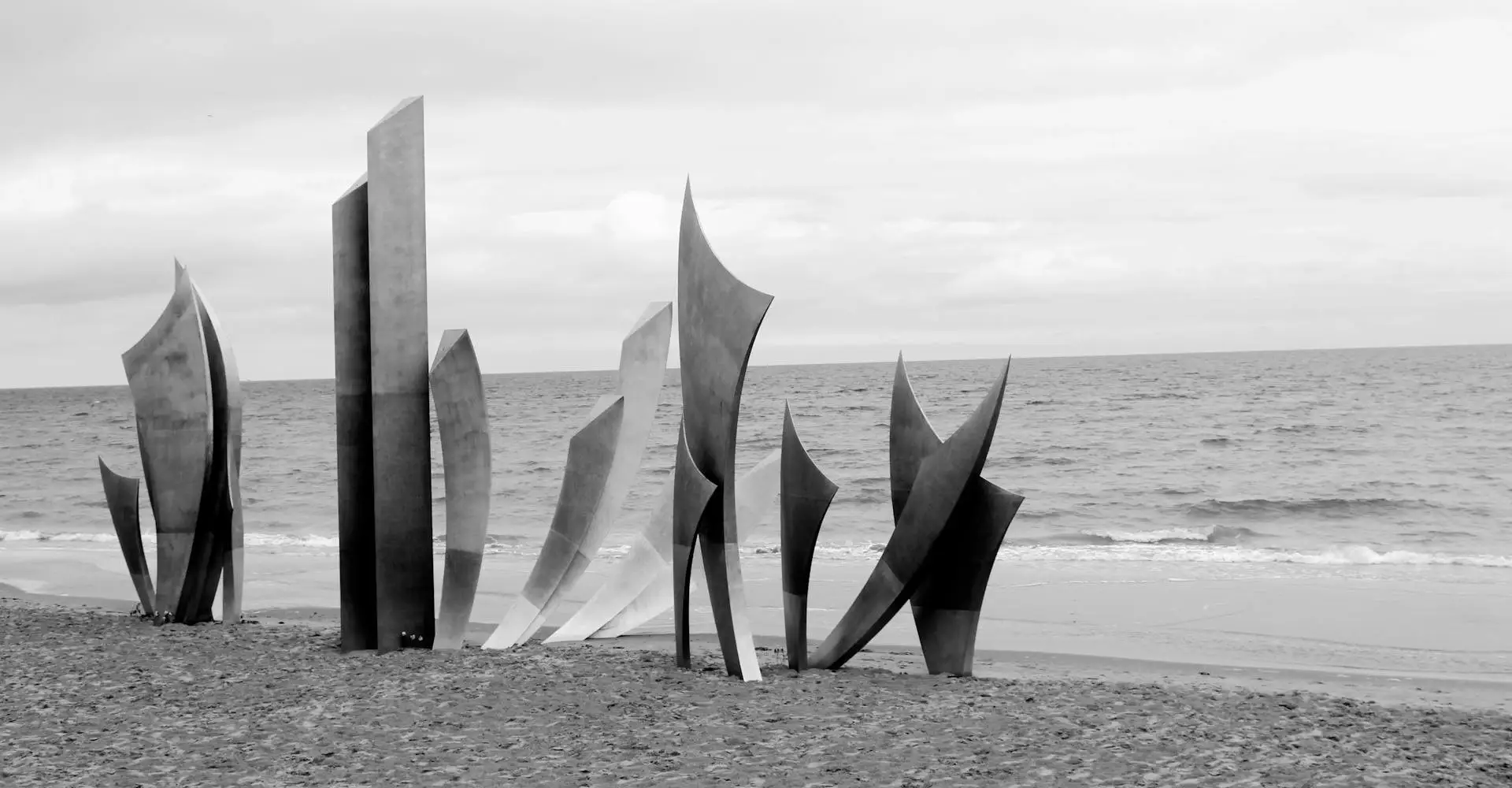
Below the cemetery, the long sand beach at Saint-Laurent-sur-Mer and Vierville is where the heaviest American losses of D-Day took place. The steel sculpture Les Braves stands on the sand, and the Overlord Museum near the cemetery holds a large collection of vehicles and equipment. Walk to the water's edge at low tide and look back at the bluffs: it explains the day better than any museum.
Pointe du Hoc
West of Omaha, the US Army Rangers climbed 30-meter cliffs to attack German gun positions. The ground is still cratered by the naval bombardment. The site is managed by the ABMC and open daily; its visitor center is free and open from 9 am to 5 pm from April 1 to September 30, and from 9 am to 12:30 pm and 1:30 pm to 5 pm from October 1 to March 31. Since August 2024, the platform on top of the observation bunker is closed to the public for safety and preservation. Stay behind the fences: the cliff edges are eroding. Allow one hour.
Utah Beach
The westernmost beach, where landings went far better than at Omaha. The Utah Beach Landing Museum at Sainte-Marie-du-Mont, built on the beach itself, tells the story from the planning to the landings and displays an original B-26 bomber. Allow one and a half hours.
Sainte-Mère-Église
One of the first towns liberated, by American paratroopers in the early hours of June 6. A paratrooper figure still hangs from the church steeple in memory of John Steele, whose parachute caught on it. Across the square, the Airborne Museum displays a Waco glider and a C-47 aircraft. In 2026 it is open from 9 am to 7 pm from May to August, 9:30 am to 6:30 pm in April and September, and 10 am to 6 pm from October to March, closed in December and January except over the Christmas holidays. Adult tickets are €11.50 (about $13). Allow one and a half hours.
Arromanches
In the British sector, the remains of the Mulberry artificial harbor, towed across the Channel and assembled after D-Day, still lie in the bay. The D-Day museum on the seafront explains how it worked, and on the cliff above, the Arromanches 360 circular cinema shows archive footage of the battle. Allow two hours.
Other sites we add on a second day
- Longues-sur-Mer: a German battery with its guns still in their casemates, between Arromanches and Omaha.
- Juno Beach Centre at Courseulles-sur-Mer, the Canadian museum, essential for travelers with Canadian family history.
- The British Normandy Memorial at Ver-sur-Mer, above Gold Beach.
- The Mémorial de Caen, the best overview museum of the whole battle and the Second World War, on the way to or from Paris.
- La Cambe German war cemetery, sober and moving, between Omaha and Utah.
A day trip from Paris: what is realistic
If you only have one day, this is the plan we build with a private driver-guide:
| Time |
Plan |
| 7:00 am |
Leave Paris |
| 10:00 am |
Sainte-Mère-Église and the Airborne Museum (or Utah Beach) |
| 12:00 pm |
Pointe du Hoc |
| 1:00 pm |
Lunch near Omaha |
| 2:00 pm |
Omaha Beach |
| 3:00 pm |
Normandy American Cemetery, staying for the flag ceremony |
| 5:00 pm |
Leave for Paris |
| 8:00 to 8:30 pm |
Back in Paris |
By train, take an early departure from Saint-Lazare to Bayeux, meet a licensed guide at the station, and return on an evening train. It is less tiring than six hours in a vehicle and lets you sleep on the way back.
What one day misses: Arromanches, the British and Canadian beaches, the museums at a calm pace, and the evening light on the cemetery. Coach tours from Paris follow a similar route with forty or more people, which makes the cemetery and Pointe du Hoc feel rushed.
Our recommendation: two nights in Bayeux
Bayeux is twenty minutes from Omaha, was spared by the battle, and has a fine medieval cathedral and good restaurants. Note that the museum housing Bayeux's famous 11th-century embroidery of the Norman Conquest is closed for renovation until autumn 2027.
- Day 1: train from Paris to Bayeux. Afternoon at Omaha Beach and the American Cemetery, staying for the flag ceremony.
- Day 2: Pointe du Hoc, Utah Beach and Sainte-Mère-Église with a guide; dinner in Bayeux.
- Day 3: Arromanches, Longues-sur-Mer and Juno, then the Mémorial de Caen and the train back to Paris. Or continue to Mont-Saint-Michel, about an hour and a half from Bayeux.
This is the rhythm of our France Family Trip in 7 Days, which combines Normandy with the Loire castles and Disneyland Paris, from €1,099 (about $1,250) per person, and it fits easily into a week built around Paris. Our guide to how many days in Paris explains why we do not count Normandy as a day trip, and how many days in France shows how to fit it into a longer route.
Visiting with children and veterans' families
The cemetery and the beaches are powerful places for teenagers; the Airborne Museum and Arromanches 360 hold the attention of younger children. Prepare them for the silence expected at the cemetery. For families tracing a relative, send us the name, unit and dates: we brief the guide in advance, and ABMC staff can help on site. See our family trips for more ideas.
When to go and when to avoid
- April to June and September: the best balance of weather, daylight and calm.
- Around June 6: anniversary ceremonies, parades and the D-Day Festival Normandy fill the area in the first half of June. It is moving, but hotels are full a year ahead, some roads close and official ceremonies may restrict access. Book very early.
- July and August: busy, especially at Omaha, Pointe du Hoc and Arromanches.
- Winter: quiet and atmospheric, with shorter hours and some museums closed for weeks. Daylight ends early, which makes a day trip from Paris even tighter.
More on seasons in our best time to visit France.
Access for reduced mobility
The main paths at the American Cemetery are paved and mostly level. Pointe du Hoc is uneven ground among bomb craters, with gravel paths. The beaches themselves are reached by ramps in some places and steps in others, and the town center of Sainte-Mère-Église is flat. We choose a vehicle with a ramp or lift and a guide who knows the step-free viewpoints.
Tell us who you are traveling with and what draws you to Normandy, and a travel designer will build your D-Day beaches visit from Paris with the right guide and the right pace.