How many days in Switzerland is enough? For a first trip, plan seven to ten days on the ground. Seven days covers three regions (Lucerne, the Jungfrau region and Zermatt) at a comfortable pace. Ten days adds Lake Geneva or a full day on the Glacier Express without rushing. Five days works for two regions, and fourteen lets you add Ticino or the Engadine and keep a free day in each base.
The country is small, but it is vertical. A summit day takes most of a day, the weather decides which day it happens, and every change of base costs about half a day. Those three facts, not the map, set the number of days.
How we count days in Switzerland
Most flights from North America land in Zurich or Geneva in the morning. Both airports have a train station inside the terminal, so you can be in Lucerne or Montreux by lunch. Count that arrival day as a half day: a lake walk and an early dinner, not a summit.
Then apply our three planning rules:
- Two nights minimum per base, three where there is a big summit, so you have a weather backup.
- One base change costs half a day, even on Swiss trains. Four bases in a week means two days lost to packing.
- Scenic trains are days, not transfers. The Glacier Express runs about eight hours from Zermatt to St. Moritz. It is a wonderful day, but it is the whole day.
Switzerland in 3 or 4 days: one region, done well
Three or four days is enough for one region, or two close ones. We would choose:
- Lucerne and the Jungfrau region: two nights in Lucerne (old town, a lake cruise, Rigi or Pilatus) and two in Grindelwald or Wengen with the Jungfraujoch or First.
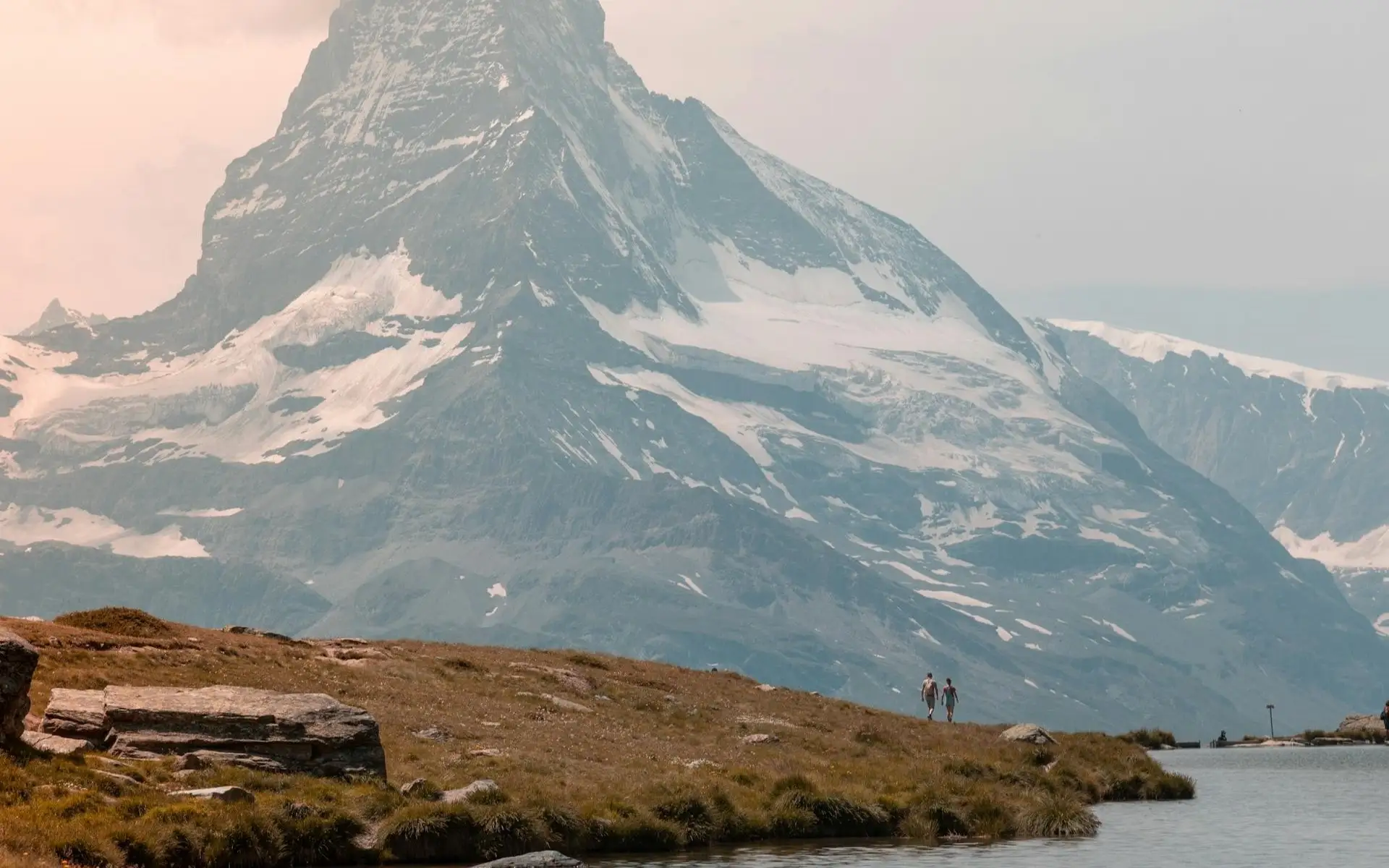
- Zermatt alone: if the Matterhorn is the reason for the trip, three nights in Zermatt gives you the Gornergrat, a lake walk under the mountain and a backup day.
What you skip: Lake Geneva, the panoramic trains and anything in the south. Three days is a sample, which is fine if Switzerland is one chapter of a longer Europe trip.
Switzerland in 5 days: two regions
| Day |
Plan |
| 1 |
Arrive Zurich, train to Lucerne (about 1 hour). Old town and Chapel Bridge. |
| 2 |
Lake cruise and Mount Rigi or Pilatus. |
| 3 |
Luzern-Interlaken Express over the Brünig Pass (about 2 hours) to Grindelwald or Wengen. |
| 4 |
Jungfraujoch or Schilthorn, depending on your base and the weather. |
| 5 |
Lauterbrunnen valley and waterfalls, then train to Zurich Airport (about 2 h 30). |
Five days is the shortest trip we would build for a first visit if you fly in only for Switzerland.
Switzerland in 7 days: the classic first trip
A week is the length most of our travelers choose, and it is enough for the three regions most people picture.
| Days |
Base |
Highlights |
| 1 to 2 |
Lucerne |
Old town, lake boats, Rigi or Pilatus |
| 3 to 4 |
Wengen or Grindelwald |
Jungfraujoch, Lauterbrunnen valley, a hike or First |
| 5 to 6 |
Zermatt |
Gornergrat, Matterhorn views, lakes walk |
| 7 |
Lake Geneva or airport |
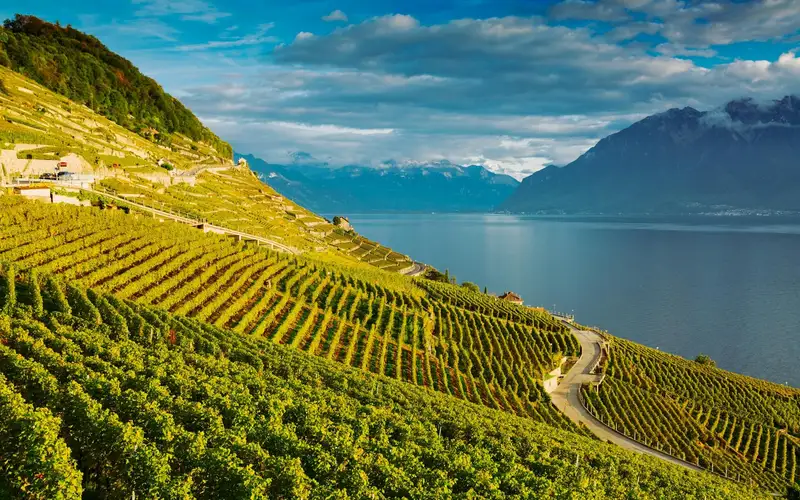
Lavaux vineyards or train to Geneva |
That is exactly the route of our Switzerland in 7 Days, from Lucerne to the Jungfrau, Zermatt and the Lavaux terraces, from €1,999 (about $2,300) per person. Browse other 7-day Switzerland itineraries if you want a different mix.
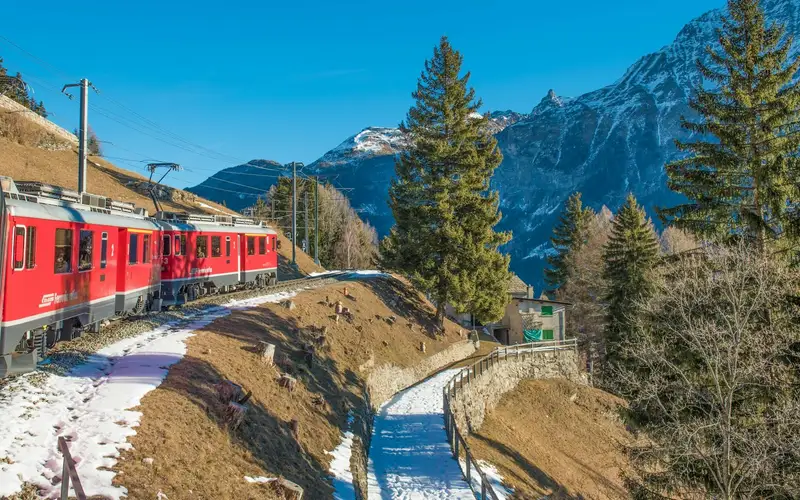
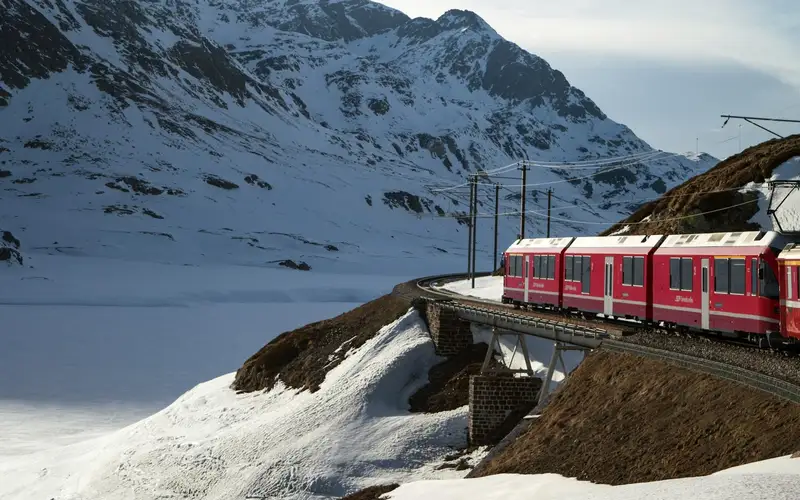
If trains matter more than hikes, swap one mountain base for the Glacier Express. Our Legendary Swiss Trains week rides the Glacier Express, the Bernina Express and the Gornergrat. Read our Glacier Express guide before you decide which direction to ride it.
Switzerland in 10 days: the length we recommend
Ten days is our favorite length because it gives every base three nights or adds a fourth region without speeding up.
- Days 1 to 3: Lucerne, with a day in Engelberg and Mount Titlis.
- Days 4 to 6: Jungfrau region, with a free day for weather.
- Days 7 to 8: Zermatt and the Gornergrat.
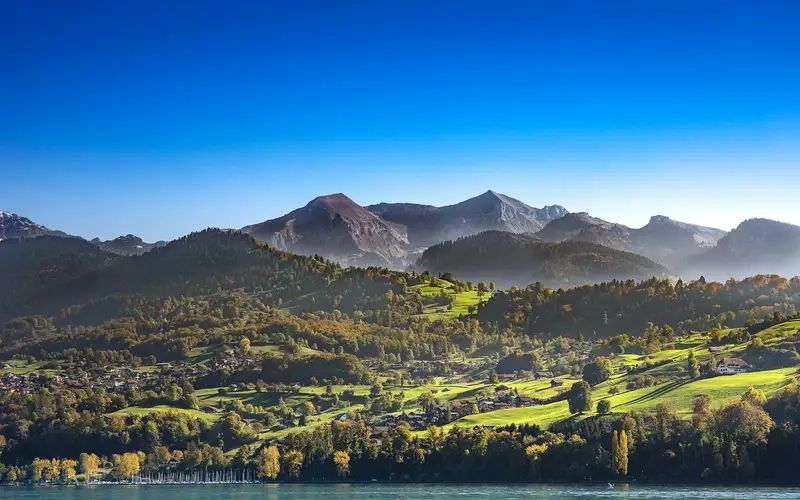
- Days 9 to 10: Montreux or Vevey, Chillon Castle and the Lavaux vineyards, then Geneva Airport (about an hour by train).
Alternatively, replace Lake Geneva with the Glacier Express to St. Moritz and the Bernina Express to Tirano, ending at Lake Como. We design both versions, and the choice usually comes down to whether you prefer vineyards or trains.
Switzerland in 14 days: the whole country at an easy pace
Two weeks lets you add the Italian-speaking south and the Engadine:
- Lucerne (3 nights), Jungfrau region (3), Zermatt (2), Glacier Express to St. Moritz (2), Bernina Express and Lugano (3), with a last night near the airport.
Our Switzerland by Train in 12 Days, from €3,499 (about $4,050) per person, is close to this shape and includes Lavaux, the Jungfraujoch and the Glacier Express.
How many days per region
| Region |
Minimum |
Ideal |
Why |
| Lucerne |
2 nights |
3 nights |
Lake, old town and one summit (Rigi, Pilatus or Titlis) |
| Jungfrau region |
2 nights |
3 nights |
One big summit plus a weather backup and the valleys |
| Zermatt |
2 nights |
3 nights |
Gornergrat and sunrise on the Matterhorn; long journey in |
| Lake Geneva |
2 nights |
2 to 3 nights |
Lavaux, Chillon, a town day in Lausanne or Geneva |
| Ticino (Lugano, Locarno) |
2 nights |
3 nights |
Lakes and villages, slower rhythm |
| Engadine (St. Moritz) |
1 night |
2 nights |
Between the Glacier and Bernina Express |
| Zurich |
0 nights |
1 night |
Arrival or departure only for most travelers |
For where exactly to sleep in each region, read where to stay in Switzerland.
Days and the Swiss Travel Pass
The Swiss Travel Pass comes in blocks of consecutive days (3, 4, 6, 8 or 15) and in a Flex version where you pick travel days within a month. Your number of days often decides which pass makes sense. Long, train-heavy trips favor the pass; short trips with one or two big mountain excursions often come out cheaper with the Half Fare Card. Our Swiss Travel Pass calculator compares both on your actual route.
Season changes the math
- June to September: everything runs, so seven days goes further.
- Winter: daylight is short and some mountain trains run reduced timetables. Add a day or plan one fewer region.
- Late April, May and November: many high lifts close for maintenance. Fewer summits, so a shorter trip can be enough.
When Switzerland is part of a bigger trip
Many of our travelers combine Switzerland with Paris (about three to four hours by TGV Lyria to Geneva, Lausanne, Basel or Zurich) or with the Italian lakes. In that case, four or five days in Switzerland is a good share: Lucerne and the Jungfrau region from the north, or Zermatt and the Bernina Express if you continue to Italy.
Pacing with reduced mobility
Travelers who use a wheelchair or walk with difficulty need roughly one extra day per week. Swiss trains are largely step-free, but connections, cable cars and summit stations take longer, and we never build back-to-back summit days. Lucerne and Interlaken are the easiest bases; Zermatt works with its electric taxis.
Tell us how many days you have and what you most want to see, and a travel designer will turn it into a day-by-day Switzerland plan with the right number of nights in each base.