The train from Rome to Florence takes about 1 hour 30 minutes on a direct high-speed train from Roma Termini to Firenze Santa Maria Novella, and Italo advertises about 1 hour 25 minutes on its fastest nonstop departures. Trenitalia's Frecciarossa and Italo share the line, with trains from about 5 a.m. to late evening, advance fares from €14.90 (about $17) and a flexible Base fare of €50 (about $58) in Standard in 2026. It is the easiest leg of any Italy trip: no flight, no car, and you step off a ten-minute walk from the Duomo.
Rome to Florence at a glance
| Option |
Time |
Fare range (2026) |
Best for |
| Frecciarossa (Trenitalia) |
about 1 h 30 min |
from about €19.90 (about $23) booked early; Base fare in Standard €50 |
Most travelers, the most departures, rail passes |
| Italo |
about 1 h 25 min to 1 h 40 min |
from €14.90 (about $17) booked early |
Good fares, a second choice when the Frecce are full |
| Regionale Veloce |
about 3 h 40 min to 4 h 40 min |
fixed, €25.75 (about $30) |
A stop in Orvieto or Arezzo, last-minute budgets |
| Private driver |
about 3 h for some 275 km |
quoted on request |
A stop in Orvieto or the Val d'Orcia, families with luggage |
There is no sensible flight between the two cities. For almost every traveler we book the high-speed train, and we only suggest the road when the day becomes a trip through southern Tuscany or Umbria.
Rome to Florence train time
- Fastest: about 1 hour 25 to 1 hour 30 minutes nonstop. Trenitalia describes the trip as "just over an hour and a half" and says it runs more than 100 Frecciarossa connections a day between the two cities (on a weekday in November 2026, that meant about 50 a day from Roma Termini in each direction); Italo lists 32 trains a day in each direction.
- First and last trains: Trenitalia's 2026 timetable has Frecciarossa departures from Rome between about 5:10 a.m. and 9:50 p.m., and from Florence between about 6 a.m. and 10:15 p.m.
- With stops: some trains also call at Roma Tiburtina, and a few run through to Bologna, Milan or Venice, so the Florence leg sits inside a longer journey. Times barely change.
- Regional trains: the Regionale Veloce follows the old line through Orvieto, Chiusi and Arezzo and takes about 3 h 40 min to 4 h 40 min.
- Engineering works: Rete Ferroviaria Italiana (RFI) closes parts of the high-speed line on some weekends and holidays; in April 2026 works added up to 150 minutes to some trains for four days. We check the "lavori programmati" notices before we book.
Frecciarossa vs Italo vs regional trains
Frecciarossa is Trenitalia's high-speed brand, the state operator's flagship. It has the most departures, takes Eurail and Interrail passes with a paid reservation, and offers four service levels. Fares are dynamic: the Base fare is flexible (changes allowed, refunds minus 20 percent in Trenitalia's 2026 conditions), Economy can be changed for a fee, and Super Economy is the cheapest and cannot be changed or refunded.
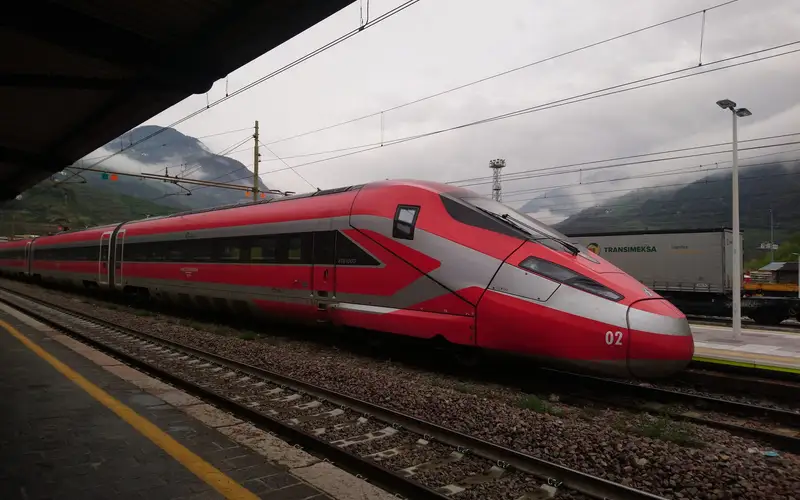
Italo is a private operator using the same high-speed tracks with its own red trains. It has fewer departures (32 a day each way here) but often cheaper fares, and it does not accept rail passes. Italo's route page starts fares at €14.90.
Regional trains (Regionale and Regionale Veloce) have a fixed fare that never rises as the train fills, no reservation, and no assigned seat. They make sense only if you want to stop in Orvieto or Arezzo, or if you decide to travel at the last minute and the high-speed fares have climbed.
Classes on board
| Frecciarossa (Trenitalia) |
Italo |
What you get |
| Executive |
Club Executive |
A small lounge-style car with a handful of leather seats and at-seat food |
| Business |
Prima Business |
Wider leather seats in 2 + 1 rows, a welcome drink and snack; Business has a quiet area |
| Premium |
|
Standard-width leather seats with a welcome drink, between Business and Standard |
| Standard |
Smart |
Comfortable 2 + 2 seats, the class most travelers take |
On a 90-minute trip, Standard or Smart is perfectly comfortable. We book Business or Prima when travelers carry large suitcases or want the quieter car, and Executive mainly for honeymooners or as a treat.
Which station in Rome and in Florence
- Roma Termini is the main station, served by every Frecciarossa and Italo train on this route. It is close to Monti and the Esquiline and a short taxi ride from most central hotels.
- Roma Tiburtina, in the northeast of the city, is a stop on many trains, both Frecciarossa and Italo. It suits hotels near Metro line B, but for the historic center Termini is simpler.
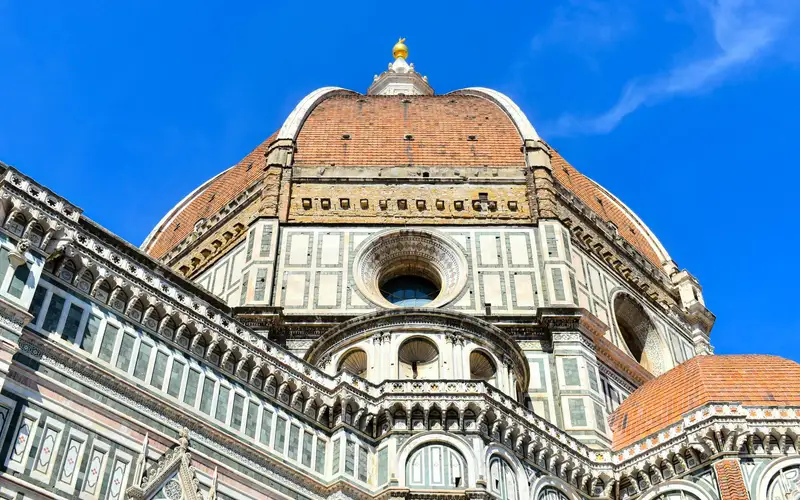
- Firenze Santa Maria Novella (SMN) is where almost every Rome train arrives. It is a terminus with platforms level with the hall, a ten-minute walk from the Duomo. Check that your ticket says "Firenze S.M. Novella": a few long-distance trains use Firenze Campo di Marte or Rifredi, which are farther from the center.
Tickets, fares and booking windows
- Where to book: trenitalia.com or the Trenitalia app for Frecciarossa and regional trains, italotreno.com or the Italo app for Italo. US cards work and tickets go to your phone.
- When to book: Trenitalia usually opens sales about four months ahead, less around the timetable changes in mid-June and mid-December. The cheapest Super Economy and Italo advance fares go first, and Trenitalia stops selling Super Economy six days before departure.
- Timetable change: the yearly European timetable change is on Sunday, December 13, 2026, so times after that date can shift by a few minutes.
- High-speed tickets are for one train and one seat. You do not validate them; the conductor scans the QR code on board.
- Validating regional tickets: a paper regional ticket from a machine or ticket office must be validated in the machines at the station before you board, and the journey must be completed within four hours. A digital regional ticket bought on the app is tied to the train you chose and validates itself at departure. Without a valid ticket you pay the fare plus a fine.
- Rail passes: Eurail and Interrail work on Frecciarossa with a paid seat reservation, not on Italo. On a single Rome to Florence trip, a pass rarely beats an advance fare.
Luggage and where to sit
Neither operator charges for luggage on this route. On Frecciarossa, bags go on the racks above the seats, in the space between seat backs, or in the racks at the end of the car. Italo allows suitcases up to 75 x 53 x 30 cm in Smart, and Prima Business and Club Executive have room for larger cases. In practice, one large suitcase and a carry-on per person is comfortable; more than that and we book a driver to meet you at SMN.
Much of the high-speed line runs through tunnels and cuttings, so seat side matters little. Pick a seat near the end of the car so you can see your luggage rack, and Trenitalia lets you choose your seat on the map when you book; Italo charges for seat choice (from €2.50 in 2026) unless you hold its Flex fare.
Train strikes (sciopero) and how we handle them
Rail strikes in Italy are announced in advance and published on the Ministry of Transport's strike calendar. During a strike, Trenitalia runs a list of guaranteed long-distance trains, and regional services are protected on weekdays from 6 to 9 a.m. and 6 to 9 p.m.; Italo publishes its own list of guaranteed trains for each strike. When a strike falls on one of your travel days, we move you to a guaranteed train or change the day, and if that is not possible we keep a driver ready. Cancelled trains are refunded.
Stops worth making on the way
- Orvieto: about 1 h 15 min from Rome on the regional line, with a funicular from the station up to the cathedral town. We often break the journey here for lunch, then continue to Florence by regional train or by car.
- Val d'Orcia and Montepulciano: not on a railway, so this is the reason to go by road. With a driver, Pienza, Montepulciano and a winery lunch fit into the day between Rome and Florence.
- Arezzo: a stop on the Regionale Veloce, with the Piero della Francesca frescoes and a large antiques fair on the first weekend of the month.
Accessibility: Sala Blu assistance
Roma Termini, Roma Tiburtina and Firenze SMN all have a Sala Blu office run by RFI, which provides free help for travelers with reduced mobility, including a lift to board the train. Book through the SalaBlu+ app or the SalaBlu Online portal at least three working hours ahead, by email at least six hours ahead, or by phone on 800 90 60 60 from an Italian landline or +39 02 32 32 32 from abroad (daily 6:45 a.m. to 9:30 p.m.); RFI asks travelers coming from abroad to send requests preferably 24 hours ahead. Frecciarossa and Italo trains have wheelchair spaces with an adapted toilet nearby, booked with the ticket; for Italo, call Pronto Italo on +39 06 07 08 at least 36 hours before departure, and RFI staff then meet you at the station. We request assistance 48 hours ahead and add an adapted vehicle at arrival, as in our accessible Rome and Florence trip and our wheelchair-accessible Italy guide.
Private drivers and door-to-door transfers
This is where we can do more than a booking site. We arrange a driver from your Rome hotel to Termini, seats in Business when you travel with bags, and someone waiting at the head of the platform at SMN. Florence's historic center is a limited-traffic zone, so cars stop near the hotel rather than at it, which our drivers know how to manage. If you prefer the road, a private driver takes you from Rome to Florence through Orvieto or the Val d'Orcia in a full day; door-to-door transfers are quoted on request.
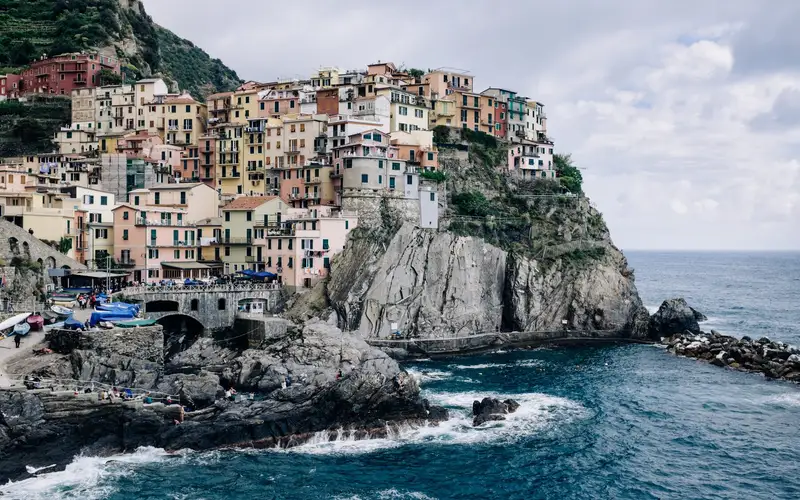
Rome to Florence is the first train of our 10-day Rome, Florence and Venice by train, while our 14-day grand tour of Italy links Florence and Rome by way of the Cinque Terre. Our Rome travel guide and Florence travel guide help with hotels and neighborhoods, and our Italy by train guide covers every leg after this one, including Florence to Venice by train. For full routes, see our 10-day Italy itineraries.
If you would like a designer to book the trains, the drivers and a lunch stop in Tuscany along the way, tell us about your trip.