The best first trip to Europe covers two or three bases, not seven, starts with a light arrival day, and uses trains between cities rather than a car. Check your passport and the new border rules before you book anything, reserve the few sights that sell out, and pack for stairs and luggage racks rather than for a cruise ship.
We plan first trips for North-American travelers every week from our offices near Lyon and in Nice. These are the mistakes we see most often, how we avoid them when we design an itinerary, and where we would send you on a first visit.
Before you book: passports and border rules for 2026-2027
- Passport validity. For the Schengen area (which includes France, Switzerland, Germany, Italy and Belgium), your passport must be valid for at least three months after the day you plan to leave, and must have been issued within the last ten years. A passport that expires in the spring can block a winter trip.
- The 90/180 rule. US and Canadian citizens can stay up to 90 days in any 180-day period across the whole Schengen area, not per country.
- The Entry/Exit System (EES). The EU's new digital border system now registers non-EU travelers with fingerprints and a facial image on their first entry instead of stamping passports. Allow extra time at passport control on your first arrival.
- ETIAS is not running yet. The EU's travel authorization for visa-free visitors will cost EUR 20 when it starts, but the European Commission says it is not in operation and no applications are being collected. Ignore websites that offer to "process" one today. We will tell you when it becomes mandatory.
Mistake 1: Trying to see seven cities in ten days
This is the classic. Every move costs about half a day: checkout, transfer, train, check-in, finding your bearings. Seven bases in ten days means three and a half days spent in transit.
What we do instead: three nights per base as a rule, two only for small places, and day trips from a base rather than one-night stops. Ten days fit three bases comfortably, for example Paris, the Alps and Switzerland. Our how many days in Europe tool gives a realistic split for your list. In Italy, the same rule fits Venice, Florence and Rome into ten days, the shape of our Rome, Florence and Venice by train trip.
Mistake 2: Flying in and out of the same city
A round-trip ticket to Paris looks simple, but if your trip ends in Zurich or Nice you lose a day going back. An open-jaw ticket (into one city, out of another) usually costs about the same and saves that day. Our Switzerland in 7 days trip is built this way: you land in Zurich and fly home from Geneva.
Mistake 3: Planning a big day on arrival
Overnight flights from North America land in the morning, and hotel rooms are rarely ready before mid-afternoon. A guided Louvre tour at 2 pm on day one is money wasted. We plan a private transfer, a walk and an early dinner, and we ask hotels for early check-in where it is possible.
Mistake 4: Renting a car where trains are better
In Switzerland, a car is a handicap: trains, boats and mountain railways connect at the same stations, often to the minute, and car-free villages like Zermatt and Wengen do not allow you to drive in. Between Paris, Lyon, Strasbourg, Brussels and Geneva, high-speed trains are faster than driving from city center to city center.
A car makes sense for the countryside: the Dordogne, Provence, the Alsace wine villages or Bavaria's Romantic Road. When we mix both, you pick up the car at the last station and drop it before the next city.
Mistake 5: Packing for a cruise, then taking trains
European trains have luggage racks, not porters. On French TGV INOUI and Intercités trains, SNCF limits each traveler to two large bags (up to 70 x 90 x 50 cm) plus one small bag (up to 40 x 30 x 15 cm), all labeled, and can fine you EUR 50 for exceeding it. Steps up into older trains and stairs in stations are common.
Pack one medium suitcase and one daypack per person. On longer trips we arrange luggage forwarding in Switzerland or a private transfer for the stage with the most changes, so you travel light between hotels.
Mistake 6: Forgetting closing days
- The Louvre closes on Tuesdays. The Musée d'Orsay and Versailles close on Mondays.
- In Germany, most shops close on Sundays, outside train stations and airports.
- In France in August, many independent restaurants and shops in Paris close for two to four weeks.
- In the Swiss Alps, many lifts and some hotels close in November and in late April to May, between seasons.
We build each day around these, so the Louvre never falls on a Tuesday.
Mistake 7: Showing up without timed tickets
The sights first-timers want most now run on timed reservations: the Louvre, the Eiffel Tower summit, Leonardo's Last Supper in Milan and Neuschwanstein in Bavaria. Last Supper slots disappear months ahead. Book these as soon as your dates are fixed, then build the rest of the day around them.
Mistake 8: Tipping like at home
In France and Switzerland, service is included in restaurant prices. Rounding up or leaving a few euros or francs for a good meal is appreciated; 18 to 20 percent is not expected. Hotel porters and private guides are the places where a tip is customary.
Mistake 9: Choosing July and August by default
Summer is peak season on the Riviera, in Provence and on the Italian lakes: higher prices, full beaches, and heat in the cities. Late May, June and September give long days, open sights and lower rates. Paris in August is quieter but partly closed. Check our month-by-month advice with the best time to visit tool.
Mistake 10: No buffer for mountain weather
Jungfraujoch, Gornergrat and the Aiguille du Midi are only worth the ticket on a clear day. We keep one flexible day in every mountain base, so you can swap the summit and the lake day according to the forecast.
Mistake 11: Card and currency surprises
Switzerland uses the Swiss franc, not the euro, although many places accept euros at a poor rate. Tap-to-pay works almost everywhere, but some ticket machines and parking meters want a chip card with a PIN. Tell your bank you are traveling, carry two cards from different networks, and keep a little cash for Christmas markets, village bakeries and public toilets.
Mistake 12: Planning around photos instead of people
Many first trips are built from social-media lists. The result is crowds at the same five viewpoints at the same hour. Ask for the local version: the Croix-Rousse market in Lyon instead of a food hall, a Lavaux vineyard walk at sunset, a winemaker's table in Burgundy. That is where the trip becomes yours.
Where to go on a first trip to Europe
If you are choosing your first destinations, these are the places we recommend most, with the time they really need.
| Destination |
Best for |
Nights |
Pairs well with |
| Paris |
Museums, food, first-time "wow" |
4 to 5 |
Normandy, Champagne, Loire |
| Lyon and Burgundy |
Food, wine, a real French city |
3 to 4 |
Annecy, Geneva |
| French Riviera (Nice) |
Sea, villages, Monaco |
4 to 5 |
Provence |
| Swiss Alps (Lucerne, Interlaken or Zermatt) |
Mountains, trains, lakes |
5 to 7 |
Geneva, Lake Como |
| Alsace (Strasbourg, Colmar) |
Villages, wine, Christmas markets |
3 |
Basel, Black Forest |
| Lake Como |
Lakeside villas, slow days |
3 to 4 |
Lugano, St. Moritz |
| Munich and Bavaria |
Beer halls, castles, Alps |
3 to 4 |
Salzburg, the Romantic Road |
| Brussels and Bruges |
Art, chocolate, beer |
3 |
Paris, Amsterdam |
For Paris, read how many days in Paris before deciding: four full days is the minimum we recommend for a first visit.
Three first-trip routes we often design
- France and Switzerland, 10 days: Paris, then Lyon or Annecy, then Geneva and Zermatt or Interlaken. Our 10-day France and Switzerland itinerary gives the day-by-day plan.
- Switzerland only, 7 days: Lucerne, Grindelwald, Zermatt and Montreux by train, with Mount Pilatus, a Jungfrau day and the Lavaux vineyards. Our first-week Switzerland routes compare three versions.
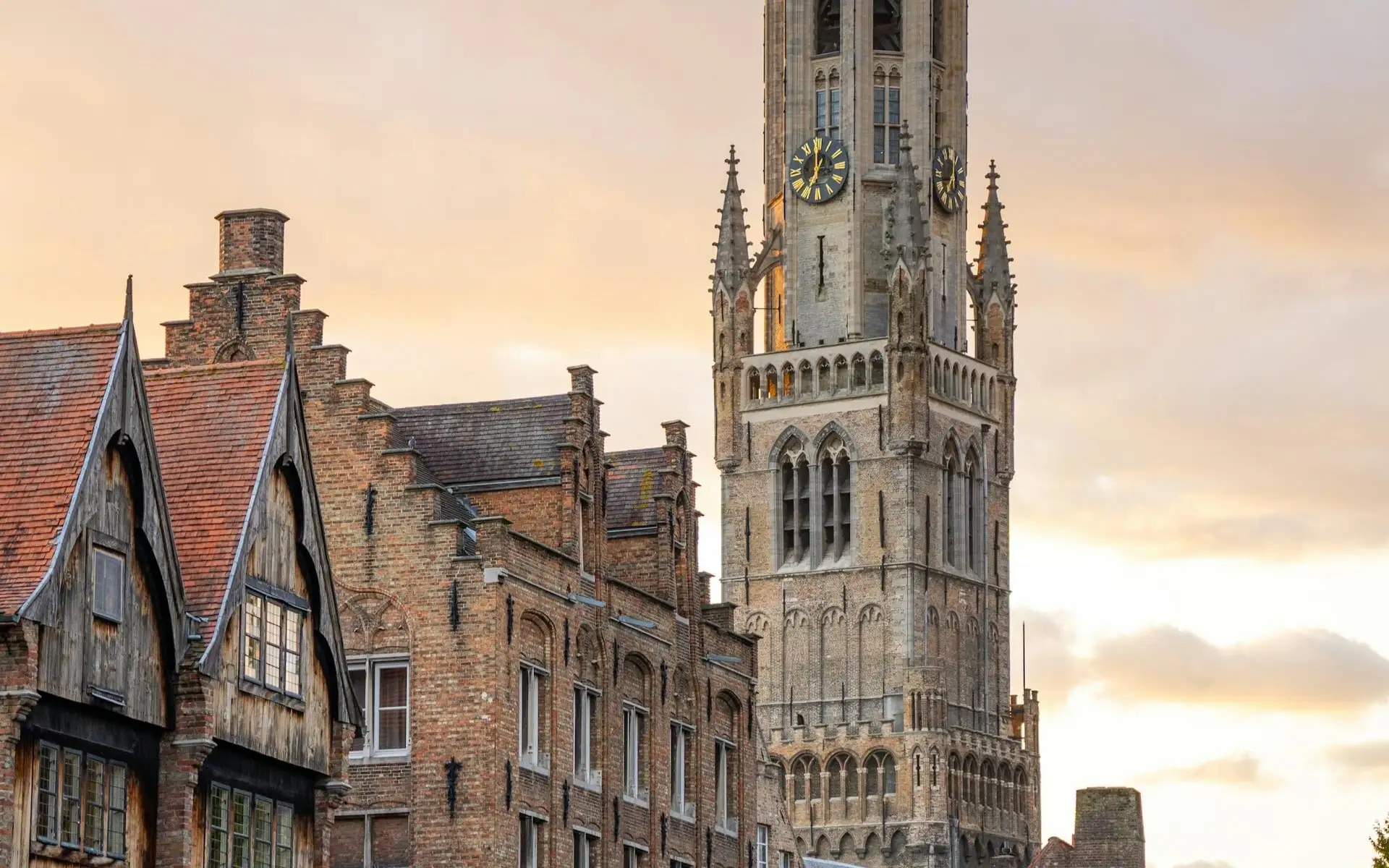
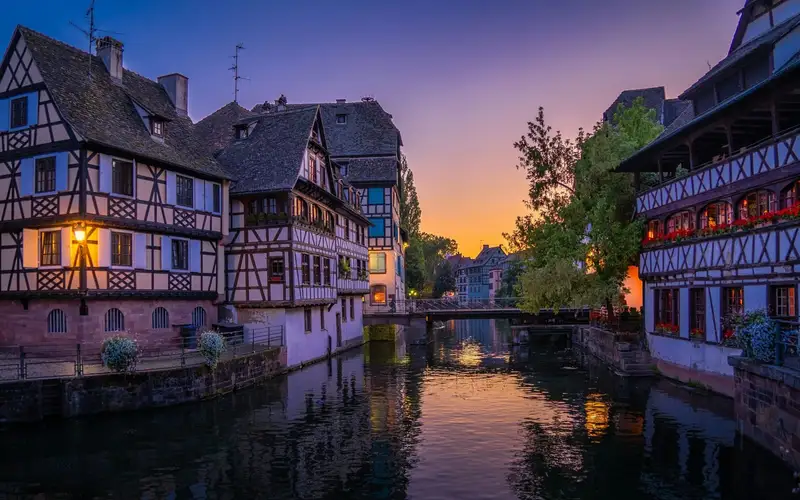
- Three countries by train, 10 days: Brussels, Bruges and Ghent, then Strasbourg and the Alsace wine route, then Basel, Zermatt and Bern. See Belgium, Alsace and Switzerland by train. It is Route 1 of our 10-day Europe trips.
If you or a travel companion has limited mobility
Old towns in Europe mean cobblestones, steps and few elevators. Most Paris metro stations have stairs (line 14 is the fully accessible exception), while Swiss trains are largely low-floor with step-free platforms. Tell us at the start, and we will choose hotels with verified step-free access and plan transfers by adapted vehicle rather than public transport where needed.
Every first trip is different, so tell us who is traveling, when, and what you most want to see, and a travel designer will draw the custom version that fits you.