Beyond Paris, the eight regions of France most worth your time are Lyon and Beaujolais, Burgundy, Alsace, the Loire Valley, Normandy, Provence, the French Riviera, and Bordeaux with the Dordogne. All but the Riviera are within about three hours of Paris by TGV, so on a 10-day trip you can pair Paris with one or two of them and still have three nights in each.
We are a French travel company with designers in Villefranche-sur-Saône, just north of Lyon, and in Nice. Below is our honest guide to each region: who it suits, how long to stay, how to get there from Paris, and what we would do there ourselves.
The eight regions at a glance
| Region |
Best for |
Nights |
From Paris by train |
Best months |
| Lyon and Beaujolais |
Food, city life, wine villages |
3 |
Lyon, about 1 h 56 |
April to June, September to December |
| Burgundy |
Wine, Romanesque abbeys, slow countryside |
2 to 3 |
Dijon, about 1 h 35 |
May to October |
| Alsace |
Half-timbered villages, Riesling, Christmas markets |
3 |
Strasbourg, about 1 h 46; Colmar, about 2 h 20 |
May to October, late November to December |
| Loire Valley |
Castles, gardens, cycling |
2 to 3 |
Tours, about 1 h 15 |
April to October |
| Normandy |
D-Day beaches, Mont-Saint-Michel, coast |
3 |
Caen, about 2 h |
April to October |
| Provence |
Villages, markets, lavender, Roman sites |
3 to 4 |
Avignon, about 2 h 40 |
May to October |
| French Riviera |
Sea, art, perched villages |
3 to 4 |
Nice, about 5 h 40 |
May to October |
| Bordeaux and Dordogne |
Wine, prehistoric caves, castles, food |
4 to 5 |
Bordeaux, about 2 h 02 |
May to October |
Train times are the fastest direct TGV times in the 2026 timetables. For a whole-trip plan, our guide on how many days in France shows how these fit around Paris.
1. Lyon and Beaujolais: for people who travel to eat
Who it suits: food lovers, travelers who like a real working city, return visitors to France.
Nights: 3, one of them for a day in Beaujolais.
Lyon has a strong claim to be the food capital of France: the bouchons and their quenelles, Les Halles Paul Bocuse market, the Renaissance lanes of Vieux Lyon with their hidden passageways (the traboules), and two rivers to walk along at night. Thirty minutes north, the Beaujolais hills offer golden-stone villages and family wine estates. This is our home region, and our full case for it is in is Lyon worth visiting. Lyon is also the gateway to the French Alps: Annecy is about two hours away by direct train.
2. Burgundy: for wine and quiet
Who it suits: wine lovers, couples, travelers who want slow days.
Nights: 2 to 3, in Beaune or a village on the Côte d'Or.
Burgundy rewards slowness: the Route des Grands Crus between Dijon and Santenay, tastings at small domaines, the Hôtel-Dieu in Beaune, and the abbeys of Fontenay and Vézelay further west. Dijon itself is worth a half day for its old town and covered market. From Lyon, a direct regional train reaches Beaune in about 1 hour 40 minutes, so Burgundy combines naturally with Lyon.
3. Alsace: for storybook villages and Christmas
Who it suits: first-time visitors, families, Christmas market lovers, white wine drinkers.
Nights: 3, in Strasbourg or Colmar.
Strasbourg has the cathedral and the canals of Petite France; Colmar has the Unterlinden Museum and its Isenheim Altarpiece. Between them, the Alsace Wine Route links Riquewihr, Kaysersberg, Eguisheim and Ribeauvillé. Alsace is also an easy bridge to Switzerland and Germany: Colmar to Basel takes about 45 minutes. In December, our French Christmas in 7 days combines Alsace markets with Lyon and the Alps.
4. The Loire Valley: for castles
Who it suits: families, history lovers, cyclists.
Nights: 2 to 3, in Amboise or Tours.
The castles (châteaux) are the reason to come: Chambord for scale, Chenonceau for its arches over the river Cher, Villandry for its gardens, and Amboise and the Clos Lucé, Leonardo da Vinci's last home. The flat Loire à Vélo cycle route links many of them. We avoid the classic mistake of four castles in a day: two, with a long lunch and a tasting of Vouvray in between, is the right rhythm.
5. Normandy: for history and the coast
Who it suits: Americans with family history in WWII, history lovers, walkers.
Nights: 3, in Bayeux or Honfleur.
The D-Day beaches, Pointe du Hoc and the American Cemetery at Colleville-sur-Mer are the emotional center of most Normandy trips, and a private guide makes all the difference. Add Mont-Saint-Michel (timed with the tides), the harbor of Honfleur, the cliffs of Étretat and Monet's garden at Giverny on the way from Paris. Trains from Paris Saint-Lazare reach Caen in about two hours; we then use a driver, as the beach sites are spread out.
6. Provence: for villages, markets and light
Who it suits: couples, painters and photographers, travelers who want to slow right down.
Nights: 3 to 4, in the Luberon, the Alpilles or Avignon.
Avignon's Palace of the Popes, the Roman arena in Arles and the Pont du Gard; the hilltop villages of Gordes, Roussillon and Ménerbes; weekly markets in every town; lavender from late June to mid-July. You need a car or a driver for the villages. Torn between the coast and the inland villages? Read Provence vs the French Riviera.
7. The French Riviera: for the sea and the art
Who it suits: couples, sun lovers, art lovers, travelers who prefer trains to driving.
Nights: 3 to 4, in Nice, Antibes or Villefranche-sur-Mer.
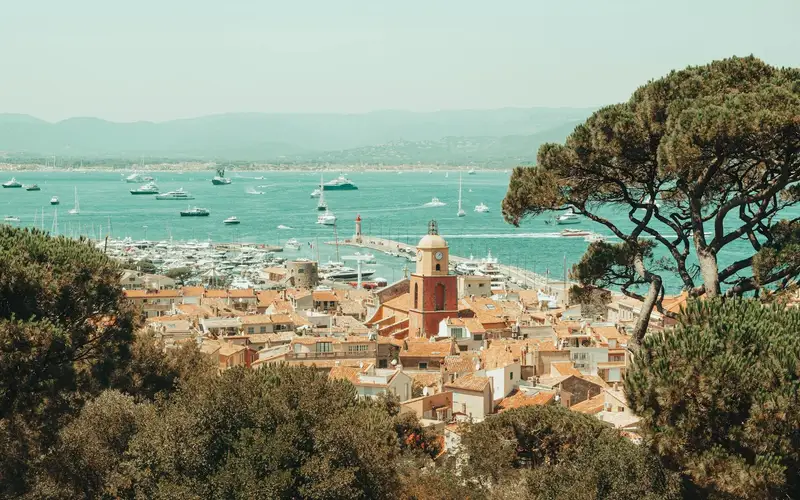
Nice's old town and Promenade des Anglais, the Matisse and Chagall museums, the perched village of Èze, Monaco, and the Picasso Museum in Antibes, all linked by a coastal train. Our designers in Nice build our French Riviera in 7 days trip, from EUR 1,899 (about $2,200) per person, which adds Saint-Tropez and the island of Porquerolles. From Paris, the TGV takes about 5 hours 40 minutes, so many travelers fly the leg (about 1 hour 25 minutes).
8. Bordeaux and the Dordogne: for wine, caves and food
Who it suits: wine lovers, families with older children, travelers who like to drive.
Nights: 4 to 5, split between Bordeaux or Saint-Émilion and the Dordogne.
Bordeaux is a handsome 18th-century city two hours from Paris by TGV, with Saint-Émilion and the Médoc châteaux close by. Two hours east by car, the Dordogne (Périgord) has medieval Sarlat, castles above the river, foie gras and walnut farms, and the Lascaux IV replica of the prehistoric painted cave. Our Bordeaux and Dordogne road trip, from EUR 1,499 (about $1,700) per person, covers both in 7 days. Our day-by-day guide to that road trip has the drive times.
How to combine them with Paris
- 7 days: Paris (4 nights) plus one region within two hours: Normandy, the Loire, Burgundy or Alsace.
- 10 days: Paris (3 or 4 nights) plus two regions on the same line: Lyon and Provence, Alsace and Burgundy, or Normandy and the Loire. See our 10-day France trips for ready routes.
- 14 days: Paris plus three regions, for example Lyon, Provence and the Riviera, flying home from Nice. Our 14-day France itineraries set out three versions.
Regions on different sides of the country (Normandy and Provence, say) are possible but cost a full day of travel through Paris. For the weather in each region by month, use our best time to visit tool.
Accessibility beyond Paris
TGV trains have wheelchair spaces and SNCF Accès Plus can provide assistance at major stations when booked ahead. The flattest, most accessible bases are Strasbourg, Bordeaux, Nice's Promenade des Anglais and Lyon's Presqu'île. Perched villages in Provence and on the Riviera, Mont-Saint-Michel and many castle upper floors are difficult, so for travelers with reduced mobility we choose accessible alternatives and check each hotel room ourselves.
Tell us what kind of France you are looking for, and a travel designer will suggest the regions that fit you and build the route around them.