A Bordeaux and Dordogne road trip works best in seven days: three nights in Bordeaux for the city, Saint-Émilion and the Atlantic coast, then three or four nights in Sarlat-la-Canéda for the Dordogne valley, Rocamadour and the Lascaux cave. The drive between the two bases is about 200 km (125 miles), roughly two and a half hours, and the rest of the trip is a series of short drives of 15 minutes to an hour. Go from May to June or in September and October, when the vineyards are working, the villages are open and the July crowds have not arrived.
This is the route of our own Bordeaux and Dordogne Road Trip in 7 Days, and the way we adapt it for each traveler.
The road trip at a glance
| Leg |
Distance |
Driving time |
| Bordeaux to Saint-Émilion |
about 40 km (25 miles) |
about 45 min |
| Bordeaux to Arcachon and the Dune du Pilat |
about 65 km (40 miles) |
about 1 h |
| Bordeaux to Sarlat |
about 205 km (127 miles) |
about 2 h 30 |
| Saint-Émilion to Sarlat |
about 170 km (106 miles) |
about 2 h 15 |
| Sarlat to Beynac and La Roque-Gageac |
about 12 km (7 miles) |
about 15 min |
| Sarlat to Lascaux IV in Montignac |
about 26 km (16 miles) |
about 30 min |
| Sarlat to Rocamadour |
about 50 km (31 miles) |
about 1 h |
| Rocamadour to the Gouffre de Padirac |
about 18 km (11 miles) |
about 25 min |
| Sarlat to Bordeaux airport |
about 220 km (137 miles) |
about 2 h 45 |
Times are without traffic or stops; add time in July and August and on market mornings.
The 7-day itinerary
| Day |
Base |
What we plan |
| 1 |
Bordeaux |
Arrival, a gourmet walk in the Chartrons wine district |
| 2 |
Bordeaux |
Saint-Émilion by e-bike, two châteaux, a hot-air balloon at dusk |
| 3 |
Bordeaux |
Arcachon oysters and the Dune du Pilat |
| 4 |
Sarlat |
Drive east, Sarlat market, the gardens of Marqueyssac |
| 5 |
Sarlat |
Rocamadour and the Gouffre de Padirac |
| 6 |
Sarlat |
Lascaux IV and a canoe on the Dordogne |
| 7 |
Departure |
Drive back to Bordeaux airport |
Days 1 to 3: Bordeaux, Saint-Émilion and the coast
Bordeaux is a city of 18th-century stone façades along the Garonne, listed by UNESCO in 2007 as "Bordeaux, Port of the Moon." We start in the Chartrons, the old wine merchants' quarter, with a food walk through its shops and wine bars. The Cité du Vin, a museum of wine cultures that opened in 2016, is the rainy-day choice. Bordeaux is about two hours from Paris by TGV, so many travelers arrive by train and pick up the car on the morning they leave the city. Inside Bordeaux, you do not need a car at all: walk, or use the tram.
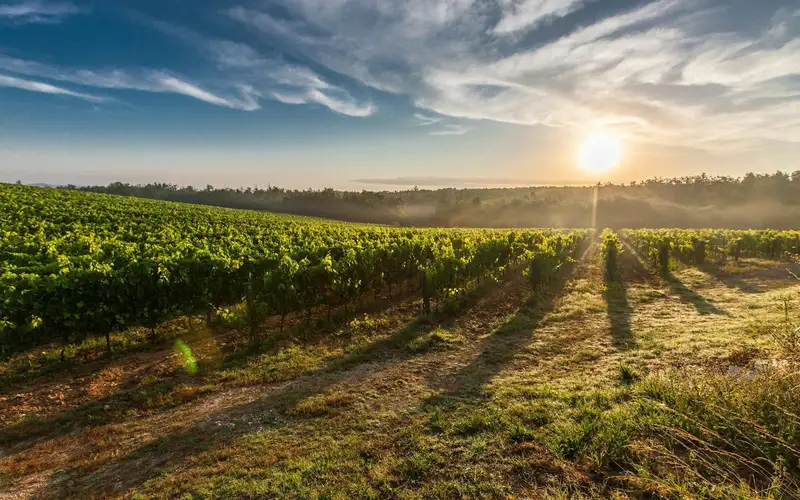
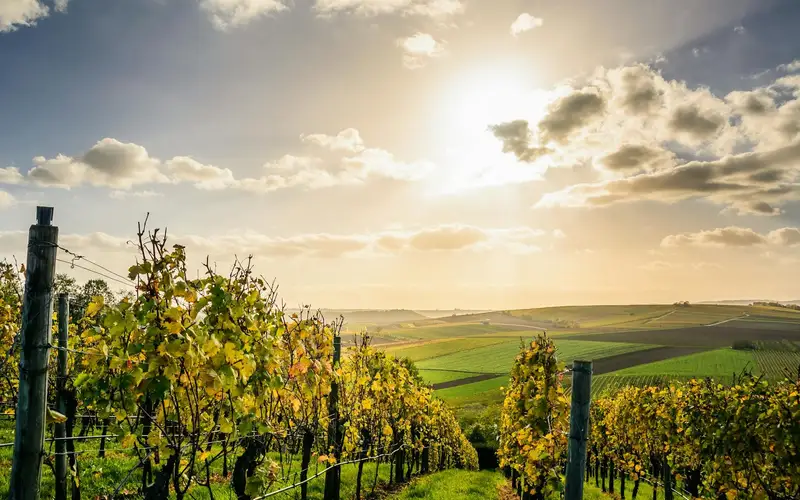
Saint-Émilion, about 40 km east, is a medieval wine village whose vineyard landscape was listed by UNESCO in 1999. Its church was carved into the limestone cliff in the 11th century, one of the largest underground churches in Europe. We visit a family-run château and a grand estate on the same day, which shows two very different sides of Bordeaux wine. On our trip, the day includes a guided e-bike ride through the vines with lunch, and a hot-air balloon flight over the vineyards in the early evening.
Arcachon and the Dune du Pilat. About an hour west, the Bay of Arcachon is oyster country. We book a morning with a local producer on the oyster beds and a tasting by the water. The Dune du Pilat, about 60 km (37 miles) southwest of Bordeaux, is the tallest sand dune in Europe, about 2.7 km long and about 107 m (350 ft) high in 2018. The climb is steep but short, and the view over the bay and the pine forest is the reward. Our itinerary adds a tandem paragliding flight over the dune for those who want it.
Day 4: the drive to the Dordogne
The drive east takes about two and a half hours by motorway, or longer through the vineyards of Saint-Émilion and Bergerac. Arrive in Sarlat-la-Canéda by lunch. Sarlat's old town is one of the best-preserved medieval centers in France, all honey-colored stone and narrow lanes. Its market fills the old town on Wednesday and Saturday mornings, with foie gras, walnuts, cheese, mushrooms in season and, in winter, truffles. Saturday is the busiest; Wednesday is calmer.
In the afternoon, drive 15 minutes to the Jardins de Marqueyssac, a park of clipped boxwood above the Dordogne, open every day of the year. The belvedere at the end looks straight down on the river and the castles. In 2026, the gardens held candlelit evenings on Thursdays in July and August.
Day 5: Rocamadour and the Gouffre de Padirac
Rocamadour, about an hour from Sarlat in the Lot, is a pilgrimage village stacked up a cliff about 120 m high above the Alzou canyon, with its chapels and the shrine of the Black Madonna. Pilgrims have come since the Middle Ages. See it first from the viewpoint across the canyon, then walk up through the village.
The Gouffre de Padirac, 20 minutes away, is a chasm about 103 m deep. Visitors go down by lift or stairs to an underground river, and part of the visit is by boat with a boatman. In 2026 it opened from March 28 to November 1. Book online, especially in summer, and bring a layer: it stays cool underground.
Day 6: Lascaux IV and the river
Lascaux IV, in Montignac, is a full replica of the Lascaux cave, whose paintings are usually dated to between 17,000 and 22,000 years ago. The original has been closed to the public since 1963 to protect it, and the decorated caves of the Vézère valley were listed by UNESCO in 1979. Lascaux IV opened in 2016 on a hill above Montignac, about 400 m from the original cave. Visits are by timed entry, so we book ahead.
In the afternoon, rent a canoe and paddle down the Dordogne under the castles. The classic stretch passes La Roque-Gageac, built against its cliff, Castelnaud and its castle, and Beynac, all three on the list of the Most Beautiful Villages of France, like Domme on its hilltop above the river. Most canoe hire companies drive you upstream and you paddle back, about two to three hours, with stops for a swim.
Day 7: back to Bordeaux
Allow about 2 hours 45 minutes to Bordeaux airport, more on summer Saturdays. With a late flight, stop in Saint-Émilion for lunch on the way.
If you have more or less time
- Five days: two nights in Bordeaux with Saint-Émilion, three in Sarlat. Drop Arcachon.
- Ten days: add a night in a Saint-Émilion château, a fourth night in the Dordogne for Domme and the Vézère valley, and two nights in Cognac. Cognac is about an hour and a half from Bordeaux, and our Cognac Getaway in 6 Days shows how we plan it.
- Combined with Paris: take the TGV to Bordeaux, do the road trip, and drop the car at Bordeaux airport or station.
Driving tips for the Dordogne
- Book an automatic early if you do not drive a manual; they are a smaller share of rental fleets in France.
- Village streets are narrow. In Sarlat, Rocamadour and La Roque-Gageac, park in the paid lots at the edge and walk in.
- Market mornings slow the traffic around Sarlat on Wednesdays and Saturdays. Arrive early or come on foot from the hotel.
- Keep the drives short. One base in Bordeaux and one in Sarlat means you never pack up more than once.
When to go
May, June, September and October are our favorite months. The weather is warm without the summer heat, the caves and gardens run full hours, and in September and October the harvest brings the vineyards to life. In the Dordogne, autumn adds walnuts and cèpe mushrooms. July and August are hot and busy, with lines at Lascaux and Padirac and traffic in the villages. Winter is quiet; Padirac and some sites close, but Sarlat's truffle markets and its Fête de la Truffe, on January 16 and 17, 2027, make a good reason to come. Our guide to the best time to visit France has the month-by-month view.
A Dordogne road trip with reduced mobility
The Dordogne is easier by car than many regions, because you can drive close to most sites. Sarlat's main streets are walkable, though paved with stone, and market days are crowded. At Padirac, visitors can take a lift as well as the stairs, but the underground route still involves steps, so we check what each traveler can manage. Rocamadour and the perched villages are built on slopes and stairs. Lascaux IV displays France's national accessibility label. We choose hotels with step-free rooms and plan each visit with the site before you travel.
Our Bordeaux and Dordogne trip
Our Bordeaux and Dordogne Road Trip in 7 Days, from €1,499 (about $1,740) per person, follows this route with three nights in a 4-star boutique hotel near the Chartrons quays and three in Sarlat, the e-bike and balloon day in Saint-Émilion, oysters at Arcachon, Rocamadour, Padirac, Lascaux IV and the canoe. For more ideas, see our road trips, our food and wine trips and our 7-day France itineraries.
If you would like the route adapted to your dates, pace and wine interests, ask one of our designers for a custom version.