A trip to Switzerland costs about CHF 260 to 390 (about $320 to $485) per person per day for a comfortable trip in 3-star hotels with 2nd class trains, CHF 370 to 590 in 4-star hotels with 1st class trains, and from CHF 700 per day in 5-star hotels with private guides, before international flights and for two people sharing a room. For a typical 8-day trip, that means roughly CHF 2,000 to 3,000 per person at the comfortable level and CHF 3,000 to 4,800 at the premium level. Our own trips start from EUR 1,999 (about $2,290) per person for seven days.
Below are the numbers behind those ranges: hotels, trains, mountain excursions, meals, guides, and three sample budgets, with every official price checked for 2026.
Daily cost per person at a glance
The ranges below are the ones we use when we budget a 2026 trip, per person, two people sharing a double room, in high season (June to September).
| Per person, per day |
Comfortable |
Premium |
Luxury |
| Hotel (half a double room) |
CHF 100 to 175 |
CHF 150 to 300 |
CHF 300 to 750 |
| Trains, boats, local transport |
CHF 55 to 70 |
CHF 75 to 95 |
CHF 90 to 160 |
| Mountain excursions and sights |
CHF 20 to 35 |
CHF 30 to 45 |
CHF 40 to 60 |
| Meals and drinks |
CHF 80 to 120 |
CHF 130 to 180 |
CHF 200 to 300 |
| Guides, transfers, extras |
CHF 0 to 10 |
CHF 0 to 20 |
CHF 60 to 100 |
| Total |
about CHF 260 to 390 |
about CHF 370 to 590 |
about CHF 700 to 1,250 |
In 2026, CHF 1 is worth about $1.24 and EUR 1 about CHF 0.92. Switzerland is consistently among the most expensive countries in Europe: in July 2026 a Big Mac cost CHF 7.30 (about $9.04), against $6.22 in the United States, according to The Economist's Big Mac index.
Hotels: the biggest line in the budget
Accommodation is usually 40 to 55 percent of the total. Typical prices for a double room per night in high season, as we see them in 2026:
| Category |
Typical double room |
Where prices run higher |
| 3-star or good guesthouse |
CHF 200 to 350 |
Zermatt, Lucerne old town, Grindelwald in summer |
| 4-star |
CHF 300 to 600 |
Lakefront Lucerne and Montreux, Zermatt with Matterhorn view |
| 5-star and grand hotels |
CHF 600 to 1,500 and more |
St. Moritz in winter, Gstaad, Zermatt, Bürgenstock |
What moves the price:
- Season: in mountain resorts, the peaks are Christmas to New Year, February (ski holidays) and July to August. Zermatt and St. Moritz cost far more at Christmas than in June. Cities like Zurich and Geneva are busiest on weekdays with business travel and big fairs.
- View: a Matterhorn-facing room in Zermatt or a lake-view room in Lucerne often costs noticeably more per night than the same room on the other side.
- Tourist tax: every municipality adds a local tax, usually a few francs per person per night, on the hotel bill.
- Breakfast: usually included in Swiss hotels, which saves a meal a day.
Our budget rule: spend more on the two nights that matter most (Zermatt with a Matterhorn view, a lake-view room in Lucerne or Montreux) and stay simpler near stations on transit nights.
Trains and local transport
Swiss public transport is expensive by the ticket but excellent value with a pass or card. The 2026 prices:
| Product |
2nd class |
1st class |
| Swiss Travel Pass, 8 consecutive days |
CHF 439 (about $545) |
CHF 697 (about $865) |
| Swiss Travel Pass, 15 consecutive days |
CHF 499 |
CHF 787 |
| Swiss Half Fare Card, one month |
CHF 150 |
CHF 150 |
| Zurich to Zermatt, full fare |
CHF 130 |
CHF 222 |
| Zurich to Lucerne, full fare |
CHF 27 |
CHF 46 |
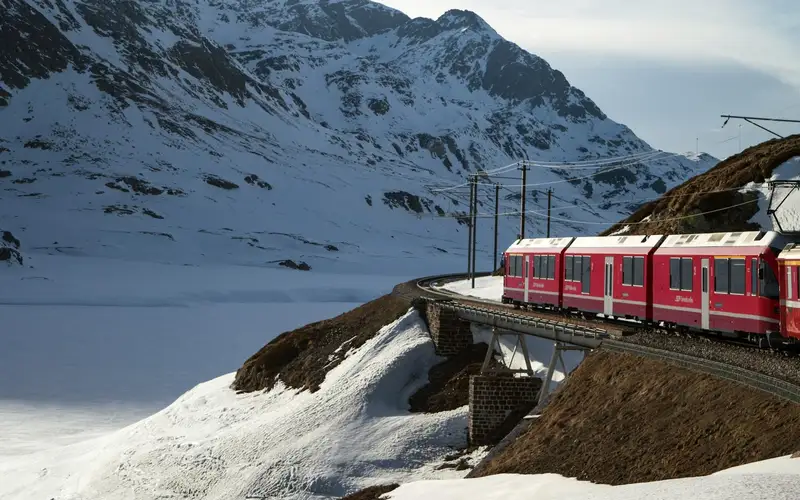
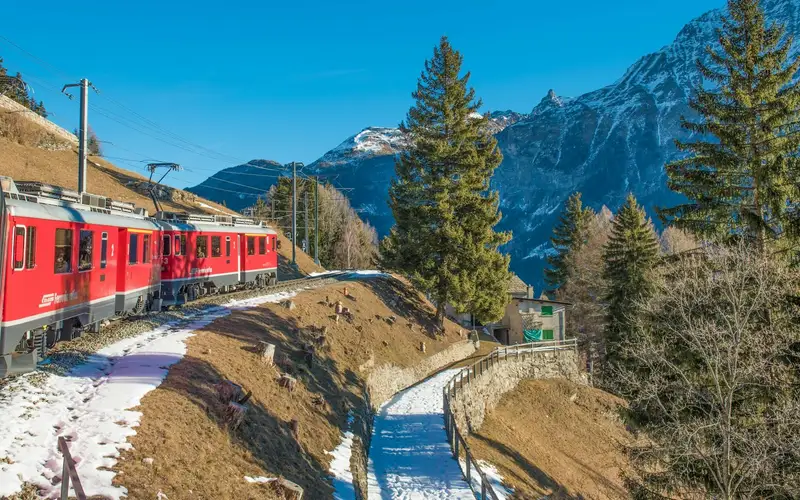
On top of the pass or tickets come the reservations on panoramic trains: CHF 54 on the Glacier Express, CHF 32 to CHF 44 on the Bernina Express, CHF 20 on the GoldenPass Express (optional), and CHF 590 for Glacier Express Excellence Class. On a trip with two or three nights per stop, the Half Fare Card usually costs less than the pass, especially in 1st class; our guide to the Swiss Travel Pass vs the Half Fare Card prices three itineraries line by line, and our Swiss Travel Pass calculator does it for your route.
Private transfers by car exist, but in Switzerland we use them sparingly: from the airport for travelers with reduced mobility or lots of luggage, and between Tirano and Lake Como. Trains are faster than the road on most routes. Luggage forwarding costs CHF 12 per bag station to station, or CHF 50 plus CHF 12 per bag door to door.
Mountain excursions: 2026 prices
Mountain railways are where budgets surprise people. Adult return fares in 2026:
| Excursion |
Full price |
With Swiss Travel Pass |
With Half Fare Card |
| Gornergrat from Zermatt (May to Oct) |
CHF 132 |
CHF 66 |
CHF 66 |
| Gornergrat (Nov to Apr) |
CHF 102 |
CHF 51 |
CHF 51 |
| Jungfraujoch from Grindelwald Terminal |
from CHF 129.60, plus CHF 10 reservation May to Oct |
Discounted |
Discounted |
| Schilthorn from Interlaken |
CHF 135.20 |
CHF 45.70 |
CHF 67.60 |
| Pilatus Golden Round Trip from Lucerne |
CHF 119.80 |
Boat free, mountain half price |
CHF 59.90 |
| Rigi railways |
Day pass at full fare |
Free |
CHF 42 day pass |
| Lake Lucerne boat day pass |
CHF 86 (2nd class) |
Free |
CHF 43 |
| Brienz Rothorn steam railway |
CHF 98 |
CHF 49 |
CHF 49 |
Most travelers do two or three of these on an 8-day trip. Choose one high summit (our comparison of Jungfraujoch, Gornergrat and Schilthorn helps) rather than all three: they offer different angles on similar landscapes.
Food and drink
Swiss restaurant prices include service, and tipping is not expected beyond rounding up for good service. The ranges we budget per person in 2026:
| Meal |
Typical price |
| Coffee and pastry |
CHF 8 to 12 |
| Lunch dish of the day in a café or restaurant |
CHF 22 to 35 |
| Cheese fondue or raclette dinner |
CHF 30 to 45, without drinks |
| Three-course dinner in a good restaurant |
CHF 70 to 120, without wine |
| Bottle of Swiss wine in a restaurant |
CHF 45 to 90 |
| Tasting menu in a Michelin-starred restaurant |
CHF 180 to 350 |
Two habits keep the food budget reasonable without eating badly: lunch as the main meal (the dish of the day is the best value in the country), and a picnic from a Coop or Migros supermarket for the long panoramic train days. On the Glacier Express, at-seat lunch is an easy alternative.
Guides and private experiences
In Switzerland we use private guides selectively, where they add something the train does not: a city walk on arrival in Lucerne or Zurich, a mountain guide for a glacier walk, a wine tasting in the Lavaux terraces, a chocolate or cheese workshop. Budget roughly CHF 300 to 500 for a private half-day city guide for your party, more for a full day with a driver or a certified mountain guide. These are the line items that separate a premium trip from a luxury one.
Three sample budgets for 8 days
Per person, two people sharing, 7 nights, high season 2026, excluding international flights.
|
Comfortable |
Premium |
Luxury |
| Route |
Lucerne, Interlaken, Zermatt |
Lucerne, Grindelwald, Zermatt, Glacier Express |
Lucerne, Zermatt, Glacier Express, St. Moritz |
| Hotels (7 nights) |
CHF 700 to 1,225 |
CHF 1,050 to 2,100 |
CHF 2,100 to 5,250 |
| Transport and reservations |
CHF 450 to 550 (2nd class) |
CHF 600 to 760 (1st class) |
CHF 1,300 to 1,400 (1st class, Excellence Class) |
| Excursions |
CHF 150 to 250 |
CHF 250 to 350 |
CHF 300 to 450 |
| Meals |
CHF 640 to 960 |
CHF 1,040 to 1,440 |
CHF 1,600 to 2,400 |
| Guides and extras |
CHF 0 to 100 |
CHF 100 to 200 |
CHF 400 to 800 |
| Total per person |
about CHF 2,000 to 3,000 |
about CHF 3,000 to 4,800 |
about CHF 5,700 to 10,300 |
How this compares with our trips: Switzerland in 7 Days, through Lucerne, the Jungfrau region, Zermatt and Lavaux by train, starts from EUR 1,999 per person, and Switzerland by Train in 12 Days, with the Glacier Express and Jungfraujoch, from EUR 3,499. "From" prices correspond to the base hotel category and season; each trip page lists what is included, and our designers price the version you choose. For other countries and lengths, our Europe trip cost calculator gives a first estimate.
When Switzerland costs less
- Shoulder seasons: late May to June and September to mid-October bring lower mountain hotel rates than July and August, with almost everything open. Mid-October to early December is the cheapest, but the Glacier Express pauses and several mountain lifts close.
- Fewer, longer stops: three bases in eight days cost less than five, in hotel rates (fewer one-night stays) and in transport.
- The right card: the Half Fare Card at CHF 150 often beats the pass, and children 6 to 15 travel free with the Swiss Family Card with either product.
- Breakfast and lunch: with breakfast included and lunch as the main meal, dinner can be simple a few nights a week.
Where we advise against saving: the Glacier Express reservation, a view room in Zermatt, and enough nights. A rushed Switzerland costs nearly as much and gives much less. Our guide on how many days to spend in Switzerland helps set the length.
Costs for travelers with reduced mobility
Accessibility does not have to cost more in Switzerland. SBB boarding assistance is free (booked through the SBB Contact Center Handicap, 0800 007 102), and accessible hotel rooms are priced like standard rooms. The extra costs are elsewhere: door-to-door luggage forwarding on every move (assistance staff do not carry bags), occasional private transfers where a station or hotel is not step-free, and sometimes a higher hotel category, because step-free rooms are more common in recent or renovated hotels. Budget about 10 percent more for logistics.
To see what your own dates, hotels and pace would cost, ask one of our travel designers for a custom version and a line-by-line quote.