Choose Lucerne if you want a lakeside city with an old town, good restaurants and easy mountain days, 41 minutes from Zurich. Choose Interlaken, or better the villages above it, if the high Alps are the point of your trip: the Jungfraujoch, the Eiger north face, glaciers and the Lauterbrunnen valley. With five nights or more, do both: the Luzern-Interlaken Express links them in 1 hour 50 minutes, and it is one of the prettiest train rides in the country.
Interlaken vs Lucerne at a glance
|
Lucerne |
Interlaken and the Jungfrau region |
| Setting |
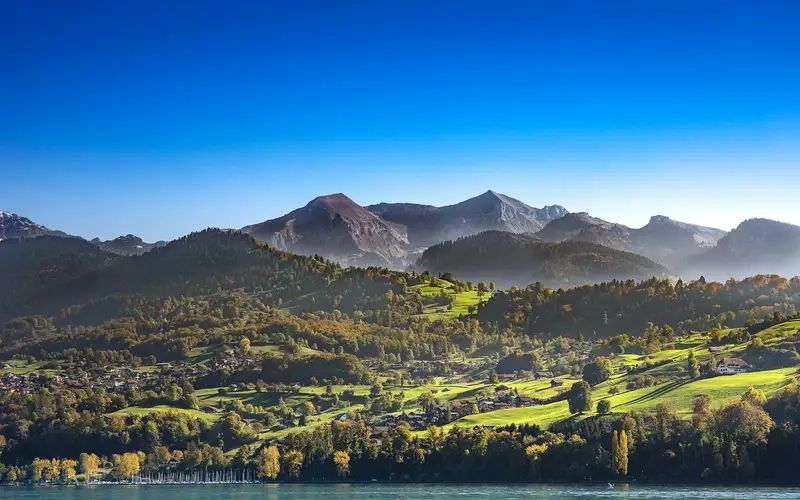
A historic city on Lake Lucerne, with Rigi and Pilatus in view |
A resort town between Lake Thun and Lake Brienz, at the foot of the Eiger, Mönch and Jungfrau |
| From Zurich |
41 to 50 min by direct train |
about 2 h with a change in Bern |
| Signature excursions |
Rigi, Pilatus, Titlis, lake steamers |
Jungfraujoch, Grindelwald First, Schilthorn, Lauterbrunnen |
| In town |
Chapel Bridge, Lion Monument, museums, concerts at the KKL |
Lakeside walks, Harder Kulm, adventure sports |
| Evenings |
Restaurants and bars on the river and in the old town |
Quieter; dinner in the village where you stay |
| Bad-weather day |
Swiss Museum of Transport, Rosengart Collection, old town |
Limited: thermal baths, Ballenberg open-air museum in season, Thun |
| Best season |
Year-round, including December |
June to September for the high Alps; winter for skiing |
| Nights we suggest |
2 to 3 |
3 to 4 |
Lucerne: a lake city with mountains on the doorstep
Lucerne works because everything is close. The station opens onto the lake, the covered Chapel Bridge leads into an old town of painted facades, and the Lion Monument is a short walk uphill. Paddle steamers leave from the quay in front of the station, and three mountains are day trips:
- Rigi: cogwheel railways from Vitznau or Arth-Goldau, with views over Lake Lucerne and Lake Zug. Fully covered by the Swiss Travel Pass.
- Pilatus: the "golden round trip" combines a boat to Alpnachstad, the world's steepest cogwheel railway in summer, and cable cars back down to Kriens. The cogwheel line runs from late spring to autumn only.
- Titlis: above Engelberg, with a glacier, a revolving cable car and snow all year.
Lucerne is also the easier base for travelers who do not want the mountains every day: the evenings are livelier, the museums are good, and rain changes the day without ruining it. It is the first stop on our Switzerland in 7 Days itinerary for that reason.
Interlaken: the gateway to the Jungfrau region
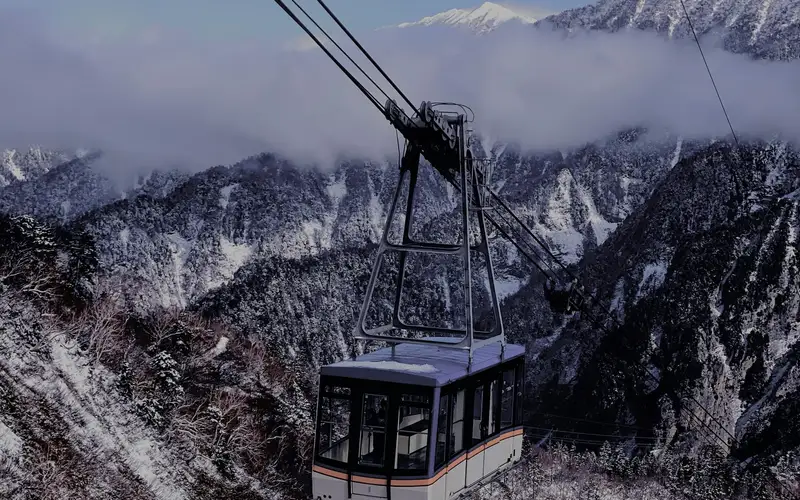
Interlaken itself is a flat, busy town between two lakes. Its strength is its position: trains from Interlaken Ost climb to Grindelwald, Lauterbrunnen, Wengen and Mürren, and from there to the Jungfraujoch, the highest railway station in Europe at 3,454 meters, about 1 hour 30 minutes from Interlaken Ost via the Eiger Express gondola. Within a 30-minute radius you have the Eiger north face, the Lauterbrunnen valley with its waterfalls, the Schilthorn, and hikes along the balconies above the valleys.
Where to sleep matters more here than in Lucerne. We place most travelers in the villages rather than in Interlaken town:
- Grindelwald for big views of the Eiger and the most choice of hotels.
- Wengen or Mürren, car-free and quieter, for couples and hikers.
- Interlaken itself when you want a central base with direct trains in every direction, or when you are moving on after two nights.
Our comparison of Jungfraujoch, Gornergrat and Schilthorn explains which summit is worth the price.
Weather, seasons and what can go wrong
The Jungfrau region depends on clear weather. A cloudy day at 3,454 meters means paying for one of the most expensive excursions in the country (in 2026, return tickets start around CHF 130 from Grindelwald Terminal and cost more from Interlaken) to look at fog. We always build a flexible day into a Jungfrau stay and check the webcams with travelers the evening before.
Lucerne is far less weather-sensitive: lake cruises, museums and the old town work in any season, and the city has a Christmas market in December. On the other hand, the Pilatus cogwheel railway closes in winter, and some excursions in both regions pause for maintenance between the summer and winter seasons, typically in November and from late April into May. We check these dates for every trip before choosing the base.
Cost
Both are expensive by European standards, and hotel prices rise sharply in July and August in both. The difference is in the excursions: the Jungfrau trains are among the most expensive in Switzerland, with only a partial discount on the Swiss Travel Pass above Grindelwald and Wengen, while the Rigi and the Lucerne lake boats are fully covered by the pass. If your budget is tight, Lucerne with Rigi and a lake cruise gives more for less. Our Swiss Travel Pass calculator shows the difference for your own plan.
Getting between Lucerne and Interlaken
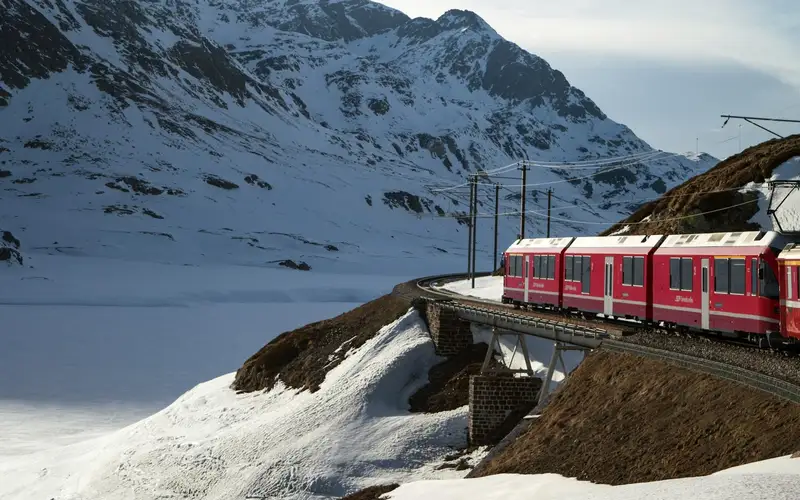
The Luzern-Interlaken Express runs hourly in about 1 hour 50 minutes over the Brünig Pass, past Lake Sarnen, Lake Lungern and Lake Brienz. Sit on the right-hand side in the direction of travel, whichever way you go. The train is fully covered by the Swiss Travel Pass, and the optional seat reservation cost CHF 12 to 16 in 2026 depending on the season. Our Zurich to Interlaken guide covers the arrival from the airport and both rail routes.
Day trips that work from either base
Some of the best days in central Switzerland are reachable from both towns, which matters if you can only choose one:
- Bern: about an hour by train from either. The arcaded old town and the Zytglogge make an easy rain-day plan.
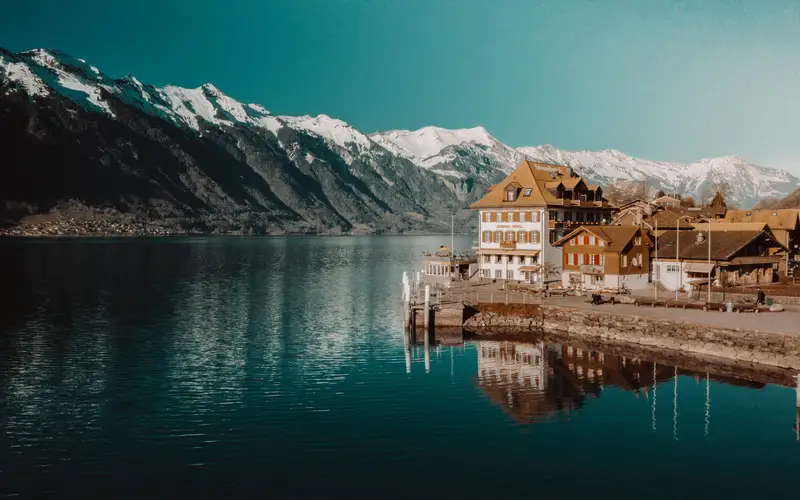
- Lake Brienz: 20 minutes from Interlaken, and on the Luzern-Interlaken Express line from Lucerne. The Giessbach Falls are a short boat ride from Brienz.
- The Brünig Pass villages: Lungern and Meiringen, where the Aare Gorge and the Reichenbach Falls make a half day.
What does not work well as a day trip: the Jungfraujoch from Lucerne, and Titlis from Interlaken. Each takes most of a day in transport from the other base.
Which one suits you
- Short first trip from Zurich (two or three nights): Lucerne, with a day on Rigi or Pilatus.
- Mountains and hiking: the Jungfrau region, staying in Wengen, Mürren or Grindelwald.
- Families with young children: Lucerne for the transport museum and the boats, or Grindelwald for First and its easy trails.
- Honeymoons: both, ending in a car-free village.
- Limited mobility: Lucerne, with a flat lakefront and step-free station. The Jungfraujoch is reachable by train, with lifts at the top, but the altitude is a concern for some health conditions, so check with your doctor.
Our suggested split by trip length
- 3 nights: choose one. Lucerne if you fly in and out of Zurich; the Jungfrau region if the Alps are your main reason for coming.
- 5 to 6 nights: two nights in Lucerne, three in the Jungfrau region, with the Luzern-Interlaken Express in between.
- 7 nights or more: add Zermatt or Lake Geneva, as in our 12-day Switzerland by train itinerary. Our guide on how many days in Switzerland helps size the trip, and more routes are on our Switzerland page.
If you would like a designer to split the nights and choose the hotels for you, tell us about your trip.