Give Nice four or five nights: two days for the city itself (the Promenade des Anglais, the old town and the Cours Saleya market, Castle Hill and the Matisse Museum) and two or three for day trips to Monaco, Èze, Villefranche or Antibes, all within 40 minutes. Stay near the Promenade or in the streets behind it, use the tram from the airport and the coastal trains for the Riviera, and come from May to June or in September for warm sea without the August crowds. Nice is the largest city on the French Riviera, and since 2021 it has been on the UNESCO World Heritage List as "Nice, Winter Resort Town of the Riviera."
Our senior designer for the Riviera was born in Nice and still lives here, and our office plans Nice stays every week of the year. This guide covers the city: what to see, how many days, where to sleep, how to get around and when to come.
Nice at a glance
|
|
| Airport to center |
tram line 2, under 30 minutes |
| Nights we suggest |
4 to 5, with day trips |
| Seafront |
the Promenade des Anglais, about 7 km (4.3 miles), flat |
| Beaches |
pebbles, public and private |
| Best months |
May, June, September |
| Matisse Museum |
€10 (about $12) in 2026, closed Tuesdays |
| Nice Carnival 2027 |
February 9 to 28 |
| To Monaco by train |
about 20 to 25 minutes |
How many days in Nice
- Two nights: enough for the city alone: the old town and the market, Castle Hill, the Promenade and one museum. You will leave wanting more.
- Three nights: the city plus one day trip, usually Monaco and Èze.
- Four to five nights: our recommendation for a first visit to the Riviera, with Nice as the single base for the eastern coast and one day west to Antibes or Grasse.
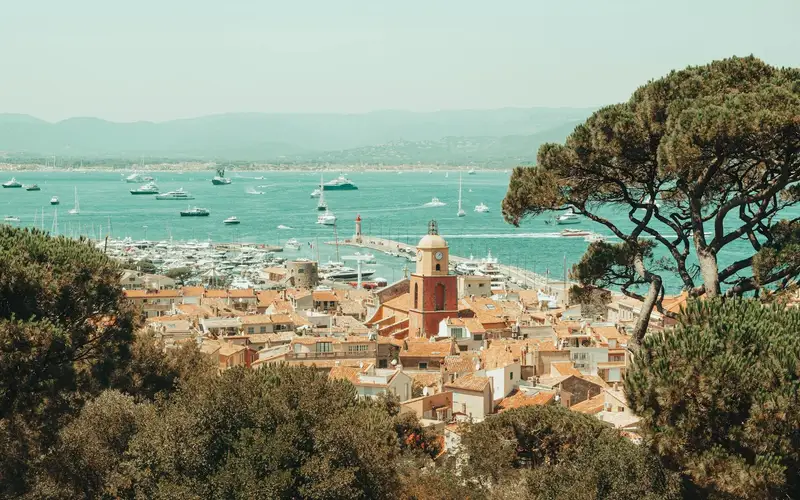
- A week: split between Nice and a second base, such as the Gulf of Saint-Tropez, or stay in Nice and go slower, with a beach day and a cooking class.
What to see and do in Nice
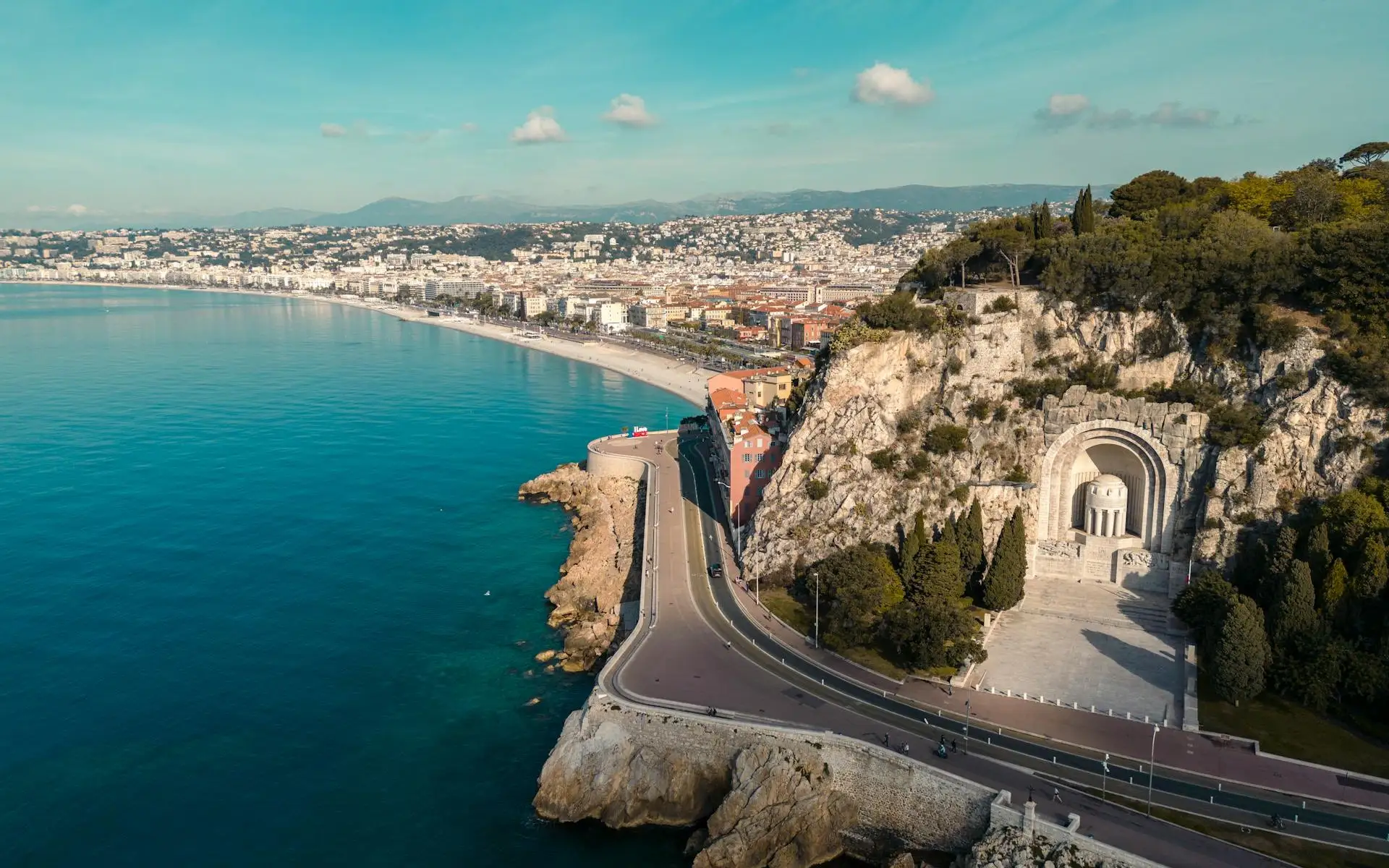
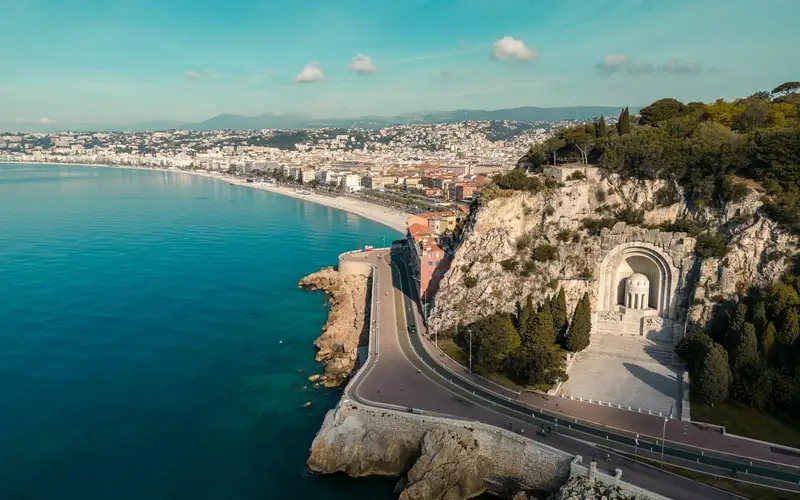
The Promenade des Anglais. The seafront avenue curves for about 7 km along the Baie des Anges, from the airport to the old town. Built in the 19th century with money from English winter residents, it is flat, wide and lined with Belle Époque hotels. Walk or cycle the stretch between the Negresco and the old town at sunset, when everyone in Nice seems to be out.
Vieux Nice and the Cours Saleya. Behind the seafront, the old town is a tangle of narrow streets, baroque churches and ochre façades. The Cours Saleya, its long square, holds a daily market of flowers and local produce, with antiques and art stalls too. Come in the morning, then stay for lunch: this is where to try socca, a chickpea pancake, pissaladière with onions and anchovies, and a real salade niçoise.
Castle Hill (Colline du Château). The hill at the eastern end of the Promenade has no castle left but has the best view in Nice, over the bay on one side and the port on the other. A public lift goes part of the way up from the seafront; the rest is paths and steps.
The Matisse Museum. Henri Matisse spent much of his life in Nice, and the museum dedicated to him occupies a villa on the Cimiez hill, overlooking an archaeological site. In 2026 it opened every day except Tuesday, from 10 a.m. to 5 p.m. from November to March and until 6 p.m. from April to October. Entry was €10, a 4-day pass to all the city's municipal museums €15 (about $17), and under-18s get in free. The national Marc Chagall Museum is also on the Cimiez side of town.
The port and Lympia. East of Castle Hill, the old port is lined with Italianate façades and local restaurants, and it is the start of the coast road to Villefranche and Monaco. It is a good evening alternative to the busier old town.
The beaches. Nice's beaches are pebbles, not sand. Public beaches are free; private beach clubs rent loungers and parasols and serve lunch. Water shoes help.
Where to stay in Nice
- The Promenade des Anglais: sea views, Belle Époque hotels and a flat walk to the old town. Our usual choice for first-timers.
- The Carré d'Or and the streets behind the seafront: quieter, close to the beach and to Place Masséna, with good hotels at lower prices than the seafront.
- Vieux Nice: atmospheric, but some lanes are noisy late at night and cars cannot reach most hotels.
- The port: a local neighborhood with good restaurants and the coast road east at the door.
- Cimiez: quiet and residential on the hill, better for longer stays with a car.
Our guide to where to stay on the French Riviera compares Nice with Antibes, Villefranche, Menton and Monaco if you are still choosing a base.
Getting to and around Nice
From the airport. Nice Côte d'Azur airport is at the western end of the Promenade. Tram line 2 runs from both terminals to the city center in under 30 minutes, about every 7 to 8 minutes on weekdays, and continues to Port Lympia, and a private transfer takes about 20 to 30 minutes depending on traffic.
From Paris. The direct TGV from Paris Gare de Lyon takes about 5 hours 40 minutes to 6 hours, with the last stretch along the sea, and a flight about an hour and a half. Our Paris to Nice by train guide compares the two.
In the city. The center is walkable, and the three tram lines cover most of what you need. You do not need a car in Nice itself.
Along the coast. Regional TER trains run from Nice-Ville east to Villefranche, Monaco and Menton, and west to Antibes and Cannes. Monaco is about 20 to 25 minutes away, with frequent departures. Our Nice to Monaco guide compares the train with the bus, a driver and the helicopter.
Nice as a base for the coast
Nice is the best base on the coast because everything fans out from it. Our favorites, in the order we plan them:
- Villefranche-sur-Mer and Cap Ferrat: a deep bay and the Villa Ephrussi de Rothschild gardens, ten minutes away.
- Monaco and Èze: the Prince's Palace, the Oceanographic Museum and a perched village on the way, best by driver along the Moyenne Corniche.
- Antibes: old ramparts, the Picasso Museum and the Cap d'Antibes coastal path.
- Grasse: perfume houses and a workshop to create your own scent, about 45 minutes inland.
- Menton: the last town before Italy, with gardens and an old town in pastel layers.
Our full guide to day trips from Nice covers eleven of them, with times and our planning rules. To cross the border, our Nice to Italy day trips cover Ventimiglia, Sanremo and Dolceacqua.
When to go to Nice
May, June and September are the best months: warm, long days, a sea warm enough to swim from June, and fewer crowds than in summer. July and August are hot and busy, the beaches are packed and hotel prices are at their peak. October is often still mild.
Winter is quiet and sunny, with mild days that made Nice a winter resort in the first place. The Nice Carnival runs from February 9 to 28, 2027, under the theme "Long live love," with carnival parades and flower parades. It is lively, but it fills hotels and slows traffic. Also watch for the Cannes Film Festival in May and the Monaco Grand Prix in late May or early June, which fill hotels along the whole coast. Our best time to visit tool has month-by-month detail.
Nice with reduced mobility
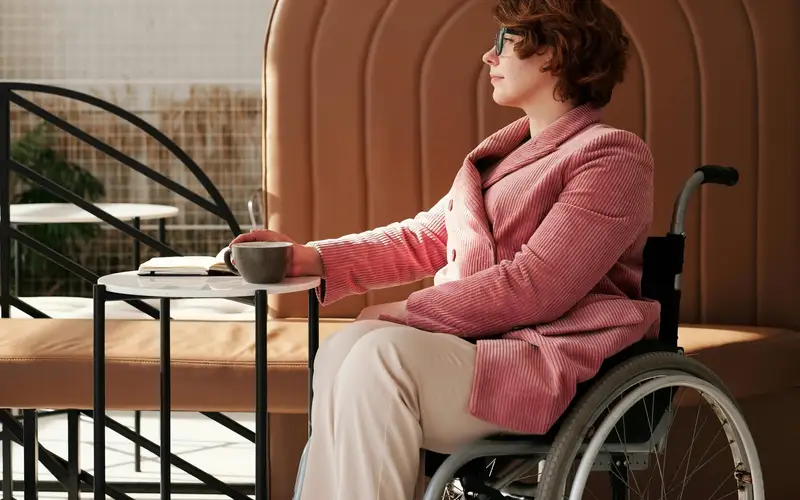
Nice is the most practical base on the Riviera for limited mobility. The Promenade des Anglais is flat and wide for its whole length, the trams offer step-free boarding with low floors and adapted platforms, according to the tourist office, and in summer the city runs two adapted beaches, Centenaire and Carras, with ramps, trained staff and water wheelchairs. The old town's lanes are narrow and uneven, best visited in the morning with a guide who knows the smoothest route, and Castle Hill's paths have slopes and steps beyond the lift. Our guide to the wheelchair-accessible French Riviera goes into detail.
Trips that start in Nice
Our Accessible French Riviera in 8 Days, from €1,499 (about $1,740) per person, keeps you seven nights in an accessible room at a 4-star hotel on the Promenade, with adapted transfers, the Matisse Museum, a coastal cruise to Monaco, Èze, Grasse and a beach day. For a classic first visit, our French Riviera in 7 Days, from €1,899 (about $2,200) per person, combines three nights in the Gulf of Saint-Tropez with three in Nice, the Cours Saleya market, Monaco at night and a perfume workshop in Grasse.
If you would like a designer from our Nice office to plan your days, hotel and day trips, tell us about your trip.