Choose the French Riviera if you want a real city as your base, art museums, the widest choice of hotels from boutique to palace, and day trips by train in every direction from Nice. Choose the Italian Riviera if you want small harbor towns on steep hillsides, Ligurian food and walks between villages above the sea, at a slower pace. The two coasts touch at the border, and Nice to Genoa takes about 3 hours 45 minutes by train with one change, so with ten days or more we often combine them.
We design our French Riviera trips from our office in Nice, and we send travelers on to Liguria every season. Here is how the two coasts compare on what actually decides a trip.
French Riviera vs Italian Riviera at a glance
|
French Riviera (Côte d'Azur) |
Italian Riviera (Liguria) |
| Where |
From Menton at the Italian border west to Cannes and Saint-Tropez |
An arc from Ventimiglia to La Spezia, with Genoa in the middle |
| Character |
Belle Époque towns, a big city, glamour in Monaco and Cannes |
Fishing villages, pastel houses, terraced hillsides |
| Signature places |
Nice, Antibes, Èze, Monaco, Cap Ferrat, Saint-Paul-de-Vence |
Portofino, Santa Margherita Ligure, Camogli, the Cinque Terre |
| Beaches |
Pebbles in Nice, sand around Cannes, Juan-les-Pins and Saint-Tropez |
Mostly rented beach clubs, small coves, sand in a few places such as Monterosso |
| Food |
Socca, pissaladière, salade niçoise, Provence rosé |
Pesto, focaccia, farinata, anchovies, seafood |
| Culture |
Matisse, Chagall and Picasso museums, Fondation Maeght |
Genoa's palaces, village churches, the landscape itself |
| From North America |
Nice has nonstop flights from New York |
No transatlantic flights to Genoa; fly to Nice or Milan |
| Hotels |
Wide range, including several palaces |
A few famous grand hotels; mostly small hotels and guesthouses |
| Best for |
First visits, art, couples, families, reduced mobility |
Walkers, food lovers, slow travel, a second visit |
| Nights we suggest |
4 to 6 |
3 to 5 |
The French Riviera: a coast built around Nice
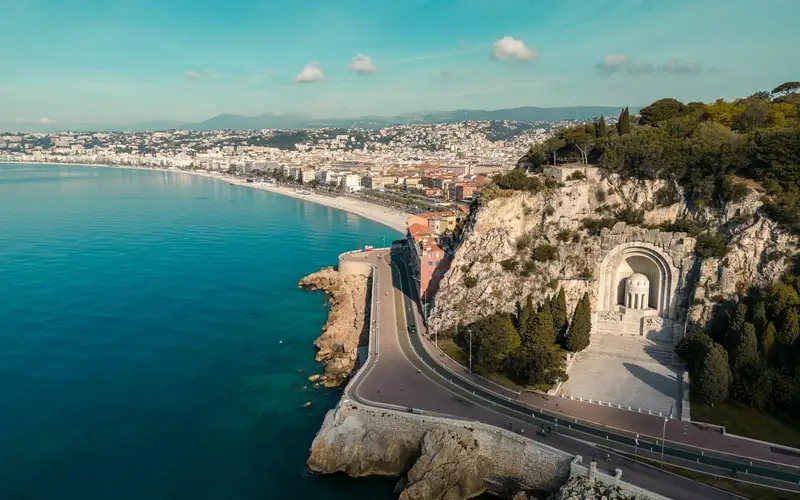
Nice is the reason the French side works so well. It is a city of about 350,000 people with an old town, the Cours Saleya market, the Matisse and Chagall museums and the Promenade des Anglais, and the coastal railway fans out from it. Monaco is 22 to 24 minutes away by regional train, Antibes and Villefranche-sur-Mer even closer, and a driver opens up the perched villages: Èze, Saint-Paul-de-Vence, and Grasse for perfume. Our guide to day trips from Nice orders them by distance and by what each day is for.
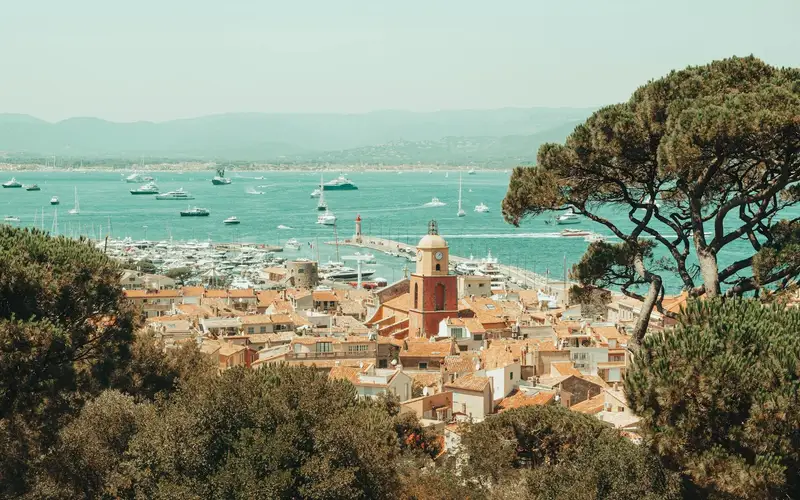
West of Cannes, the coast changes: Saint-Tropez is not on the railway, and we reach it by road or by boat. That is why our French Riviera in 7 Days splits the week between the Gulf of Saint-Tropez and Nice, with a private yacht day to Porquerolles in between.
The hotel range is the widest on either coast, from small boutique hotels in Nice's old town to grand addresses such as the Hôtel du Cap-Eden-Roc in Antibes or the Hôtel de Paris in Monte-Carlo. Our guide on where to stay on the French Riviera compares the bases town by town.
The Italian Riviera: villages, terraces and Portofino
Liguria is a narrow strip between the mountains and the sea, and that shapes everything: the towns are small, built up the slopes, and linked by a railway that runs largely through tunnels. Genoa divides it into two halves. West, the Riviera di Ponente has the longer sandy beaches, around Alassio, and Sanremo. East, the Riviera di Levante has the places most travelers come for:
- Portofino: a tiny harbor with no railway station. The nearest station is Santa Margherita Ligure, about 5 kilometers away, linked by bus, by boat in the warmer months, or by a coastal walk of about an hour. We usually base travelers in Santa Margherita and visit Portofino early in the morning or in the evening, after the day boats leave.
- Camogli: a working fishing town with tall painted houses on the water, and the starting point for walks and boats around the Portofino promontory.
- The Cinque Terre: five villages (Monterosso, Vernazza, Corniglia, Manarola and Riomaggiore), listed by UNESCO together with Portovenere. Regional trains link them between Levanto and La Spezia, and the Cinque Terre Treno Card covers unlimited regional trains on that stretch plus park services; in 2026 its price depends on the date. The Via dell'Amore between Riomaggiore and Manarola reopened in 2024 after years of closure, one way only, with entry booked in advance.
The hotels are smaller. A few grand hotels are famous, such as the Splendido above Portofino or the Grand Hotel Miramare in Santa Margherita, but most of the coast is family-run hotels, guesthouses and apartments, and the Cinque Terre villages have very few hotels with elevators. For a comfortable stay, we base travelers in Santa Margherita, Camogli, Levanto or Portovenere and reach the Cinque Terre by train or by private boat, early in the day.
Beaches: pebbles, sand and beach clubs
Neither Riviera is a long sandy-beach coast in the Caribbean sense.
- French side: Nice's beaches are pebbles, with private beach clubs renting sunbeds and serving lunch from around Easter to the end of September, and public stretches between them. For sand, go west: Juan-les-Pins, Cannes and Pampelonne near Saint-Tropez.
- Italian side: much of the shore is divided into stabilimenti balneari, beach clubs where you rent a sunbed and umbrella by the day, with free beaches between them. Monterosso has the largest sandy beach of the Cinque Terre, and the Ponente has longer sandy stretches. Around Portofino, swimming is mostly from rocks, platforms and small coves.
If a beach day is central to your trip, the French Riviera west of Nice is the easier choice. If swimming from a boat or a rock platform appeals to you, Liguria is better.
Food: two cousins
The two coasts share more than a border. Nice's socca and Liguria's farinata are the same chickpea flatbread under two names, and both kitchens rely on olive oil, anchovies and vegetables. The differences:
- Nice: salade niçoise, pan bagnat, pissaladière, stuffed vegetables (petits farcis), and Provence rosé. The coast also has the higher density of fine-dining restaurants, from Monaco to Saint-Tropez.
- Liguria: pesto made with the local basil (Basilico Genovese has a protected designation of origin), trofie pasta, focaccia, the cheese focaccia of Recco, anchovies from Monterosso, and Sciacchetrà, the sweet wine of the Cinque Terre. Simpler, cheaper and very good in an ordinary trattoria.
Getting there and getting around
Flights. Nice Côte d'Azur airport has nonstop flights from New York and seasonal routes from other North American cities. Genoa has no transatlantic flights, so for the Italian side most travelers fly into Milan or Nice. From Paris, the TGV reaches Nice in about 5 hours 40 minutes.
On the French side, the coastal TER train links Cannes, Antibes, Nice, Villefranche, Monaco and Menton several times an hour. A driver is the better choice for the perched villages and Saint-Tropez.
On the Italian side, the train is the best way along the coast, and often the only sensible one: the roads to Portofino are narrow with very little parking, and the Cinque Terre villages are largely closed to non-resident cars. Boats link Santa Margherita, Portofino, the Cinque Terre and Portovenere in the warmer months.
Combining both Rivieras by train
The two coasts make a natural ten-day trip, and the train ride between them follows the sea most of the way.
- Nice, 4 nights. Day trips to Monaco, Èze and Antibes.
- Nice to Ventimiglia, about 55 to 60 minutes on the French TER. Sit on the right-hand side, facing forward, for the sea.
- Ventimiglia to Genoa, about 2 hours on a Trenitalia Intercity. Allow at least 45 minutes for the change at Ventimiglia, and buy separate tickets for each leg.
- Genoa to Santa Margherita Ligure, about 25 minutes on the fastest trains. 3 nights for Portofino, Camogli and a boat day.
- Optionally, 2 nights in Levanto or Portovenere for the Cinque Terre, then a flight home from Milan or Pisa, or a continuation to Lake Como or Tuscany.
Two practical points. With several suitcases, the change at Ventimiglia is the hard part, so we often book a private driver from Nice to Santa Margherita instead, about three hours by motorway. And in 2026, works on the Nice to Ventimiglia line stop trains between 10 p.m. and 6 a.m. from Sunday to Thursday until December 11, with replacement buses, so we never plan an evening crossing on those nights.
Which Riviera suits you
- A first trip, five to seven days: the French Riviera, based in Nice.
- Art lovers: the French Riviera, without hesitation.
- Walkers: the Italian Riviera, for the Cinque Terre and the Portofino promontory.
- Food lovers on a budget: the Italian Riviera, where an excellent meal costs less.
- Honeymooners: either. Portofino and Saint-Tropez both do romance well; the French side has more choice at the top end.
- Families with young children: the French Riviera, for the sandy beaches west of Nice and the easy trains.
- Travelers who have already seen Nice: Liguria makes a different, quieter second trip, and our comparison of Provence and the French Riviera is worth reading if you are weighing a third option.
Reduced mobility
The difference is large. Nice is one of the more manageable coastal cities in Europe: the Promenade des Anglais is long and flat, the Cours Saleya and much of the old town are flat, and some public beaches have beach wheelchairs. Our Accessible French Riviera trip is built on that. The Cinque Terre villages, by contrast, are steep, with many steps and stations largely in tunnels, and Portofino is flat only along the harbor. For limited mobility, we recommend the French side, with Liguria visited by boat or car rather than on foot.
When to go
May, June and September are the best months on both coasts: warm sea, open hotels and fewer people than in July and August. In high summer, the Cinque Terre are crowded by midday with day visitors, and the coast road to Monaco is slow. In winter, Nice stays lively, with the Carnival in February, while many seaside hotels in Liguria close until spring.
For more Italian routes, see our Italy page, or ask a travel designer to build a trip that combines both Rivieras for your dates.