Paris is more wheelchair accessible than its reputation suggests, and less accessible than its tourist board would like. The big museums are well equipped, the buses all have ramps, and newer hotels have proper roll-in showers. The metro, the cobblestones and the old elevators are another story. We design accessible trips to Paris all year, and this is the honest picture we give our travelers before they book.
The short version
- Museums and major sights: mostly very good, with step-free routes, elevators, loaned wheelchairs and priority entry.
- Metro: mostly not accessible. Plan around it, with one exception.
- Buses: accessible on every line, with ramps and a dedicated space.
- Taxis and adapted vans: the most reliable way to move, if booked ahead.
- Hotels: possible, but "accessible room" can mean very different things. Check every detail.
- Streets: wide boulevards with curb cuts, plus some steep, cobbled districts.
Getting around: metro, bus, taxi
The metro was mostly built more than a century ago, with stairs at almost every station. The exception is line 14, fully automated and accessible at every station, with elevators and level boarding. It crosses the center via Saint-Lazare, Madeleine, Pyramides, Châtelet and Gare de Lyon, and since 2024 it runs from Saint-Denis Pleyel in the north to Orly airport in the south. If your hotel is near a line 14 station, it is a real asset. The rest of the network is not a realistic option for wheelchair users.
The RER suburban trains have some accessible stations, but gaps between the train and the platform vary and elevators are sometimes out of service. We use the RER only for specific, checked journeys.
Buses are the best public option. Every Paris bus line is equipped with a ramp and a wheelchair space, and many routes pass the main sights. The limits: buses get crowded at rush hour, and occasionally a ramp does not deploy. Allow time and avoid peak hours.
Taxis: all Paris taxis must accept a folding wheelchair, and a number of ramp-equipped taxis can be booked through the main taxi company, though there are not many of them. For travelers using a power chair, we book private adapted vans with a ramp or a lift, for airport transfers and for every day with long distances. It is the single biggest factor in a smooth trip.
Accessible sights in Paris
The Eiffel Tower is accessible by elevator to the second floor, which has the best views of the city anyway. The summit is not open to wheelchair users. Book timed tickets in advance.
The Louvre has step-free access through the pyramid entrance by elevator, accessible routes through most of the collections, and wheelchairs on loan. Like other national museums, it offers free entry for a disabled visitor and one companion, with priority access. Bring an official document showing your disability; we check in advance what each venue accepts from US visitors.
The Musée d'Orsay and the Orangerie are both accessible, with elevators and good circulation. They are among the easiest museums in Paris.
Notre-Dame, reopened in December 2024, has a step-free entrance to the nave.
Sainte-Chapelle is more complicated. The lower chapel is at street level, but the upper chapel, with the famous stained glass, is reached by a narrow spiral staircase in the medieval building. We confirm the current access arrangements before including it.
Montmartre is steep and cobbled. The funicular takes you up to the Sacré-Cœur level, and the views from the forecourt are excellent. The village streets behind the basilica are hard going in a manual chair.
Look for the Tourisme & Handicap label. This French label marks sites, restaurants and hotels assessed for different types of disability. It is a useful starting point, but we still check the details.
Versailles
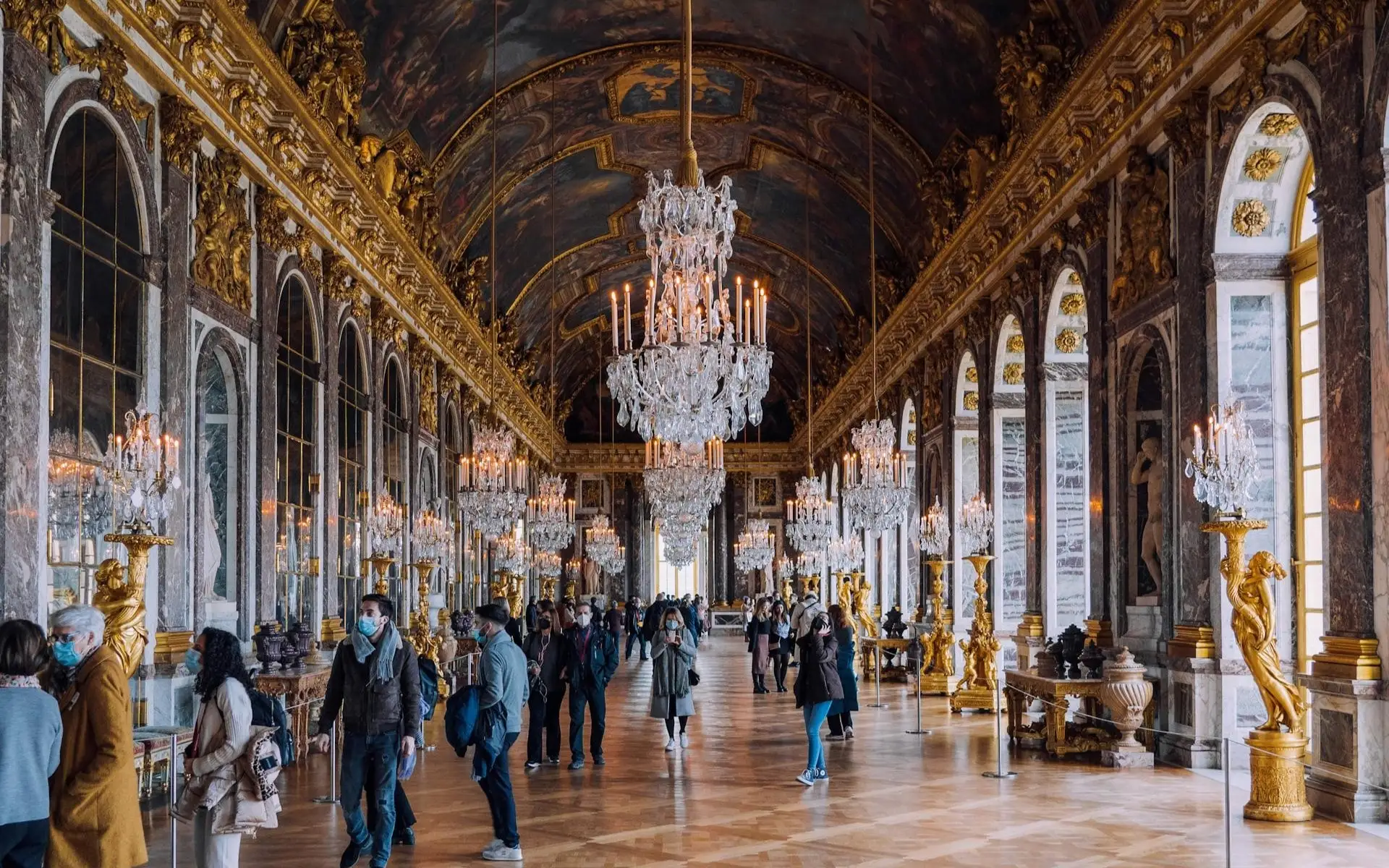
The Palace of Versailles is a full day and, in parts, very accessible. The main state apartments, the Hall of Mirrors and the royal apartments have elevators and accessible routes, and wheelchairs are available on loan. As in other national monuments, a disabled visitor and one companion can enter free.
The challenge is the gardens. They are vast, mostly on gravel, with slopes and long distances to the Trianon palaces and Marie-Antoinette's estate. We plan Versailles with a private guide who knows the accessible routes, an adapted vehicle for the trip from Paris, and a realistic program: the château and the terrace views in the morning, then one part of the estate in the afternoon rather than all of it.
Seine cruises
A boat on the Seine is one of the best ways for wheelchair users to see Paris: the Eiffel Tower, the Louvre, Notre-Dame and the bridges, all from one seat. Several operators have boats with step-free boarding and accessible toilets, but not every pier has a ramp and not every boat is adapted.
We book cruises where both the dock and the boat are accessible, usually in the late afternoon or early evening, when the light on the buildings is at its best. Our Accessible Paris in 7 Days includes a fully accessible cruise.
Hotels: what "accessible" should mean
Many Paris hotels are in 19th-century buildings with narrow corridors, a step at the entrance and tiny elevators. An "accessible room" on a booking site can mean a room with grab bars and a bathtub, which is no use if you need a roll-in shower.
Before we confirm any hotel, we check:
- Step-free access from the street to the lobby and the elevator.
- Elevator size, including the door width, for your chair.
- Door widths to the room and bathroom.
- A roll-in shower with a seat and grab bars, if needed.
- Bed height and space on each side to transfer.
- The route from the hotel to the nearest accessible bus stop or taxi point.
For our accessible Paris trip, we use an accessible executive room at the Hotel Westminster 4* between the Opéra and Place Vendôme, with a roll-in shower and a flat route to the covered passages. We can propose alternatives in the Marais or near the Eiffel Tower, always after the same checks.
Practical tips
- Airport assistance: request it from your airline at least 48 hours before the flight. Paris airports have dedicated assistance teams.
- Avoid the first half of August, when some venues reduce their accessibility staff, and the busiest weekends of spring.
- Accessible restrooms are available in major museums, department stores and many of the city's public toilets.
- Keep days short. Two main visits a day, with a rest in between, makes a week much more enjoyable than a packed schedule.
For the overall budget, our trip cost calculator gives a first estimate, and the best time to visit France explains the seasons.
What makes an accessible Paris trip work
The question we are asked most is "Can I really do Paris in a wheelchair?" The answer is yes, with planning. The travelers who struggle are the ones who rely on the metro and on a booking-site photo of a bathroom. The ones who love it have an adapted van on call, a hotel checked down to the shower seat, and a program built around two great visits a day.
We also tell people not to give up on the things that look difficult. The second floor of the Eiffel Tower, a dinner cruise, the Hall of Mirrors: all of these work beautifully. The trick is knowing which entrance, which time slot and which boat. That is our job, not yours.
Accessible trips to Paris and the Riviera
Our Accessible Paris in 7 Days covers the Eiffel Tower, the Louvre, Versailles, Sainte-Chapelle and a Seine cruise with adapted transfers throughout. To add the coast, our Accessible French Riviera in 8 Days works from a single hotel on the Promenade des Anglais; read where to stay on the French Riviera for the wider picture. You can see all our accessible trips, and our guide to how many days in Paris helps with pacing.
Tell us about your mobility needs and your dates, and one of our designers will send you a custom version with prices within 48 hours, every hotel and transfer checked.